Ayodhya After the Temple: How the Ram Mandir Remade a City
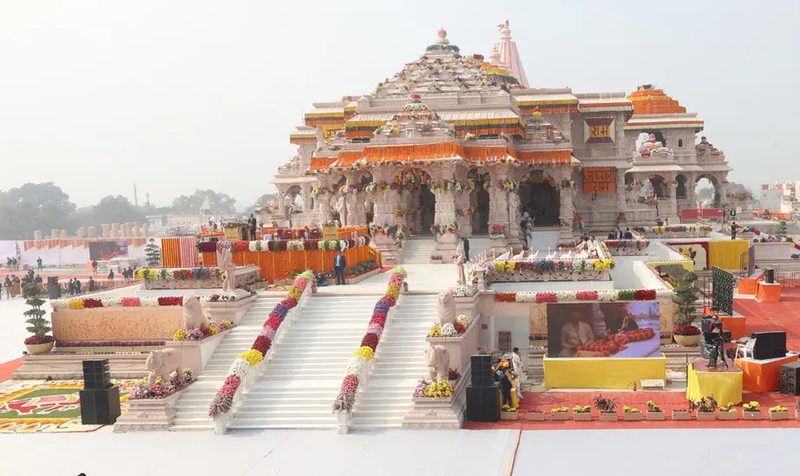
On January 22, 2024, the consecration of the Ram Mandir in Ayodhya marked the culmination of one of independent India’s longest-running religious and political sagas, and the beginning of the city’s transformation. Since then, Ayodhya has been remade: a grand temple complex rising in Nagara style, a redeveloped city with a new airport, railway station, and riverfront, and pilgrim footfalls counted in crores. The temple that was once the centre of a dispute that shaped Indian politics for decades is now the centre of a tourism and infrastructure boom. This is Ayodhya after the temple.
The temple
The Ram Mandir, built by the Shri Ram Janmabhoomi Teerth Kshetra trust, is a monumental Nagara-style temple: 161 feet high, built of pink sandstone from Rajasthan without steel or iron in the traditional manner, with intricate carvings depicting scenes from the Ramayana. The consecration, the pran pratishtha of the Ram Lalla idol, was performed amid Vedic rituals and attended by the Prime Minister, religious leaders, and celebrities, watched by millions. Construction continues on the full complex: the temple itself was opened in phases, with surrounding shrines, pilgrim facilities, and the eventual completion of the entire 70-acre campus. The architecture deliberately evokes classical Hindu temple traditions, and the trust has positioned the complex as a civilisational statement, not merely a place of worship. For devotees, the temple’s completion fulfils a 500-year aspiration; for the country, it closes the most contentious chapter of modern Indian religious politics.
The city’s transformation
Ayodhya’s physical remaking matches the temple’s scale. The city got a new international airport, the Maharishi Valmiki International Airport; a redeveloped Ayodhya Dham railway station; widened roads, including the grand Ram Path; a redeveloped Saryu riverfront with cruises; and a surge of hotels, dharamshalas, and restaurants. The Uttar Pradesh government designated Ayodhya a major tourism and development priority, with projects running into tens of thousands of crores across the wider region. The old city’s narrow lanes near the temple were widened, with compensation and controversy in familiar measure. The transformation’s speed has been striking: a sleepy temple town of a few lakhs became, within two years, one of India’s most-visited pilgrimage destinations, with infrastructure struggling to keep pace with the crores who arrived.
Pilgrims in crores
The footfall numbers tell the story: Ayodhya now receives pilgrims in the crores annually, rivaling Tirupati and Varanasi among India’s great pilgrimage centres. The temple trust manages darshan through timed slots and extensive queues; festivals like Ram Navami and Diwali, when Ayodhya’s Deepotsav sets records for diyas lit, draw exceptional crowds. The pilgrim economy has boomed: local businesses, from prasad sellers to boatmen on the Saryu, report transformed fortunes, and land prices in the city have soared. The administration faces the classic pilgrimage-city challenges: crowd management, sanitation, traffic, and preserving the city’s religious character amid commercialisation. The state has responded with master planning, including a vision for Ayodhya as a spiritual tourism hub with regulated development zones.
The politics and the meaning
The temple’s political significance is impossible to separate from its religious one. The Ram Janmabhoomi movement shaped Indian politics for three decades, contributing to the BJP’s rise; the Supreme Court’s 2019 verdict awarding the site to the temple trust, with alternative land for a mosque, provided legal closure; and the consecration was the movement’s triumphant culmination. The temple’s completion has been read as marking a new phase in India’s public culture: the confident assertion of Hindu civilisational identity by the state. Critics worry about the implications for secularism and minority sentiment; supporters see the fulfilment of a democratic and judicial process. The mosque planned on the alternative land allotted in Dhannipur proceeds slowly, a quiet counterpoint to the temple’s grandeur. Ayodhya’s meaning for India will be debated long after the construction dust settles.
What Ayodhya becomes
Ayodhya is becoming something new: neither the dusty town of memory nor merely a temple with a city attached, but a planned pilgrimage metropolis, a Varanasi rebuilt from near-scratch with modern infrastructure. The test ahead is whether the city can absorb crores of pilgrims without losing its soul: whether the Saryu’s ghats retain their sanctity amid the crowds, whether development benefits the old city’s residents as well as newcomers, and whether the temple’s spiritual mission transcends its political origins. For the devotees streaming through the temple’s carved corridors, these are distant questions; the darshan is the point. But Ayodhya’s transformation is also India’s: a city remade around faith, at a scale and speed that will shape how the country builds its sacred geography for decades.
FAQs
When was the Ram Mandir consecrated? January 22, 2024, with the pran pratishtha of the Ram Lalla idol; the complex continues to be developed in phases.
How do I visit? Through Ayodhya’s new airport or redeveloped railway station; temple darshan uses timed slots managed by the trust, with heavy crowds on festivals.
What is the Deepotsav? Ayodhya’s Diwali celebration lighting record numbers of diyas on the Saryu ghats, now a major annual event.
Ayodhya after the temple is a city transformed: grander, busier, richer, and still becoming. The Ram Mandir fulfilled a centuries-old aspiration; what the city makes of the fulfilment is the story now unfolding.
Compiled by the Khabar 24h Editorial Desk from publicly available sources.

Khabar 24h Editorial Desk — our explainers are prepared by the Khabar 24h editorial team using AI-assisted research tools, and every piece is reviewed by a human editor before publishing. We do not claim original reporting: our work is turning complex topics into simple, accurate summaries. Spotted an error? Write to contact@khabar24h.com — our corrections policy aims for same-day review.
More from this author →