How KYC Works: Why Banks Keep Asking for Documents and What CKYC Means
Few phrases irritate bank customers more than a message saying their KYC is due for updation — again. Yet Know Your Customer verification is the invisible infrastructure beneath every account, investment and insurance policy in India: a regulatory requirement that banks, mutual funds, insurers and brokers verify your identity and address before doing business with you. Understanding how KYC works, what the Central KYC Registry changed, and why periodic re-KYC is mandatory turns an annoyance into a five-minute task you can plan for.
Why KYC exists at all
KYC norms flow from anti-money-laundering law. Banks are required to establish who their customers are — identity, address, and increasingly the source of funds — so that the financial system cannot be used anonymously for fraud, tax evasion or the financing of crime. The RBI’s KYC directions mandate it for every account holder, and SEBI, IRDAI and other regulators impose parallel requirements for investors and policyholders. When a bank freezes an account over pending KYC, it is not being difficult; it is complying with directions that carry serious penalties for lapses. High-profile frauds invariably reveal KYC failures somewhere in the chain, which is why regulators keep tightening the screws.
The documents and the process
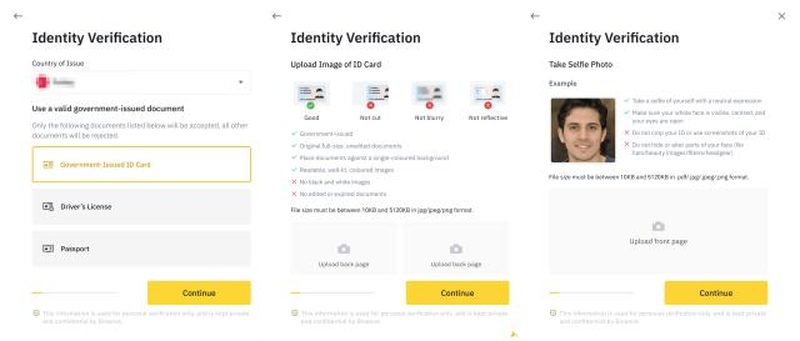
For an individual, KYC needs two things: proof of identity and proof of address, plus a photograph and PAN for most financial relationships. Officially valid documents include the passport, driving licence, voter ID, Aadhaar, NREGA job card and, for address, utility bills or bank statements in many practical cases. Aadhaar-based e-KYC — paperless verification using OTP or biometrics — made account opening nearly instant, and video KYC, permitted since 2020, lets banks complete full verification over a recorded video call. For mutual fund investors, KYC is registered with a KYC Registration Agency, and the familiar KYC form with in-person verification has largely moved online.
What CKYC changed
The Central KYC Registry, operated by CERSAI, was created to end the absurdity of doing KYC separately with every institution. Once any regulated entity uploads your KYC record, you get a 14-digit CKYC number, and other institutions can pull your verified record instead of collecting documents afresh. In practice, interoperability has improved but remains imperfect — banks and mutual funds still ask for documents because records may be incomplete, photographs outdated or the registry entry not yet fetched. Still, the direction is clear: one KYC, usable everywhere. If you have invested or banked in the last decade, you likely have a CKYC number already; your bank or fund can tell you what it is.
- CKYC number: a 14-digit identifier for your central KYC record — one KYC for all institutions.
- e-KYC: instant Aadhaar-based verification for new accounts.
- Video KYC: full KYC over a recorded video call, no branch visit needed.
- KRA: KYC Registration Agencies hold mutual fund investors’ KYC records.
Why re-KYC keeps happening
KYC is not one-and-done. The RBI requires periodic updation based on risk categorisation: high-risk customers every 2 years, medium-risk every 8 years and low-risk every 10 years. Banks have also been running large re-KYC drives because legacy records predate current standards — missing photographs, old addresses, incomplete CKYC uploads. The good news: for customers with no change in information and no high-risk flag, re-KYC can now be done digitally — a self-declaration through net banking, mobile app or email in many banks — without visiting a branch. The bad news for procrastinators: accounts can face transaction restrictions if re-KYC remains pending past deadlines, so treat the reminder as urgent, not optional.
FAQs
Is Aadhaar mandatory for KYC? No — it is one of several officially valid documents, though it is the most convenient because it enables e-KYC. You can complete KYC with a passport, driving licence or voter ID instead.
Why does my mutual fund need separate KYC if my bank already did it? It should not, in theory — CKYC and KRA records are meant to be shared. In practice, fetch failures and incomplete records still trigger fresh requests; ask the fund to pull your existing CKYC record first.
Can I update my address for KYC online? Yes, most banks and KRAs accept address updates through net banking, apps or email with scanned proof, without a branch visit.
KYC is the financial system’s identity layer — unglamorous, occasionally irritating, but the reason your money moves in a system that knows its customers. Keep your documents current, complete re-KYC at the first reminder, note down your CKYC number, and the next message from your bank will be a formality instead of a fire drill.
Compiled by the Khabar 24h Editorial Desk from publicly available sources.

Khabar 24h Editorial Desk — our explainers are prepared by the Khabar 24h editorial team using AI-assisted research tools, and every piece is reviewed by a human editor before publishing. We do not claim original reporting: our work is turning complex topics into simple, accurate summaries. Spotted an error? Write to contact@khabar24h.com — our corrections policy aims for same-day review.
More from this author →