Polytechnic Diploma Courses: Admission, Branches and Lateral Entry to B.Tech
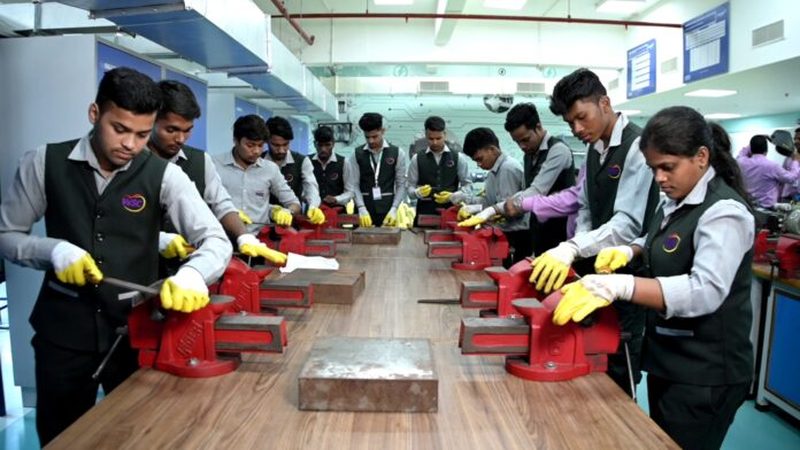
Between the ITI workshop and the B.Tech classroom sits a qualification lakhs of students use to build solid technical careers: the polytechnic diploma. Polytechnic diploma courses — three-year engineering diplomas after Class 10 — produce junior engineers for industry, offer lateral entry into B.Tech second year, and cost a fraction of engineering college. For students certain about technical careers but unsure about the JEE grind, polytechnics are the pragmatic middle path. This guide explains admission, branches and prospects.
How polytechnics work
Government and private polytechnics, regulated by state technical-education boards under AICTE norms, offer three-year diplomas after Class 10 (two years after 12th with science, via lateral entry). The curriculum blends engineering theory with heavy practical and workshop training — diploma holders are valued in industry as hands-on junior engineers who can actually execute. Government polytechnic fees are nominal (5,000-15,000 rupees a year); private ones charge 30,000-80,000. Admission is through state polytechnic entrance tests (like JEECUP in UP, DCECE in Bihar) or Class 10 merit, depending on the state.
Branches: which to choose
- Mechanical Engineering: the evergreen branch — manufacturing, maintenance, production roles across industry.
- Electrical Engineering: power sector, railways, construction — perennial demand.
- Civil Engineering: infrastructure boom sustains demand for site engineers and surveyors.
- Computer Science / IT: software support, testing, hardware — a launchpad toward IT careers.
- Electronics and Communication: manufacturing, telecom, embedded systems.
- Emerging: mechatronics, AI/ML diplomas, renewable energy — niche but future-facing.
Choose branches with broad industry bases rather than hyper-specialised ones; flexibility is the diploma’s strength.
Lateral entry to B.Tech: the degree ladder
The diploma’s killer feature is lateral entry: diploma holders can join B.Tech directly in the second year through state lateral-entry exams (LEET and equivalents), with reserved quotas. This creates a powerful 3+3 path: three years of practical diploma plus three years of degree, producing engineers with both hands-on skill and theoretical depth — a combination employers prize. Many diploma holders work a few years first, then complete B.Tech part-time or full-time, letting industry fund the degree. The route demands planning: maintain strong diploma scores, as lateral-entry cut-offs for good colleges are competitive.
Jobs directly after diploma
Diploma holders work as junior engineers, supervisors, technicians and site engineers in manufacturing, construction, power utilities, railways and government departments — many state and central recruitments (SSC JE, railway JE, state electricity boards) specifically target diploma holders with salaries of 35,000-50,000 rupees. Private industry hires for production, maintenance, quality and site roles at 15,000-30,000 rupees starting. The honest picture: initial salaries trail B.Tech graduates, but experienced diploma engineers with site and execution skills are indispensable — and many rise to project-manager levels.
Who should choose polytechnic
The diploma suits students who are technically inclined, prefer practical learning, want earning power by age 19-20, or missed B.Tech admission but want the engineering ladder kept open. It suits families needing early financial contribution and students who learn by doing. It is less suited to those targeting research, software-product roles at top firms (where B.Tech filters dominate) or careers needing postgraduate depth — though lateral entry keeps even those doors ajar. Visit the polytechnic before joining: workshop quality and faculty vary enormously between institutions.
FAQs
Can I do B.Tech after polytechnic?
Yes — lateral entry into B.Tech second year through state LEET exams, with reserved seats for diploma holders.
What are the fees?
Government polytechnics charge 5,000-15,000 rupees a year; private ones 30,000-80,000.
Diploma or 12th + B.Tech — which is better?
Direct B.Tech suits the academically strong targeting top colleges. The diploma route suits practical learners, offers earlier earning, and keeps B.Tech open via lateral entry.
The polytechnic diploma is Indian technical education’s quiet workhorse: affordable, practical, employment-linked and laddered to degrees. For the student who wants to build things rather than just clear exams, it is a path worth taking seriously. Girls are joining polytechnics in growing numbers, especially in computer science, electronics and emerging branches, and many institutes now run dedicated support and hostel facilities. Part-time and evening diploma options let working youth upgrade qualifications without leaving jobs. When shortlisting institutes, prioritise government polytechnics with NBA-accredited programmes and active industry partnerships, since workshop quality and faculty stability directly shape employability. Above all, remember the diploma rewards the hands-on learner: the students who spend extra hours in workshops and master their trade practically are the ones employers compete to hire.
Source: All India Council for Technical Education

Khabar 24h Editorial Desk — our explainers are prepared by the Khabar 24h editorial team using AI-assisted research tools, and every piece is reviewed by a human editor before publishing. We do not claim original reporting: our work is turning complex topics into simple, accurate summaries. Spotted an error? Write to contact@khabar24h.com — our corrections policy aims for same-day review.
More from this author →