Homeschooling in India: Legal Status, Curriculum Options and Challenges
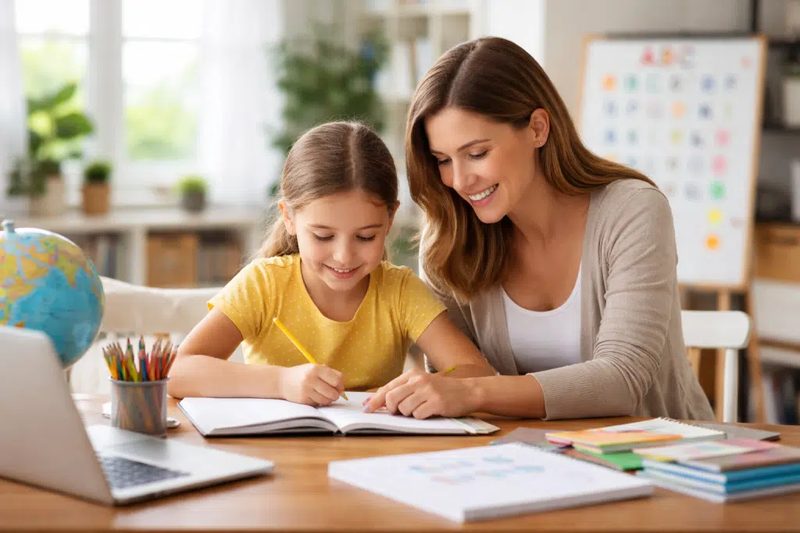
A growing number of Indian parents are asking a radical question: what if we skip school entirely? Homeschooling in India occupies a strange legal and cultural space — permitted but unregulated, increasingly visible in urban parent communities yet statistically tiny. Motivations vary: dissatisfaction with rote-heavy schooling, children’s needs in sports or arts careers, bullying or special needs, and families who travel. This guide lays out the legal status honestly, the curriculum paths available, and the challenges nobody mentions in homeschooling webinars.
The legal status: allowed, but in a grey zone
Indian law does not prohibit homeschooling, but neither does it explicitly recognise it. The Right to Education Act mandates free and compulsory education for ages 6-14 without specifying that it must happen in a school, and courts have generally held that parents may educate children at home. However, there is no homeschooling registration system, no prescribed standards and no official certification path — a regulatory vacuum. Practically, this means homeschooled children face hurdles at transition points: proving age and prior learning for board exams as private candidates, and producing documentation for college admissions. Several court petitions over the years have sought clarity, but comprehensive legislation is still awaited. Parents should keep meticulous records — portfolios, test scores, attendance logs — as their legal shield.
Curriculum options for homeschoolers
- NCERT/CBSE via NIOS: the National Institute of Open Schooling is the most popular route — a government board offering Classes 10 and 12 certification through open schooling, widely accepted for college.
- CBSE or state board as private candidates: possible but procedurally harder, with limited subjects and centre constraints.
- International curricula: Cambridge or American programmes through accredited online schools, useful for families planning study abroad but expensive.
- Eclectic or unschooling approaches: parent-designed learning for younger children, usually converging to a formal board by Class 9-10 for certification.
Most Indian homeschoolers use structured curricula for core subjects and child-led exploration for the rest, formalising toward NIOS certification in secondary years.
The socialisation question, answered honestly
The commonest objection — but what about friends? — deserves a straight answer. Homeschooled children do not automatically become isolated; many have richer social lives than schoolchildren through sports academies, hobby classes, community groups and homeschool co-ops in cities like Bengaluru, Pune and Hyderabad. But socialisation requires deliberate parental effort: enrolling in team activities, arranging peer groups and creating routine interaction. Families in small towns find this harder. And some things — navigating a classroom of forty peers, dealing with difficult authority figures — are genuinely hard to replicate at home. Evaluate your child’s temperament honestly: outgoing children often thrive with curated social lives, while some children need school’s daily peer immersion.
Challenges nobody advertises
Homeschooling demands enormous parental time — effectively a part-time teaching job for one parent through primary years. It requires the parent to stay ahead of the curriculum, which gets genuinely hard at Class 9-10 physics and maths. Single-income strain is real, since one parent typically steps back from work. Extended family in India often disapproves loudly, creating social pressure. And the certification maze — NIOS registration, practical exam centres, college admission queries about homeschooling — falls entirely on parents to navigate. Burnout among homeschooling mothers is the community’s open secret.
Making it work: if you decide to try
Start with a one-year trial rather than a permanent decision, with clear review criteria. Join a local homeschool community before you begin — experienced families share curricula, tutors and exam-navigation knowledge freely. Fix a daily rhythm rather than a rigid timetable; consistency matters more than hours. Outsource your weak subjects to tutors early instead of struggling. Register with NIOS well before Class 10 deadlines. And keep the exit option open: many families homeschool through primary years and return to formal school for secondary — a perfectly valid hybrid.
FAQs
Is homeschooling legal in India?
Yes, in the sense that no law prohibits it, but it is unregulated with no official registration. Keep thorough records and plan certification through NIOS.
Can homeschooled children go to college?
Yes. NIOS Class 12 certificates are accepted by Indian universities including through CUET, and international curricula open foreign admissions.
What does it cost?
From near-zero using free resources to several lakhs for international online schools. Most Indian families spend 30,000-1,00,000 rupees a year on materials and tutors.
Homeschooling is neither the miracle its advocates claim nor the disaster its critics predict. It is a demanding, legally grey, potentially rewarding path that suits a minority of families — those with time, conviction, community and a clear certification plan. For everyone else, finding a better school remains the simpler answer.
Source: National Institute of Open Schooling

Khabar 24h Editorial Desk — our explainers are prepared by the Khabar 24h editorial team using AI-assisted research tools, and every piece is reviewed by a human editor before publishing. We do not claim original reporting: our work is turning complex topics into simple, accurate summaries. Spotted an error? Write to contact@khabar24h.com — our corrections policy aims for same-day review.
More from this author →