Webb Detects Methane on Interstellar Comet 3I/ATLAS for First Time
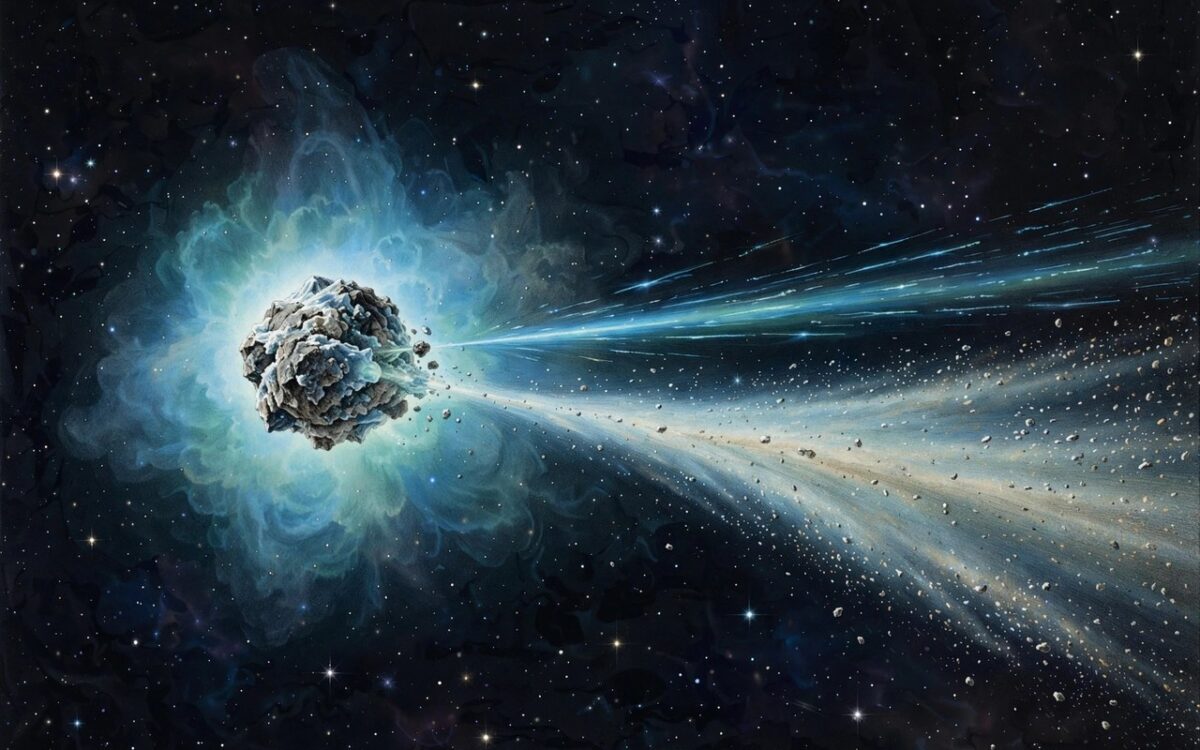
NASA's James Webb Space Telescope has detected methane on interstellar comet 3I/ATLAS — the first time the gas has ever been directly found on a visitor from another star system.
The observations were made with Webb's Mid-Infrared Instrument on December 15-16 and December 27, 2025, as the comet travelled back out of the solar system after passing the Sun. The results were published in the Astrophysical Journal Letters.
Methane is highly volatile, so its delayed appearance suggests it was buried beneath the comet's surface, protected until solar heat reached deeper icy layers. The amount of methane relative to water is surprisingly high, with few analogues in our solar system.
Webb also confirmed the comet is unusually rich in carbon dioxide. Both findings point to a formation environment very different from the one that produced our solar system's comets.
NASA says the comet poses no threat to Earth.
The detection adds to a growing dossier on 3I/ATLAS, only the third interstellar object ever confirmed after 1I/'Oumuamua and 2I/Borisov. Each new measurement helps astronomers compare how planets and comets form around other stars with our own solar system's history.
Related stories
View all →
ISRO’s NVS-03 NavIC satellite eyes mid-October launch
ISRO is preparing to launch the NVS-03 navigation satellite in mid-October, according to reports. The launch window is said to be between…

NASA’s SPHEREx telescope maps brown dwarf atmospheres
NASA's SPHEREx telescope analysed 37 nearby brown dwarfs and found atmospheres rich in water, carbon dioxide and methane. The telescope takes 3,600…

Most Distant Blazar Found Eight Billion Light-Years Away
Scientists have detected blazar OP 313, the most distant ever recorded, eight billion light-years away.

Khabar 24h Editorial Desk — our explainers are prepared by the Khabar 24h editorial team using AI-assisted research tools, and every piece is reviewed by a human editor before publishing. We do not claim original reporting: our work is turning complex topics into simple, accurate summaries. Spotted an error? Write to contact@khabar24h.com — our corrections policy aims for same-day review.
More from this author →
Leave a Reply