NASA: October Skies Bring Saturn at Its Best and Meteor Showers
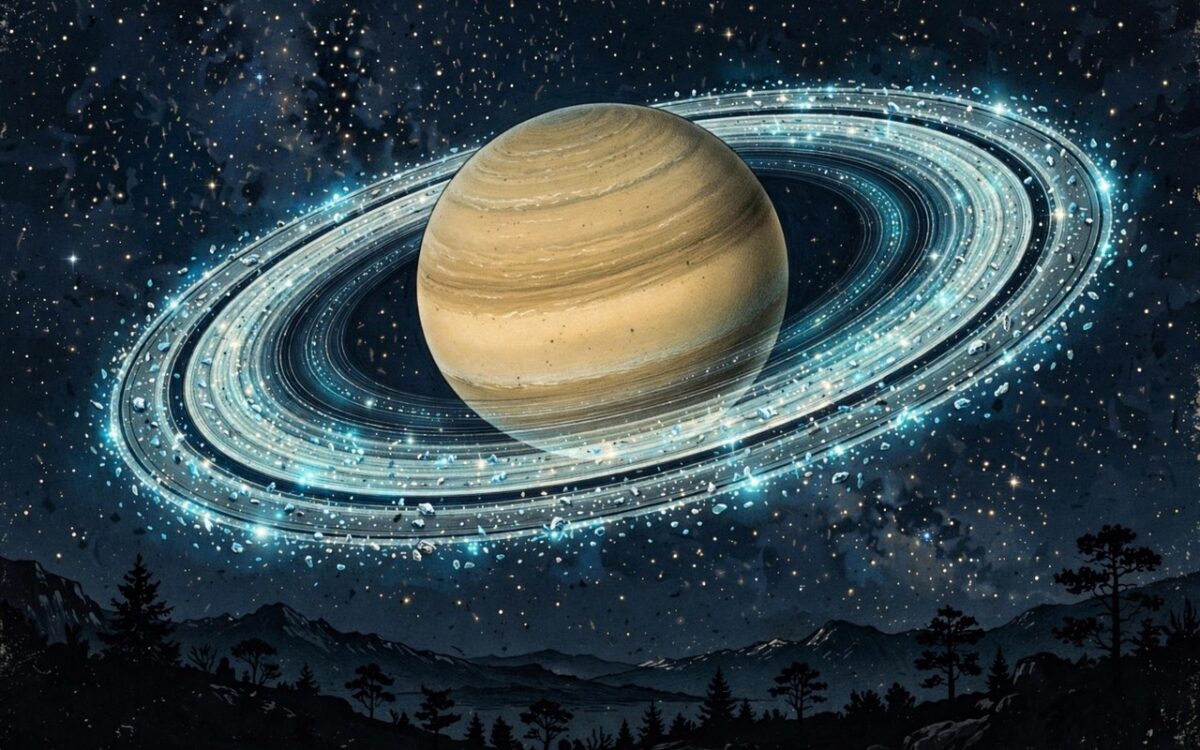
October is a great month to look up, according to NASA's monthly skywatching guide.
Saturn reaches opposition on October 4, meaning it is directly opposite the Sun from Earth's view. The ringed planet will be at its brightest and visible all night long — a prime target for binoculars and small telescopes.
On October 6, a thin crescent Moon appears close to bright Jupiter before sunrise, a lovely sight for early risers. NASA's video guide also highlights a 10-sided atmospheric wave around Saturn's south pole recently revealed by the Hubble Space Telescope.
Later in the month, the Orionid meteor shower peaks on the nights of October 21 and 22. The Orionids are debris from Halley's Comet and can produce bright, fast meteors, though moonlight may wash out some fainter streaks this year.
The month wraps up with the Moon gliding near the Pleiades star cluster, also called the Seven Sisters, on October 27 and 28 — a pretty sight even with the naked eye.
NASA notes that dark skies away from city lights give the best views, and no special equipment is needed to enjoy most of October's highlights.
Related stories
View all →
ISRO’s NVS-03 NavIC satellite eyes mid-October launch
ISRO is preparing to launch the NVS-03 navigation satellite in mid-October, according to reports. The launch window is said to be between…
NASA’s SPHEREx telescope maps brown dwarf atmospheres
NASA's SPHEREx telescope analysed 37 nearby brown dwarfs and found atmospheres rich in water, carbon dioxide and methane. The telescope takes 3,600…

Most Distant Blazar Found Eight Billion Light-Years Away
Scientists have detected blazar OP 313, the most distant ever recorded, eight billion light-years away.

Khabar 24h Editorial Desk — our explainers are prepared by the Khabar 24h editorial team using AI-assisted research tools, and every piece is reviewed by a human editor before publishing. We do not claim original reporting: our work is turning complex topics into simple, accurate summaries. Spotted an error? Write to contact@khabar24h.com — our corrections policy aims for same-day review.
More from this author →
Leave a Reply