The Bennu asteroid discovery, explained
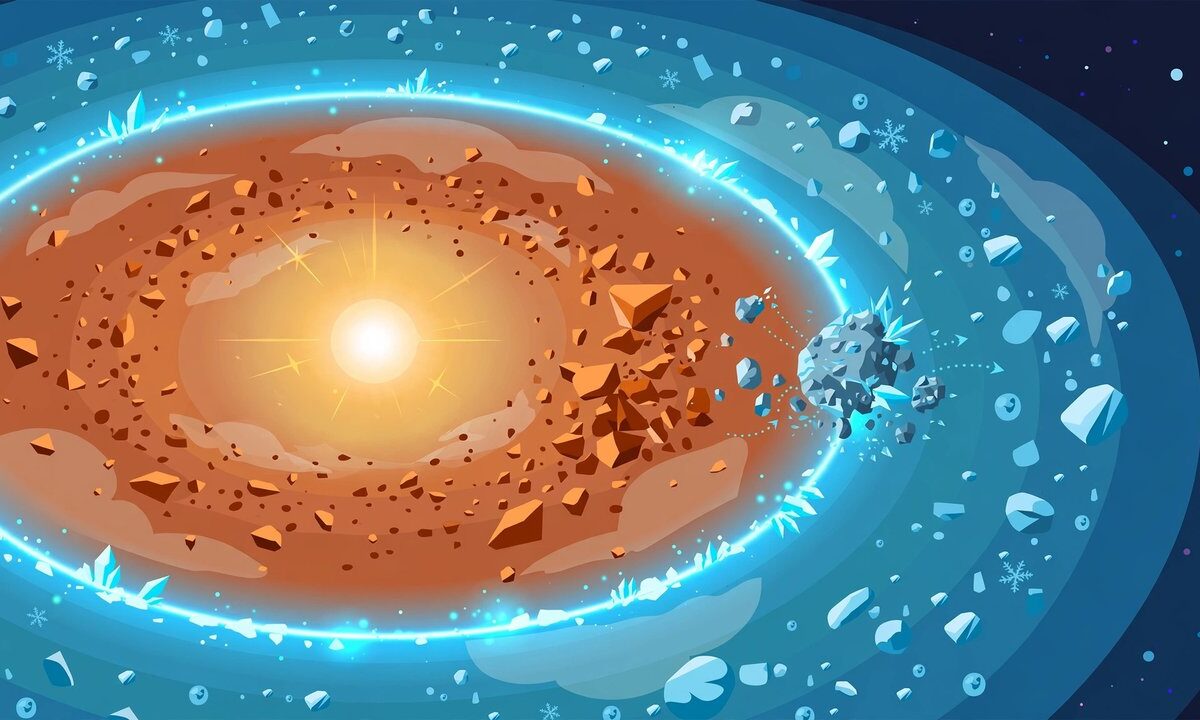
A new study of asteroid Bennu’s rocks has revealed it formed at one of the most important addresses in the early solar system: the water-ice line, where temperatures were cold enough for water to freeze but the young Sun still kept rock hot.
Scientists at ETH Zurich studied 120 grams of material brought back by NASA’s OSIRIS-REx spacecraft in 2023. By measuring isotopes of iron, titanium and chromium — atomic fingerprints — they found Bennu mixes ingredients from both the inner and outer solar system, like a recipe combining two kitchens.
Why does this matter? Carbon-rich asteroids like Bennu are prime suspects for delivering water and the building blocks of life to the early Earth. Knowing exactly where they formed helps scientists map how those ingredients travelled across the young solar system.
Bennu’s makeup closely matches samples from Japan’s Ryugu asteroid and a rare meteorite family called CI chondrites, suggesting these bodies share a common birthplace near that ancient fire-and-ice boundary. The OSIRIS-REx capsule delivered its 120-gram sample to Earth in September 2023, and scientists say the pristine material will be studied for decades. Each new analysis peels back another layer of the 4.5-billion-year history written into Bennu’s rocks.
Related stories
View all →
Asian Games Cricket: Why There May Be No Silver Medal
If the men’s cricket final at the Asian Games 2026 is washed out, there will be no silver medals — both finalists…

The Sanctioning Russia and Iran Act: What It Means for India
The Sanctioning Russia and Iran Act of 2026 (SRIA) is the US law at the centre of India’s toughest trade challenge with…
Monsoon 2026: What a 13% Deficit Means for India
The 2026 monsoon season ended on September 30 with rainfall at 87 per cent of the long-period average, a 13 per cent…

Khabar 24h Editorial Desk — our explainers are prepared by the Khabar 24h editorial team using AI-assisted research tools, and every piece is reviewed by a human editor before publishing. We do not claim original reporting: our work is turning complex topics into simple, accurate summaries. Spotted an error? Write to contact@khabar24h.com — our corrections policy aims for same-day review.
More from this author →
Leave a Reply