Backcountry recreation pushing wolverines out of Canada’s Rockies
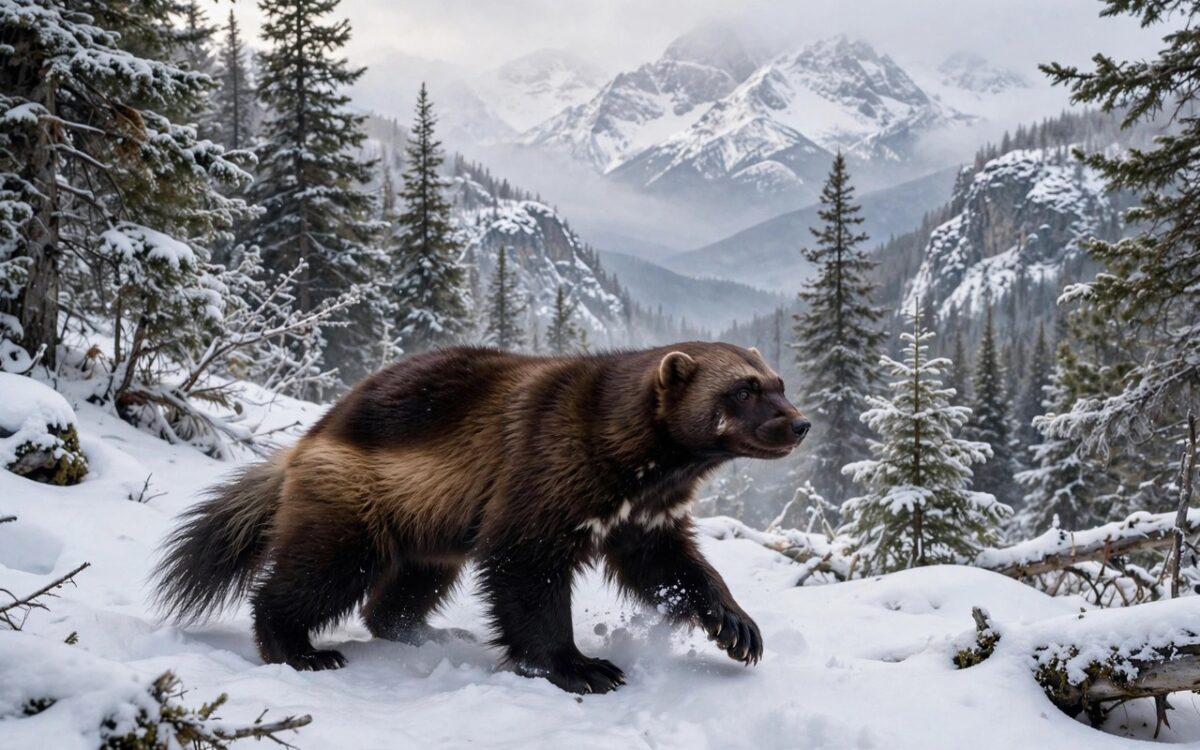
Wildlife researchers have found that backcountry recreation and roads are driving down wolverine populations in Canada’s Rocky Mountains and Columbia Mountains, in what is believed to be the first landscape-scale evidence linking recreation to lower carnivore density.
The study, led by Dr Mirjam Barrueto as part of her PhD research at the University of Calgary, was published on September 29 in the journal Biological Conservation. Co-authors include scientists from Parks Canada, the Nature Conservancy of Canada and Montana State University.
The paper, one of the largest wolverine studies ever conducted, found fewer than 300 wolverines across 81,800 square kilometres of western Alberta and eastern British Columbia. Barrueto said the population could be about 30 per cent higher without current recreation and road levels.
Recreation data was drawn from publicly available heat maps from recreational apps, covering backcountry skiing, heliskiing, cat skiing, cross-country skiing and hiking in winter and summer. Road density was the other main predictor of population density, consistent with earlier studies.
Barrueto said she was surprised by the impact of recreation, which had not previously been shown to reduce a carnivore’s population density at this scale.
Related stories
View all →
Red alert in Uttarakhand; Char Dham Yatra suspended
Red alert in Uttarakhand; Char Dham Yatra suspended: The India Meteorological Department has issued a red alert for very heavy rainfall in…

Robert Hautman wins 2026 US Duck Stamp contest for fourth time
Robert Hautman won the 2026 Federal Duck Stamp contest for the fourth time with a painting of long-tailed ducks; the stamp raises…

Mediterranean ministers adopt water resilience plan to 2030
Mediterranean ministers endorsed a new water declaration to 2030 and launched the Rome Initiative at the 2nd UfM Ministerial Meeting on Water…

Khabar 24h Editorial Desk — our explainers are prepared by the Khabar 24h editorial team using AI-assisted research tools, and every piece is reviewed by a human editor before publishing. We do not claim original reporting: our work is turning complex topics into simple, accurate summaries. Spotted an error? Write to contact@khabar24h.com — our corrections policy aims for same-day review.
More from this author →
Leave a Reply