NASA studies Scottish rocks to understand Mars
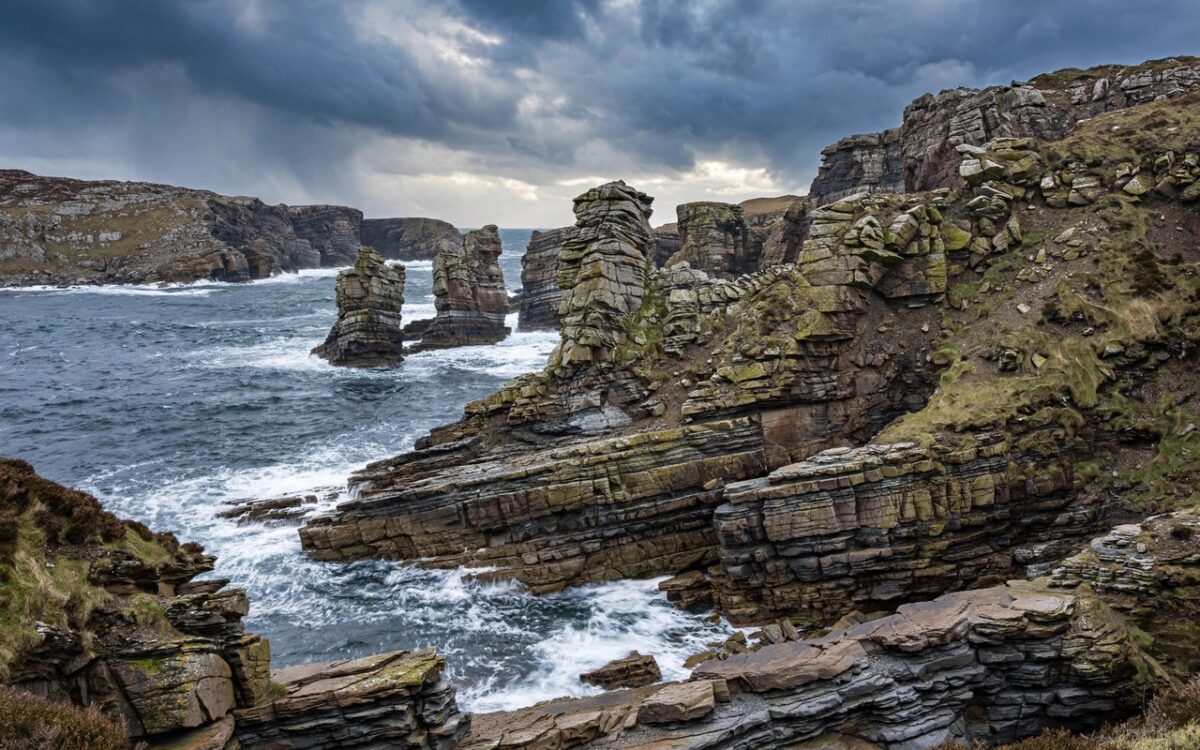
NASA scientists have travelled to Scotland to study rocks that may hold clues about the history of water on Mars.
The team examined the Stoer formation, a set of 1.2-billion-year-old rocks on Scotland's northwest coast. These rocks formed in ancient lakes and rivers, making them a good match for places NASA studies on Mars.
On Earth, geologists can walk around the rocks and see the full landscape. On Mars, rovers like Perseverance see only small areas. The Scottish site helps scientists learn how to read the clues.
NASA says the work supports evidence of repeated water activity on Mars. Perseverance has found interesting features at the edge of an ancient lakebed.
Mars was once much wetter than it is today. Understanding when and where water flowed helps scientists judge whether the planet could once have supported life.
The research shows how fieldwork on Earth directly supports space exploration. The lessons from Scotland will guide how NASA reads data from the Red Planet.
Related stories
View all →
Solar storm mystery moved from 1841 to 1848
Researchers have solved a mystery about one of the earliest recorded space weather events. The famous Exeter disruption most likely happened in…

Webb reveals vast stellar nursery IC 348
The James Webb Space Telescope has captured one of its largest images ever: a sweeping panorama of the stellar nursery IC 348.

Astronomers trace radio signals to exoplanet
Astronomers have, for the first time, traced radio signals directly to a planet outside our solar system. And no, it is not…

Khabar 24h Editorial Desk — our explainers are prepared by the Khabar 24h editorial team using AI-assisted research tools, and every piece is reviewed by a human editor before publishing. We do not claim original reporting: our work is turning complex topics into simple, accurate summaries. Spotted an error? Write to contact@khabar24h.com — our corrections policy aims for same-day review.
More from this author →
Leave a Reply