The Ottoman Empire Explained: Six Centuries That Shaped Three Continents
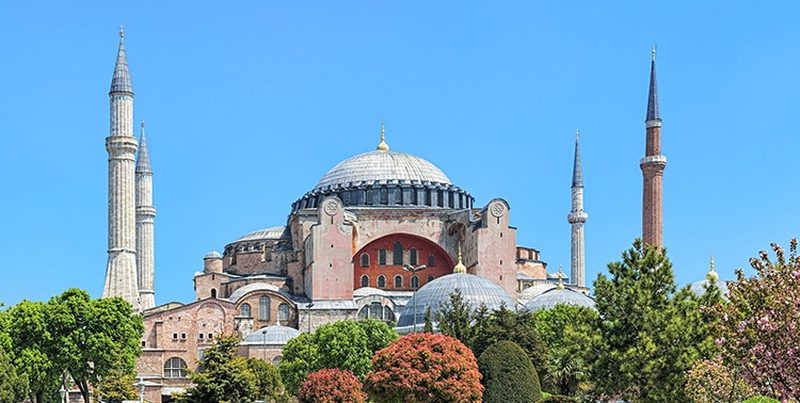
For six centuries, one dynasty ruled a vast empire stretching from Hungary to Yemen, from Algeria to the Caucasus. The Ottoman Empire was Islam’s great early-modern superpower, the terror of Christian Europe, the guardian of Mecca and Medina, and a sophisticated multi-ethnic state that governed Muslims, Christians and Jews under one sultan. Its rise, its long decline and its violent end shaped the modern Middle East, the Balkans and beyond. Its ghosts still walk.
From frontier beylik to world power
The Ottomans began around 1300 as a small Turkish principality in Anatolia, frontier warriors expanding at Byzantium’s expense. In 1453, Mehmed the Conqueror took Constantinople with giant cannon, ending the Byzantine Empire and making Istanbul his capital. Suleiman the Magnificent (1520-1566) brought the empire to its zenith: Belgrade, Rhodes, Baghdad and North Africa fell; Ottoman armies besieged Vienna; the navy dominated the Mediterranean. At its peak the empire held some 35 million people, and the sultan claimed the title of caliph, leader of Sunni Islam.
How the Ottomans governed
The empire’s durability came from pragmatic institutions. The devshirme recruited Christian boys into the elite Janissary corps and administration, creating a loyal meritocratic service class. The millet system let religious communities, Orthodox, Armenian, Jewish, govern their own family and religious affairs under their own leaders, a workable pluralism for a pre-modern empire. Land was state-owned, granted to cavalrymen for service; trade was taxed, not strangled. Istanbul became one of the world’s great cities, adorned by Sinan’s mosques, which rival anything in Renaissance Europe.
The long decline
After Suleiman, expansion stalled: the 1571 defeat at Lepanto, the failed 1683 siege of Vienna, and rising European military and economic power reversed the tide. The empire became the sick man of Europe, losing territory steadily: Greece independent by 1830, the Balkans through the 19th century, North Africa to France and Italy. Reformers tried to modernise, the Tanzimat reforms, a constitution in 1876, but debt, nationalism and great-power predation hollowed the state. Decline took two centuries, which itself testifies to the empire’s resilience.
World War I and the empire’s end
The Ottomans’ fatal gamble was joining Germany in World War I. Defeat brought partition: the 1920 Treaty of Sevres carved the empire among victors, but Mustafa Kemal Ataturk’s nationalist movement fought back, winning Turkish independence and abolishing the sultanate in 1922 and the caliphate in 1924. The Arab provinces became British and French mandates, Palestine, Syria, Iraq, Lebanon, drawing the borders of today’s Middle East. The Armenian genocide of 1915, in which the Ottoman state killed some million Armenians, remains a defining and contested horror.
The empire’s living legacy
The Ottoman past is everywhere: in Balkan cuisines, music and mosques; in Middle Eastern borders drawn from its provinces; in Turkey’s identity debates between Ottoman nostalgia and Kemalist secularism. The millet logic echoes in Lebanon’s confessional politics. Even coffee culture, bureaucracy and the word kiosk are Ottoman gifts to the world. The empire’s pluralism, however hierarchical, offers a historical counterpoint to modern sectarianism: millions of different faiths lived under one rule for centuries.
Why the Ottomans still matter
Modern conflicts map onto Ottoman geography: the Balkans’ ethnic patchwork, the Kurdish question across four states, the Israeli-Palestinian conflict in former Ottoman Palestine, Sunni-Shia tensions the Ottomans managed as caliphs. Understanding the empire is prerequisite to understanding why the Middle East looks the way it does. Six centuries of Ottoman rule did not simply vanish in 1922; it set the board on which today’s games are played.
The empire’s cultural fusion
Ottoman culture was a deliberate synthesis: Persian poetry, Byzantine administration, Islamic law and Turkic military tradition fused into something distinctive. Ottoman cuisine layered Central Asian, Arab and Balkan flavours; its architecture married the dome to the minaret; its music blended makam traditions across continents. The empire’s cosmopolitanism was not an accident but a governing strategy, and its flavours still season tables from Sarajevo to Damascus.
FAQs
How long did the Ottoman Empire last? About 600 years, from around 1300 to 1922, one of history’s longest-lived empires.
What ended the Ottoman Empire? Defeat in World War I, partition by the Allies, and Ataturk’s Turkish nationalist movement, which abolished the sultanate.
Was the Ottoman Empire tolerant? Relatively, by pre-modern standards: non-Muslims had protected but second-class status under the millet system, with periods of both harmony and persecution.
The Ottomans built one of history’s great multi-ethnic empires and watched it dissolve into the modern map. Their six centuries remind us that the Middle East’s borders are young, its divisions old, and its history far richer than the headlines suggest.
Source: Britannica

Khabar 24h Editorial Desk — our explainers are prepared by the Khabar 24h editorial team using AI-assisted research tools, and every piece is reviewed by a human editor before publishing. We do not claim original reporting: our work is turning complex topics into simple, accurate summaries. Spotted an error? Write to contact@khabar24h.com — our corrections policy aims for same-day review.
More from this author →