How the Netherlands Became the World’s Cycling Capital
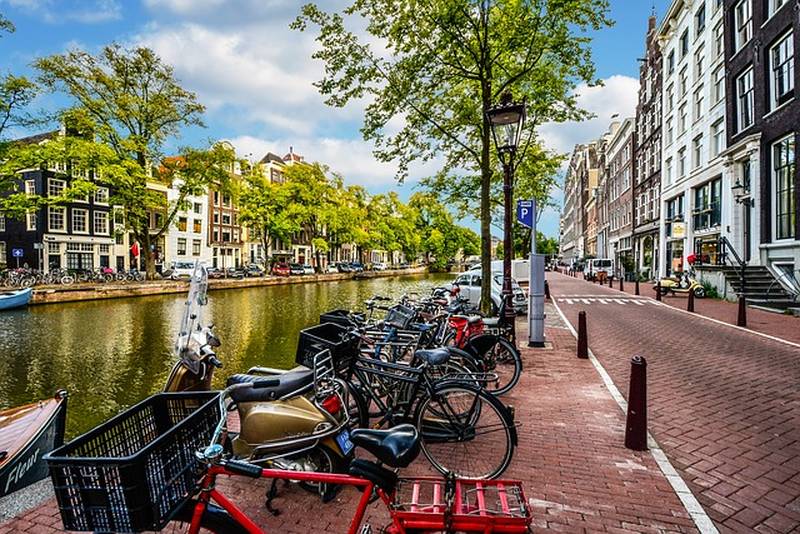
The Netherlands has more bicycles than people, around 23 million for 17.5 million residents, and cycling is not a hobby or a statement but simply how the country moves. A third of all trips are by bike; children cycle to school unaccompanied; ministers pedal to parliament. Yet this was not inevitable: in the 1970s the Dutch were motoring toward car dependence like everyone else. How the Netherlands became the world’s cycling capital is a story of protest, planning and stubborn national character.
The revolt that saved the bicycle
The turning point was tragedy. As cars flooded Dutch cities in the 1960s and 70s, child road deaths soared, and the Stop de Kindermoord, Stop the Child Murder, movement erupted, demanding streets safe for children. The 1973 oil crisis gave the government cover to act: car-free Sundays, cycling investment, and a national rethink. Activists and planners seized the moment, and the Netherlands chose a different path from car-centric America or Britain. The bicycle, once dismissed as old-fashioned, was reborn as the future.
Infrastructure: the real magic
Dutch cycling rests on infrastructure of staggering completeness: some 35,000 kilometres of dedicated cycle paths, physically separated from cars, with their own traffic lights, roundabouts, bridges and even multi-storey bike parking garages at stations. Junctions are engineered so bikes flow safely; the famous Dutch roundabout gives cyclists priority. This is the crucial insight: the Dutch do not cycle because they are special, they cycle because it is safe, fast and convenient. Build it, and they will pedal.
Cycling as everyday life
The result is a culture where the bike is furniture, not sport. The omafiets, the classic sit-up city bike, carries groceries, children and grandparents in all weathers; e-bikes now extend range for older riders. Cycling to work in a suit, in the rain, without special clothes, is normal. Children gain independence early, cycling to school from age eight or nine. The health dividend is enormous: Dutch longevity and low obesity owe much to this daily, effortless exercise. The bike is the great equaliser, ridden by cleaners and CEOs alike.
The economics of the bike
Cycling pays. Studies credit it with billions in health savings, reduced congestion and cleaner air. Bikes take a fraction of the road space and parking of cars, freeing city centres for people. Dutch cities are now removing thousands of car parking spaces, and the freed land becomes housing and parks. The cycling industry, from Gazelle to VanMoof’s rise and fall, exports Dutch know-how worldwide. Even the economics of retail favour bikes: cyclists shop locally and often.
The challenges ahead
Success brings problems. Cycle paths in Amsterdam and Utrecht are congested at rush hour; e-bikes and fatbikes, faster and heavier, spark safety debates and generational friction. Bike theft is a national plague, with hundreds of thousands stolen yearly. Rural areas remain car-dependent, and the Netherlands’ climate goals demand even more cycling. Planners now wrestle with speed differentials, wider paths and integrating cycling with public transport, the next frontier of the world’s most mature bike system.
Can your city become Amsterdam?
Cities worldwide, from Paris to Bogota to New York, are building bike lanes and citing the Dutch example. The lesson is encouraging: the Netherlands was not always like this; it chose cycling through protest and policy within living memory. But it also took decades of consistent investment and a willingness to take space from cars, the politically hard part. The Dutch secret was never the bicycle. It was the decision that streets belong to people first.
What the Dutch are still learning
Even the masters iterate. Dutch planners now design for an ageing cycling population, with e-bikes extending riding into the eighties, and for cargo bikes replacing delivery vans. School streets close to cars at drop-off times; mobility hubs blend bike-share with trains. The next debate is speed: separating fast e-bikes from children and the elderly on crowded paths. The cycling capital stays ahead by treating its system as unfinished, a lesson for every city that copies it.
FAQs
How many bikes are there in the Netherlands? Around 23 million, more than the 17.5 million people.
Is it safe to cycle in the Netherlands? Yes, by design: separated infrastructure makes cycling there among the safest in the world per kilometre.
Do the Dutch cycle in winter? Absolutely; proper clothing and cleared paths keep the country pedalling year-round.
The Netherlands proves that the cycling capital of the world was made, not born. Any city willing to brave the politics of road space can follow, one protected lane at a time.
Source: Dutch News

Khabar 24h Editorial Desk — our explainers are prepared by the Khabar 24h editorial team using AI-assisted research tools, and every piece is reviewed by a human editor before publishing. We do not claim original reporting: our work is turning complex topics into simple, accurate summaries. Spotted an error? Write to contact@khabar24h.com — our corrections policy aims for same-day review.
More from this author →