What Is Agentic AI? How Autonomous AI Agents Complete Tasks

Chatbots answer questions. AI agents do things. Tell an agentic AI system to plan a weekend trip, and it might search for flights, compare hotel prices, check the weather, draft an itinerary and email it to you, working through the steps on its own rather than waiting for you to prompt each one. This shift, from AI that responds to AI that acts, is what the industry calls agentic AI, and it is widely seen as the next major phase of the technology. Here is what an AI agent actually is, how it completes tasks, and where the autonomy ends.
What counts as an AI agent
An AI agent is a system built around a large language model but extended with the ability to perceive, plan and act. The model provides the reasoning; around it sit several components that turn a chatbot into something that can pursue goals. Agents typically have tools, software functions they can call, such as web search, calculators, code execution, email or booking systems. They have memory, a record of what has happened so far in the task, so they can build on earlier steps. And they run in a loop: observe the current state, decide the next action, take it, observe the result, and repeat until the goal is reached or they get stuck. A chatbot that only produces text is not an agent. A system that can check a calendar, book a flight and handle the confirmation email is.
How an agent completes a task, step by step
Consider the trip-planning request. The agent first breaks the goal into sub-tasks: find flights, find hotels, check weather, assemble an itinerary. It then works through them, calling tools as needed. A web search returns flight options; the agent reads the results, picks candidates, and moves on. If a hotel site is down, it tries another source rather than giving up, because the loop lets it observe failures and replan. Many agents can write and run code to analyse data mid-task, for instance computing the cheapest combination of flights and hotels from a spreadsheet of options. Throughout, the language model acts as the decision-maker, choosing each next step based on the goal and everything observed so far. The impressive part is not any single step but the chaining: dozens of small decisions compounding into a completed job.
The tools and memory that make agents useful
Two ingredients separate capable agents from demos. The first is tool access. An agent that can only produce text is limited to advice; one connected to real systems, browsers, calendars, databases, payment rails, can change the world outside the chat window. Companies are now publishing standardised tool interfaces so agents can plug into software the way apps plug into an operating system. The second is memory. Short-term memory keeps the current task coherent across many steps. Longer-term memory lets an agent remember your preferences, past projects and recurring routines across sessions, so the tenth trip it plans for you is better than the first. Better tools and better memory are where most current progress in agentic AI is happening.
Where agents are already working
Despite the hype, agents are already doing real jobs in constrained settings.
- Software development: coding agents that read a bug report, explore a codebase, write a fix and run the tests.
- Customer support: agents that look up order histories, check policies and resolve routine tickets end to end.
- Research assistance: deep-research agents that gather sources across the web and compile cited briefings.
- Data work: agents that clean spreadsheets, build dashboards and flag anomalies without hand-holding.
- Personal productivity: agents that manage inboxes, schedule meetings and prepare documents from rough notes.
The pattern is consistent: well-defined tasks, in digital environments, where mistakes are cheap and reversible.
The risks of giving AI autonomy
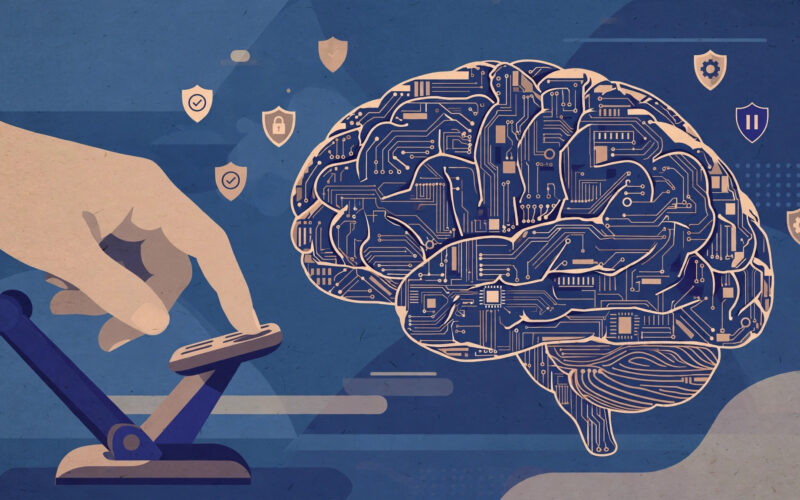
Autonomy amplifies both capability and danger. An agent that misunderstands a goal can take many wrong actions before anyone notices, booking the wrong flights or emailing the wrong people. Agents can be tricked by malicious instructions hidden in web pages or documents they read, a class of attack called prompt injection. Giving agents access to money, private data or critical systems raises the stakes of every error. This is why serious deployments wrap agents in guardrails: requiring human approval before irreversible actions, limiting which tools an agent may touch, logging every step for audit, and testing agents against adversarial scenarios before release. The industry’s emerging consensus is that agents should earn autonomy gradually, proving reliability on low-stakes tasks before touching anything important.
FAQs
How is an AI agent different from a chatbot? A chatbot produces text in response to each message. An agent pursues a goal across many steps, using tools and memory, and can take actions in external software.
Can I use AI agents today? Yes. Coding assistants, deep-research tools and automation platforms already offer agent-like behaviour, and major AI companies have begun shipping general-purpose agents to consumers.
Will agents replace human workers? They are already absorbing well-defined digital tasks. Work that needs judgement, accountability and human trust is far harder to automate, and most experts expect agents to change jobs rather than simply erase them.
Agentic AI is the moment the technology stops being a clever conversationalist and starts being a colleague: slower than the hype suggests, more capable than the sceptics admit, and most useful where its autonomy is matched with careful human oversight. The question for the next few years is not whether agents will act on our behalf, but how much freedom we are wise to give them.
Compiled by the Khabar 24h Editorial Desk from publicly available sources.
Related stories
View all →
IFA 2026: AI Moves Into Smart Glasses, Tiny Phones and Wearables
The biggest trend at IFA 2026 in Berlin is hard to miss: artificial intelligence is moving out of phones and laptops and…

Meta Rolls Out Parental Controls for Threads in India
Meta has added parental supervision controls to Threads in India, following government talks on child safety, content moderation and deepfakes.
Anthropic CEO Vows to Slow AI Releases for Safety
Anthropic CEO Dario Amodei told the UN Security Council the company will slow down AI development as much as needed to keep…

Khabar 24h Editorial Desk — our explainers are prepared by the Khabar 24h editorial team using AI-assisted research tools, and every piece is reviewed by a human editor before publishing. We do not claim original reporting: our work is turning complex topics into simple, accurate summaries. Spotted an error? Write to contact@khabar24h.com — our corrections policy aims for same-day review.
More from this author →