Finland’s Education System Explained: Why It Tops Global Rankings
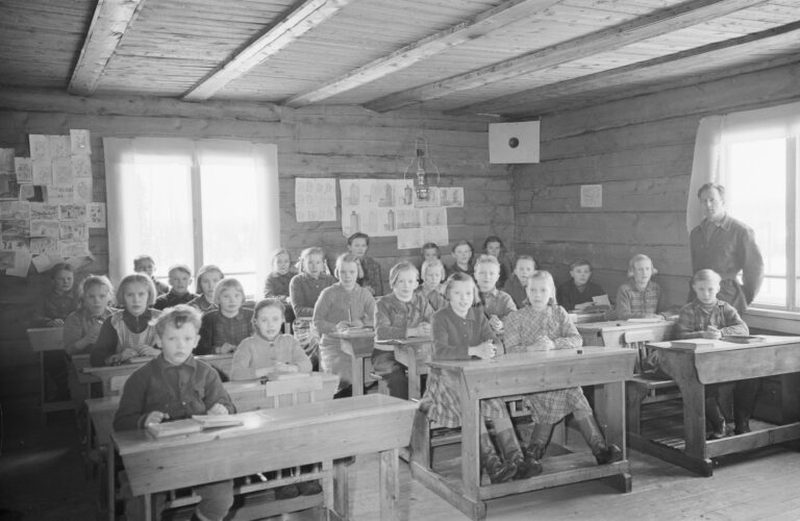
Every few years, international test results land like a thunderclap: tiny Finland, population 5.5 million, outscores almost everyone in reading, maths and science, while its children spend fewer hours in class, get less homework and face no high-stakes exams until their teens. Policymakers pilgrimage to Helsinki to learn the secret. The Finnish education system is the world’s most admired, and also its most misunderstood. Here is what it actually does, and why it works.
The results that shocked the world
Finland’s fame began with the PISA tests, the OECD’s triennial assessment of 15-year-olds. From 2000, Finland topped or nearly topped the rankings in reading, maths and science, astonishing observers because it spent moderately, tested little and started school late. The results held across cycles, and the equity was as striking as the excellence: Finland had the smallest gap between its best and worst students, and a child’s background predicted success less than almost anywhere. The miracle, researchers found, was not hothouse pressure but the opposite.
What Finnish schools actually do
The Finnish model inverts conventional wisdom. Children start school at seven, after years of play-based kindergarten. School days are short, with 15-minute breaks every hour and minimal homework. There are no standardised tests until the matriculation exam at 18; teachers assess their own pupils. Streaming by ability is avoided; struggling students get early, intensive support instead. Classes are small, meals are free and healthy, and every school has welfare teams. The system trusts children to be children, and trusts teachers as professionals.
Teachers: the respected elite
The linchpin is the teacher. Teaching in Finland is a high-status, highly selective profession: all teachers hold master’s degrees, and education programmes accept roughly one applicant in ten. Teachers design their own curricula within a national framework, choose their methods, and are trusted without inspection regimes. Pay is decent but not spectacular; the attraction is autonomy and respect. Finland bet that the quality of an education system cannot exceed the quality of its teachers, and then built the profession to prove it.
Equity as strategy
Finland’s secret weapon is not excellence but equity. Schools are overwhelmingly public and uniformly good; private schools barely exist. Funding follows need, with extra resources for immigrant and disadvantaged pupils. The comprehensive school, peruskoulu, keeps all children together through age 16, rejecting the early tracking common in Germany or the postcode lotteries elsewhere. The philosophy is explicit: the system should bring every child to a high level, not sort them. In a small country that cannot afford to waste talent, equity is economic strategy.
The criticisms and the cracks
The model is not flawless. Finland’s PISA scores have slipped from their peak, worrying policymakers. Boys, especially, underperform in reading. Integration of immigrant pupils strains resources. Some argue the system coasts on a historically homogeneous, high-trust society that others cannot replicate, and that its very success bred complacency. Recent reforms have pushed more digital learning and phenomenon-based teaching, with mixed reviews. Finland’s educators are the first to say their system is a work in progress, not a temple.
Can other countries copy Finland?
Delegations leave Helsinki inspired and usually change little, because Finland’s model rests on cultural foundations: deep trust in teachers, social equality, consensus politics, and a welfare state that keeps child poverty low. You cannot import the school without the society. But researchers say elements travel: investing in teacher quality, delaying tracking, funding equity, and ditching test mania. The real lesson of Finland may be philosophical: treat children as people, teachers as professionals, and education as a public good, and the test scores take care of themselves.
FAQs
Do Finnish students get homework? Very little by global standards; the OECD found Finnish 15-year-olds spend among the fewest hours on homework in the developed world.
When do Finnish children start school? At age seven, after universal play-based preschool, later than in most countries.
Are there private schools in Finland? Very few; almost all children attend free public comprehensive schools, which are kept uniformly strong.
Finland’s education miracle was never about tricks or spending. It was about trust: in teachers, in children, in the idea that a fair system is a strong one. In an age of testing mania, that remains a quietly radical proposition.
Source: OECD

Khabar 24h Editorial Desk — our explainers are prepared by the Khabar 24h editorial team using AI-assisted research tools, and every piece is reviewed by a human editor before publishing. We do not claim original reporting: our work is turning complex topics into simple, accurate summaries. Spotted an error? Write to contact@khabar24h.com — our corrections policy aims for same-day review.
More from this author →