Shinto Explained: Japan’s Indigenous Faith of Kami and Ritual
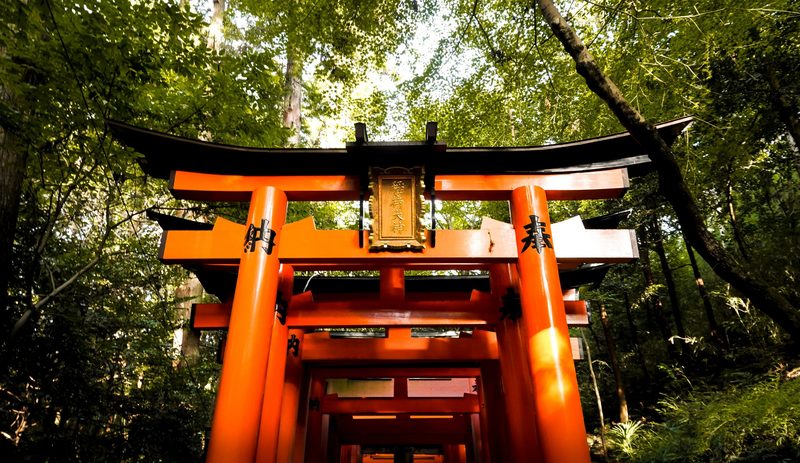
Before Buddhism arrived in Japan, before the emperors claimed divine descent, there was Shinto, the way of the kami. It has no founder, no scripture and no dogma, yet it shapes Japanese life from birth to New Year: the shrine visit for a newborn, the wedding in sacred dress, the millions who crowd shrines at midnight on New Year’s Eve. Shinto is Japan’s indigenous spirituality, a sensibility as much as a religion, and understanding it is essential to understanding Japan.
What are kami?
Kami are the sacred spirits or essences that inhabit the Shinto worldview: not gods in the Western sense, but extraordinary presences found in mountains, rivers, trees, ancestors, and remarkable people. The sun goddess Amaterasu is the most exalted, ancestress of the imperial line, but a local waterfall or an ancient tree can house kami too. The world, in Shinto, is saturated with sacredness; the task of religion is to recognise it, honour it and live in right relationship with it. This animist richness makes Shinto feel less like theology and more like attention.
Purity, ritual and the shrine
Shinto’s central religious concern is purity, kegare (impurity) versus harae (purification). Worshippers rinse hands and mouth at the temizuya font before approaching, clap twice to wake the kami, bow, and offer a coin and a prayer. Rituals mark every transition: hatsumiyamairi presents newborns to the shrine, Shichi-Go-San blesses children at ages three, five and seven, weddings unfold in solemn Shinto dress. Death, associated with impurity, is usually left to Buddhism, a division of labour the two faiths have maintained for centuries. Matsuri festivals, with their portable mikoshi shrines and street energy, are Shinto at its most joyful.
A faith without scripture
Shinto has no founder and no canonical text, though the 8th-century Kojiki and Nihon Shoki chronicles record its myths: the creation of the islands by the divine couple Izanagi and Izanami, Amaterasu’s retreat into a cave, the descent of her grandson to rule Japan. Priests inherit or train into roles rather than preaching doctrine. Belief is almost beside the point; practice is everything. This is why surveys find most Japanese do Shinto rituals while claiming no religion: Shinto is something you do, at New Year, at exam time, when passing a shrine, not something you join.
Shinto and the Japanese state
Shinto’s history darkened in the modern era. The Meiji government weaponised it as State Shinto, an ideology of emperor worship that fuelled militarism and the Pacific War. After 1945 the occupation dismantled the state apparatus and the emperor renounced divinity, but controversies linger, above all the Yasukuni Shrine, which honours war dead including convicted war criminals, and whose visits by prime ministers enrage China and Korea. The debate exposes Shinto’s double nature: intimate folk spirituality and, in its modern political form, a carrier of nationalism.
Shinto and Buddhism: a 1,400-year marriage
For most of Japanese history Shinto and Buddhism were not rivals but partners, in the syncretic blend called shinbutsu-shugo. Temples housed shrines, kami were understood as local forms of Buddhas, and Japanese people moved between them by occasion: Shinto for birth and celebration, Buddhism for death and ancestors. The Meiji state forcibly separated them, but popular practice never fully complied. Today’s Japanese religious life remains pragmatically plural, a wedding at a shrine, a funeral at a temple, Christmas cake in December, and few see any contradiction.
Shinto in contemporary Japan
Shinto thrives in the details of modern life: the omamori amulets students buy before exams, the ema prayer plaques dense with wishes, the salarymen stopping at shrines before big meetings, the 3 million visitors to Meiji Shrine each New Year. Environmentalists find in its reverence for nature a native ecological ethic. As Japan debates identity in a globalising age, Shinto offers continuity without creed, a way of being Japanese that asks for ritual, not belief. The kami, it seems, are in no hurry to leave.
FAQs
What is the difference between Shinto and Buddhism? Shinto is Japan’s native kami-centred tradition focused on purity and this-worldly blessings; Buddhism, imported from Asia, focuses on enlightenment and handles funerals and ancestors.
Do Japanese people consider themselves religious? Most say they have no religion, yet the vast majority practise Shinto and Buddhist rituals at life’s key moments.
What happens at a Shinto wedding? A solemn ceremony before the kami with sake-sharing rites, usually followed by a Western-style reception.
Shinto is a reminder that religion need not mean belief: it can mean attention, gratitude and ritual done beautifully. In the hush of a shrine forest, with the city humming beyond the trees, the way of the kami still makes its quiet claim.
Source: Japan Times

Khabar 24h Editorial Desk — our explainers are prepared by the Khabar 24h editorial team using AI-assisted research tools, and every piece is reviewed by a human editor before publishing. We do not claim original reporting: our work is turning complex topics into simple, accurate summaries. Spotted an error? Write to contact@khabar24h.com — our corrections policy aims for same-day review.
More from this author →