Winter Light Festivals Around the World Explained: Lanterns, Luminarias and Hanukkah Lights
Every culture that endures a dark winter has invented a festival of light to defy it. As days shrink toward the solstice, cities and villages across the northern hemisphere ignite lanterns, candles, bonfires and illuminations, each carrying its own story of hope, faith or sheer stubbornness. The winter light festivals of the world look different, but they share a single ancient logic: when the sun retreats, humans make their own.
China’s Lantern Festival
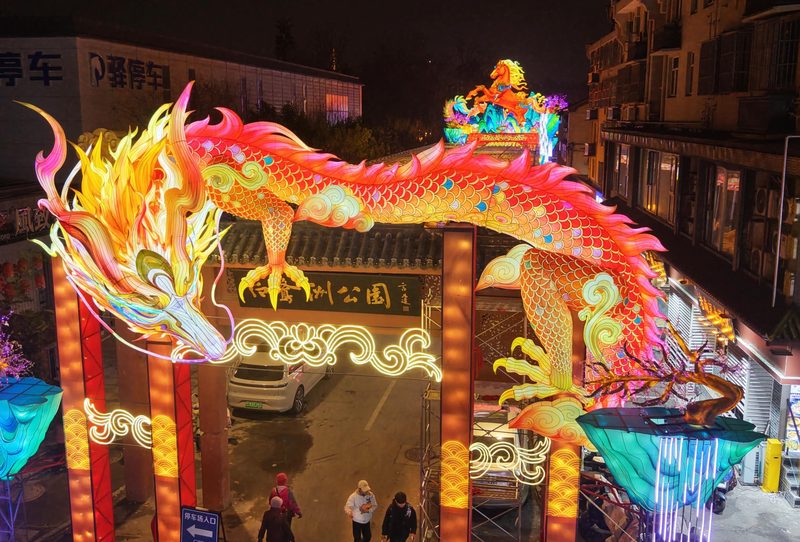
The Lantern Festival, Yuanxiao, closes the Lunar New Year celebrations on the first full moon of the year. Cities fill with glowing lanterns in every imaginable shape, dragons, palaces, cartoon characters, while families eat sweet tangyuan dumplings and solve riddles written on lanterns. Its roots reach back two millennia to Buddhist and imperial traditions of honouring the new year’s first moon. Modern festivals like Zigong’s turn whole parks into luminous dreamscapes, drawing millions of visitors to what may be the world’s most spectacular lantern show.
Hanukkah: the festival of lights
Hanukkah commemorates the Maccabean revolt of the 2nd century BCE, when, tradition holds, a single day’s supply of temple oil burned for eight. Jews light the nine-branched menorah one candle at a time over eight nights, placing it in windows as a public declaration of the miracle. Falling near the solstice, it carries the universal winter theme of light persisting against darkness, alongside its specific story of religious freedom. Potato latkes fried in oil, dreidel games and gifts, especially where Christmas looms large, complete a festival that is both ancient and constantly renewed.
Diwali and the lights of South Asia
Though autumnal rather than midwinter, Diwali belongs to the same family: the Hindu festival of lights celebrating the victory of light over darkness and good over evil. Millions of diyas, small oil lamps, outline homes, temples and rivers, while fireworks fill the sky. Its stories vary by region, Rama’s return to Ayodhya in the north, Krishna’s victory in the south, but the symbolism is constant. For the Sikh and Jain communities it carries its own meanings, making Diwali one of the most widely celebrated light festivals on Earth.
Northern fire and Christian light
Europe’s winter festivals layer Christian and pagan traditions. St. Lucia’s Day in Scandinavia crowns a girl in candles to carry light through the darkest month. Germany’s Christmas markets glow with electric descendants of candlelit trees, a tradition Germany gave the world. In the American Southwest, luminarias, paper bags weighted with sand and lit by candles, line streets and churches on Christmas Eve, a tradition with roots in Spanish colonial New Mexico. Up Helly Aa in Shetland ends the season with a burning Viking galley, fire as pure spectacle.
Why light festivals are booming
Light festivals are growing fast as tourism engines and civic rituals. Lyon’s Fete des Lumieres, Amsterdam’s Light Festival and countless botanical garden illuminations draw millions and fortunes in visitor spending. LED technology made large-scale light art cheap and programmable, turning whole districts into canvases. Psychologists note the festivals answer a real need: winter darkness correlates with low mood, and communal light is a proven antidote. The ancient instinct, it turns out, scales beautifully.
The science of light in the dark
There is biology behind the glow. Short winter days disrupt circadian rhythms and serotonin production, contributing to seasonal low mood in millions. Bright light therapy is an evidence-based treatment, and researchers find that communal outdoor light experiences lift spirits beyond the photons alone. Festival organisers increasingly cite wellbeing as well as tourism in their planning. The ancients who lit solstice fires to coax back the sun were wrong about the astronomy and right about the psychology.
FAQs
What is the oldest winter light festival? Traditions like the Roman Saturnalia and various solstice fires predate the surviving festivals by millennia; among current ones, Hanukkah and Lunar New Year lantern customs are over 2,000 years old.
Why do so many festivals cluster in winter? The winter solstice is the year’s darkest point, and agrarian societies everywhere marked it with rituals to encourage the sun’s return.
What are luminarias? Small paper-bag lanterns lit by candles, traditionally lining streets in New Mexico on Christmas Eve.
From a single diya to a city of LEDs, winter light festivals say the same thing in every language: the dark is temporary, and we will get through it together, preferably with something delicious to eat.
Compiled by the Khabar 24h Editorial Desk from publicly available sources.

Khabar 24h Editorial Desk — our explainers are prepared by the Khabar 24h editorial team using AI-assisted research tools, and every piece is reviewed by a human editor before publishing. We do not claim original reporting: our work is turning complex topics into simple, accurate summaries. Spotted an error? Write to contact@khabar24h.com — our corrections policy aims for same-day review.
More from this author →