The International Criminal Court Explained: How the ICC Prosecutes War Crimes
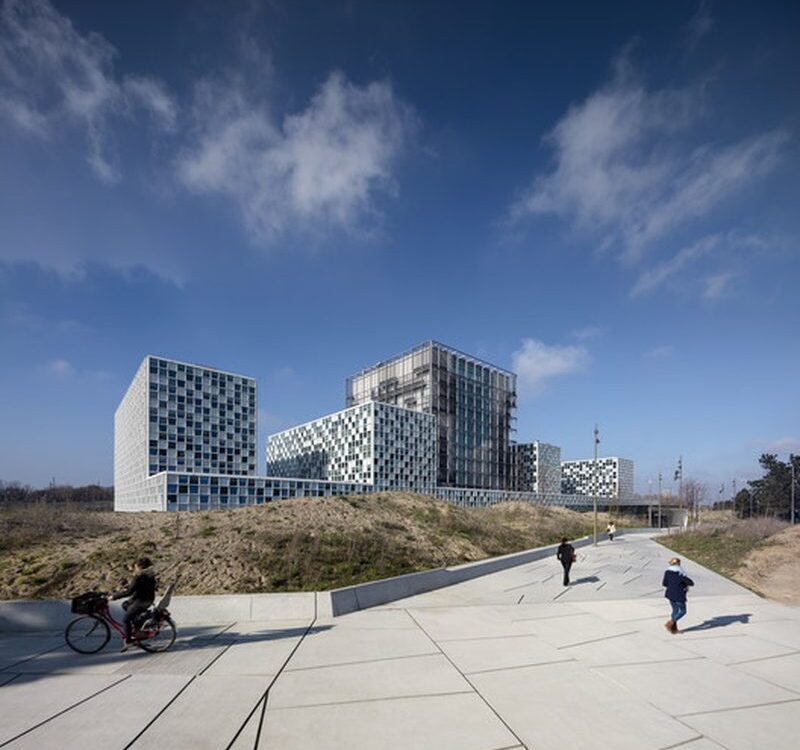
The International Criminal Court in The Hague is the world’s court of last resort for atrocities: genocide, war crimes, crimes against humanity and aggression. Created in 2002, it has convicted warlords, a former head of state, and issued arrest warrants for sitting leaders, including Vladimir Putin. It has also been accused of bias, overreach and impotence in equal measure. This explainer shows how the ICC works, what it has achieved, and why the world’s great powers refuse to join it.
How the court was created
The ICC was born from the ad hoc tribunals for Yugoslavia and Rwanda in the 1990s, which proved international justice was possible but slow and selective. The 1998 Rome Statute created a permanent court, which began operating in 2002 when 60 states ratified it. Today 124 countries are members, spanning Europe, Africa, Latin America and Asia-Pacific. Crucially, the biggest powers, the United States, China, Russia and India, are not members, a gap that shadows everything the court does. The ICC prosecutes individuals, not states, and only for crimes committed after 2002.
How cases work
The ICC is complementary: it steps in only when national courts are unwilling or unable to act. Cases reach it three ways: referral by a member state, referral by the UN Security Council, or the prosecutor’s own investigation with judges’ approval. Trials follow adversarial procedures with defence rights, and convictions require proof beyond reasonable doubt. Sentences are served in member-state prisons; the court has no death penalty. The process is glacially slow: investigations take years, trials take years more, and suspects like Sudan’s Omar al-Bashir evaded arrest for over a decade despite warrants.
Landmark cases
The court’s record is modest but real. It convicted Congolese warlord Thomas Lubanga for child soldiers, sentenced Bosco Ntaganga to 30 years, and, in its most significant verdict, convicted former Congolese vice-president Jean-Pierre Bemba, though that was overturned on appeal. The 2023 arrest warrant for Vladimir Putin over deportation of Ukrainian children was historic: the first against a permanent Security Council member’s leader, sharply restricting his travel. Warrants over Gaza, for Israeli and Hamas leaders alike, triggered fury in Washington and Jerusalem. Each big case tests whether international law applies to the powerful or only the defeated.
- 124 member states; the US, China, Russia and India are not members.
- Crimes covered: genocide, war crimes, crimes against humanity, aggression.
- First warrants against a P5 leader: Vladimir Putin, March 2023.
- The court has secured a handful of convictions in two decades of operation.
The bias debate
For years, every ICC investigation targeted Africa, feeding accusations of neo-colonial justice. The court replies that African states referred many cases themselves, and that great-power non-membership, not bias, explains the geography. The newer investigations into Afghanistan, Palestine, Ukraine and the Philippines show a court trying to look beyond Africa, and each has brought ferocious political blowback, including US sanctions on ICC officials. The paradox is sharp: the court is attacked as biased when it focuses on the weak and as overreaching when it touches the strong.
Does it deter?
The evidence is thin but suggestive: some studies find ICC scrutiny moderates wartime behaviour, and the warrants undeniably constrain leaders’ movements. But deterrence assumes rational calculators, and the court’s enforcement depends entirely on states: it has no police, and suspects travel freely through non-member countries. Bashir visited ICC members with impunity for years. The court’s true power may be normative: establishing that atrocity is a crime, not a prerogative, and creating a record that outlasts the politics of the moment.
FAQs
Can the ICC try Americans or Russians? It claims jurisdiction over crimes on member-state territory regardless of nationality, which is why non-members call it illegitimate.
Why isn’t the US a member? Washington fears politically motivated prosecutions of its soldiers and officials; it signed the Rome Statute but never ratified it.
Has the ICC convicted a head of state? It convicted former Liberian president Charles Taylor, though that was the Special Court for Sierra Leone; ICC heads-of-state cases have collapsed or stalled.
The ICC is an extraordinary idea imperfectly realised: a permanent court for humanity’s worst crimes, hamstrung by the refusal of the powerful to submit to it. Its courtroom in The Hague will keep trying cases the world would rather forget, which is precisely the point.
Compiled by the Khabar 24h Editorial Desk from publicly available sources.

Khabar 24h Editorial Desk — our explainers are prepared by the Khabar 24h editorial team using AI-assisted research tools, and every piece is reviewed by a human editor before publishing. We do not claim original reporting: our work is turning complex topics into simple, accurate summaries. Spotted an error? Write to contact@khabar24h.com — our corrections policy aims for same-day review.
More from this author →