How Connected Cars Work: The Software Running Inside Modern Vehicles
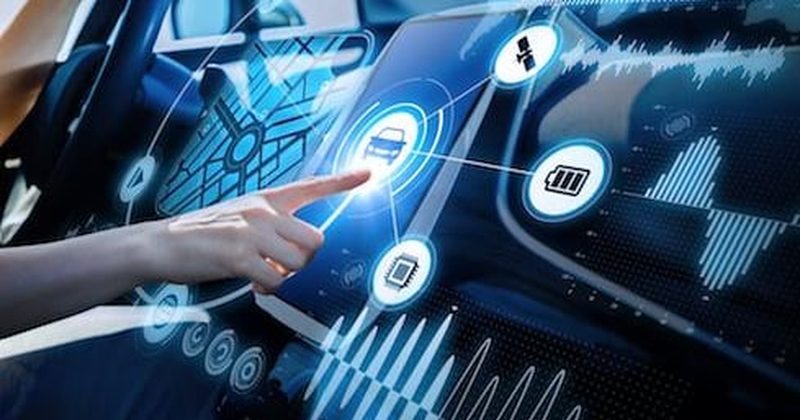
A modern car contains around 100 million lines of software code, more than a passenger jet, managed by dozens of onboard computers talking over internal networks. It navigates with satellite precision, brakes before you react, updates itself overnight like a phone, and phones home with data about everywhere you go. The connected car, the vehicle as an internet device, is now mainstream in India, from Tata’s connected SUVs to MG’s internet-inside branding. Understanding how connected cars work means understanding the software, the connectivity and the data flows running inside the machine in your driveway.
What makes a car “connected”?
A connected car has an embedded cellular modem, essentially a smartphone built into the dashboard, linking it to the manufacturer’s cloud servers. Through this link the car sends telemetry, location, speed, battery or fuel status, diagnostic codes, and receives commands and updates in return. Your phone app talks to the same cloud, letting you lock doors, check fuel, locate the car or pre-cool the cabin from anywhere. Inside, the car’s systems communicate over networks like CAN bus and automotive Ethernet, with a central gateway controlling what talks to what. The infotainment screen is just the visible tip: beneath it, software manages the engine, brakes, steering assistance and battery, increasingly consolidated onto a few powerful central computers rather than dozens of small controllers.
What can connected cars actually do?
The feature list has grown far beyond novelty.
- Remote control: lock, unlock, start climate control and check status from your phone, from anywhere with internet.
- Live tracking and geofencing: see the car’s location in real time and get alerts if it leaves a designated area, popular with parents and fleet owners.
- Over-the-air updates: manufacturers fix bugs and add features via software downloads, the way phones do, without a service visit.
- Emergency response: automatic crash detection can call emergency services with your location, a proven lifesaver.
- Predictive maintenance: the car monitors its own health and warns you about a weakening battery or overdue service before failure.
- Stolen vehicle tracking: immobilisation and location sharing help police recover stolen cars faster.
How do over-the-air updates work?
Over-the-air (OTA) updates are the connected car’s superpower and its biggest risk. Like a phone update, new software downloads, verifies itself cryptographically, installs, often overnight, and rolls back if something fails. Tesla pioneered the idea, improving range, acceleration and even adding features years after purchase. Indian manufacturers now offer OTA for infotainment widely, and increasingly for deeper vehicle systems. The engineering challenge is safety: updating the software that controls brakes or steering demands far more rigour than updating a music app, with redundant systems and strict validation. Regulators are catching up too, requiring manufacturers to document and secure their update processes.
What data does your car collect?
This is the uncomfortable part. Connected cars are among the most data-hungry consumer products ever sold: continuous location history, driving behaviour including speed and braking patterns, cabin microphone and camera data in some models, phone contacts synced via Bluetooth, and even weight sensors that can infer passenger counts. Manufacturers say this data improves safety, enables features and trains driver-assistance systems. Privacy researchers and regulators note that it is also immensely valuable for insurance pricing, advertising and law enforcement requests. India’s data protection law now covers this collection in principle, but in practice few buyers read the connected-car privacy policy. At minimum, review what your car’s app shares, disable data sharing you do not need, and think twice before syncing your entire contact list to a rental car.
Can connected cars be hacked?
Any computer with a network connection is theoretically hackable, and cars are no exception. Security researchers have demonstrated remote takeovers of infotainment and, in controlled settings, deeper systems, prompting the industry to invest heavily in automotive cybersecurity: encrypted communications, intrusion detection on internal networks, and bug-bounty programmes. Real-world malicious car hacking remains extremely rare, partly because the payoff is low compared to the difficulty, but the attack surface grows with every new feature. The practical advice mirrors phone security: install software updates promptly, use strong unique passwords for car apps, and be cautious with third-party dongles plugged into the diagnostic port.
FAQs
Do connected features work without a subscription? Basic connectivity is often free for a few years, but many manufacturers charge annual subscriptions for remote features and live services after the trial period. Check before buying.
Can I use a connected car without the app? Yes. The car drives normally; you simply lose remote features and tracking. Some data collection may continue regardless, so check privacy settings.
Will my car spy on me for insurance? Usage-based insurance using driving data exists and is opt-in. But the data exists whether or not you opt in, which is why privacy settings deserve your attention.
The connected car turns the automobile from a mechanical product into a software platform, with all the benefits and baggage that implies: features that improve overnight, and data flows that deserve scrutiny. The winners in this transition will be buyers who enjoy the connectivity while staying in charge of it.
Compiled by the Khabar 24h Editorial Desk from publicly available sources.
Related stories
View all →
Macau Customs Seizes Two RTX 5090 Cards in Smuggling Bust
Two Nvidia GeForce RTX 5090 graphics cards were seized by Macau Customs during a crackdown on cross-border smuggling, according to local media…
Thieves Steal Nvidia Trailers, Find 20 Tons of Sand
Thieves who stole two trailers branded with the Nvidia logo got a surprise: each was loaded with about 20,000 pounds of sand.…
Amazon drones drive Texas neighborhood mad with noise
Residents near Amazon’s drone delivery hub in College Station, Texas, say the company’s delivery drones have turned their neighborhood into a daily…

Khabar 24h Editorial Desk — our explainers are prepared by the Khabar 24h editorial team using AI-assisted research tools, and every piece is reviewed by a human editor before publishing. We do not claim original reporting: our work is turning complex topics into simple, accurate summaries. Spotted an error? Write to contact@khabar24h.com — our corrections policy aims for same-day review.
More from this author →