Greenland Explained: Ice, Autonomy and Arctic Geopolitics
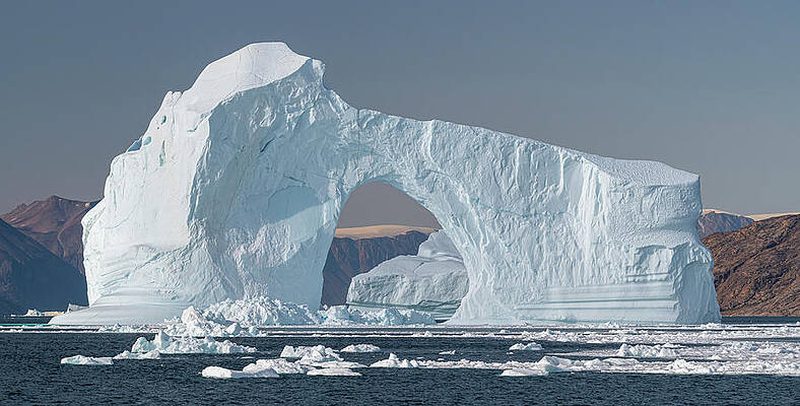
Greenland is the world’s largest island and one of its least populated: 56,000 people on 2.1 million square kilometres, 80 per cent of it buried under ice. It is also suddenly one of the most geopolitically coveted places on earth, courted by Washington, eyed by Beijing, and steadily moving toward independence from Denmark. Beneath the ice lie minerals the world needs; above it, shipping lanes the world wants. This explainer covers the ice, the autonomy and the Arctic great game.
The ice and what it holds
The Greenland ice sheet is the second-largest body of ice on the planet, up to three kilometres thick, holding enough water to raise global sea levels by about seven metres if it melted entirely. It is melting faster than ever, losing hundreds of billions of tonnes a year, making Greenland the single largest contributor to sea-level rise. The melt is a catastrophe for the climate and an opportunity for miners: retreating ice exposes deposits of rare earths, uranium, zinc and other minerals critical for batteries and electronics. Greenland’s government sees mining as the economic foundation for independence; environmentalists see it as trading one crisis for another.
How autonomy works
Greenland is part of the Kingdom of Denmark but governs itself in almost everything except foreign policy, defence and currency. The 2009 Self-Government Act recognised Greenlanders as a people with the right to independence, and gave Nuuk control over natural resources. Denmark still pays an annual block grant worth roughly half the Greenlandic budget, the golden handcuffs of autonomy. Inuit Greenlanders, about 90 per cent of the population, have steadily expanded self-rule: the capital Nuuk is a modern Nordic town, Greenlandic is the official language, and independence is the stated goal of most parties, even if the economics remain daunting.
Why great powers care
Greenland’s location is its superpower. It sits between North America and Europe, astride emerging Arctic shipping routes and beneath missile flight paths, which is why the US has operated Thule Air Base there since the Cold War. President Trump repeatedly floated buying Greenland, an idea Denmark called absurd but which revealed Washington’s anxiety about Chinese and Russian Arctic ambitions. China has courted Greenland with mining investments and research stations, prompting Danish and American pressure to block deals. Russia, meanwhile, is militarising its own Arctic coastline. For Nuuk, the attention is leverage: playing suitors against each other to extract the best deal.
- Population: about 56,000, mostly Inuit, on the world’s largest island.
- The ice sheet holds around 7 metres of potential sea-level rise.
- Denmark’s annual grant covers roughly half of Greenland’s public budget.
- Thule Air Base (Pituffik) is the US military’s northernmost installation.
The independence question
Almost all Greenlandic parties favour eventual independence; the disagreement is over timing and economics. Fishing, the economic mainstay, cannot fund a sovereign state at Danish welfare levels, which is why minerals and tourism are cast as the future. But mining projects have repeatedly stalled over environmental opposition, most dramatically the 2021 election that turned on a rare-earths mine and brought a left-green government to power. Young Greenlanders are impatient, but the fiscal maths is sobering: independence without the Danish grant means either a mining boom, a new patron, or sharp austerity. Denmark, for its part, has shifted from resisting independence to managing it gracefully.
Climate frontline
Greenlanders live the climate crisis in real time: thinning sea ice disrupting traditional hunting, meltwater reshaping fjords, and villages threatened by tsunamis from collapsing glaciers. Yet the island is also positioning itself as part of the solution, offering the minerals for the green transition and vast hydropower potential. The paradox is sharp: the world needs Greenland’s resources to decarbonise, but extracting them risks the pristine environment Greenlanders cherish. How Nuuk resolves that tension will shape not just the island’s future but the ethics of the energy transition itself.
FAQs
Is Greenland independent? No. It is an autonomous territory of Denmark with self-government in most areas and a recognised right to declare independence.
Why did Trump want to buy Greenland? For its strategic Arctic location and mineral resources; Denmark rejected the idea, but it highlighted great-power competition over the island.
How fast is the ice sheet melting? It is losing hundreds of billions of tonnes of ice per year, making it the largest single contributor to global sea-level rise.
Greenland is where climate change, decolonisation and great-power rivalry meet on a single frozen island. Its 56,000 people hold leverage far beyond their numbers, and the choices they make about ice, minerals and independence will echo well beyond the Arctic.
Compiled by the Khabar 24h Editorial Desk from publicly available sources.

Khabar 24h Editorial Desk — our explainers are prepared by the Khabar 24h editorial team using AI-assisted research tools, and every piece is reviewed by a human editor before publishing. We do not claim original reporting: our work is turning complex topics into simple, accurate summaries. Spotted an error? Write to contact@khabar24h.com — our corrections policy aims for same-day review.
More from this author →