Hong Kong Explained: What Remains of ‘One Country, Two Systems’
In 1997, Britain handed Hong Kong back to China under a promise that captivated the world: one country, two systems, with the city’s freedoms guaranteed for 50 years. For two decades Hong Kong thrived as Asia’s freest economy and a haven of free speech under Chinese sovereignty. Then came the protest years, the 2020 national security law, and a transformation so swift that many now ask what, if anything, remains of the original bargain. This explainer traces what happened to Hong Kong.
The handover bargain
The 1984 Sino-British Joint Declaration promised that Hong Kong’s capitalist system, rule of law, free press and civil liberties would remain unchanged until 2047. The Basic Law, the city’s mini-constitution, guaranteed rights like free speech and assembly, an independent judiciary, and eventual universal suffrage as an ultimate aim. For years the formula seemed to work: Hong Kong remained a global financial centre, its courts were respected worldwide, and its media was the freest in Asia. Beijing mostly kept its distance, and Hong Kongers enjoyed freedoms mainland Chinese could only envy.
The protest years
The unraveling came in waves. In 2003, half a million people marched against a proposed security law, forcing its withdrawal. In 2014, the Umbrella Movement occupied streets for 79 days demanding genuine universal suffrage, and failed. In 2019, a proposed extradition bill that would have allowed suspects to be sent to mainland China sparked protests of up to two million people, nearly a third of the population, which evolved into a broader pro-democracy uprising. The protests were met with police crackdowns, and by early 2020 the movement had been suppressed but the underlying demands unmet. Beijing concluded that patience had failed.
What the security law changed
In June 2020, Beijing imposed a national security law on Hong Kong directly, bypassing the local legislature. The law criminalises secession, subversion, terrorism and collusion with foreign forces in sweeping terms, with penalties up to life imprisonment, and it created mainland security offices operating openly in the city. The effect was immediate and sweeping: leading activists were jailed, the pro-democracy newspaper Apple Daily was forced to close, civil society groups disbanded by the dozens, and the legislature was purged of opposition. A 2024 follow-up law, Article 23, closed remaining gaps. Elections were redesigned so only vetted patriots could run.
- Over 280 people have been arrested under the national security law, with most leading democrats jailed or exiled.
- Hong Kong’s press freedom ranking has plunged in global indexes since 2020.
- Tens of thousands of residents have emigrated to Britain, Canada and elsewhere under special visa schemes.
- The 50-year guarantee technically runs until 2047, but its substance was hollowed out decades early.
What remains
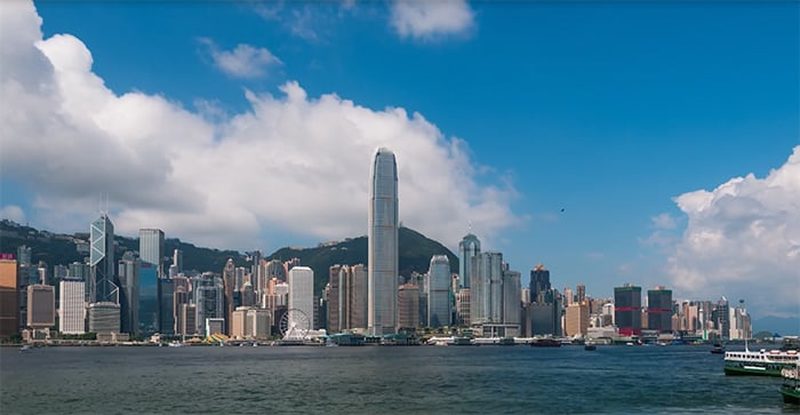
Hong Kong is not a mainland Chinese city, at least not yet. The Hong Kong dollar, low taxes, free capital flows and an independent judiciary in commercial cases remain. The common-law courts still function, though national security cases are tried under different rules with handpicked judges. Daily life for apolitical residents feels largely normal: the restaurants are full, the markets buzz, the skyline gleams. What has vanished is the political freedom that made Hong Kong exceptional: free elections with real choice, a raucous free press, and the right to protest. The economy that depended on the city’s reputation for rule of law is now adapting to a new reality where politics is off-limits.
The world’s verdict
Western governments condemned the crackdown and offered refuge to Hong Kongers; Britain called the security law a breach of the Joint Declaration. Beijing insists it restored order and that Hong Kong is more prosperous and stable than ever, pointing to Macau as proof the formula works with cooperative locals. Financial markets have rendered a mixed verdict: Hong Kong remains a major financial centre, but Singapore has gained ground as an alternative Asian hub. For Taiwan, watching across the strait, Hong Kong’s fate became the ultimate cautionary tale about Beijing’s promises.
FAQs
What was ‘one country, two systems’? Deng Xiaoping’s formula promising Hong Kong 50 years of unchanged capitalist system and freedoms after the 1997 handover; it was supposed to run until 2047.
Is Hong Kong still a financial centre? Yes, it remains one of the world’s top financial hubs, though its edge over Singapore has narrowed and some firms have shifted staff.
Can people still protest in Hong Kong? Effectively no. Public protest now risks prosecution under security laws, and authorised demonstrations have virtually disappeared.
Hong Kong’s tragedy is that of a promise kept in form and broken in substance. The skyline is the same, the systems mostly function, but the freedoms that defined the city have been extinguished a generation before the guarantee expired. What remains is a question that haunts every similar bargain: what is autonomy worth when one party can rewrite the terms?
Compiled by the Khabar 24h Editorial Desk from publicly available sources.

Khabar 24h Editorial Desk — our explainers are prepared by the Khabar 24h editorial team using AI-assisted research tools, and every piece is reviewed by a human editor before publishing. We do not claim original reporting: our work is turning complex topics into simple, accurate summaries. Spotted an error? Write to contact@khabar24h.com — our corrections policy aims for same-day review.
More from this author →