What Is Ray Tracing? How Modern Games Create Realistic Graphics
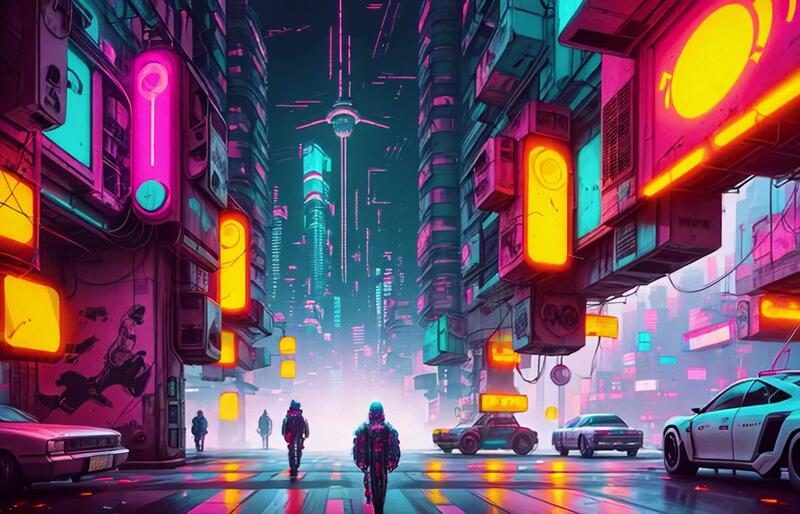
Pause a modern blockbuster game and the scene could pass for a film still: sunlight scattering through dusty air, reflections rippling across wet streets, shadows softening realistically at their edges. This leap in visual realism has a name: ray tracing, a rendering technique borrowed from Hollywood that simulates the actual physics of light. Once confined to movie studios where a single frame took hours to render, ray tracing now runs in real time on gaming GPUs. Understanding how it works explains both the beauty and the brutal hardware demands of modern gaming graphics.
What is ray tracing?
Ray tracing renders images by tracing the path of light rays, backwards, from the camera into the scene. For each pixel on screen, the renderer shoots a virtual ray into the 3D world; when the ray hits an object, the renderer calculates how light would interact there, what colour the surface is, whether it reflects or refracts, what shadows fall on it, and follows bounced rays as they scatter to other surfaces. Do this millions of times per frame and you get lighting that behaves like the real world: accurate reflections, true shadows, light bleeding naturally around corners. Traditional game rendering, called rasterisation, fakes these effects with clever shortcuts; ray tracing computes them, which is why its results look fundamentally more believable.
How is it different from traditional graphics?
Rasterisation, the technique games used for decades, draws 3D objects as triangles projected onto the screen, then applies approximations for lighting: shadow maps that fake shadows, screen-space reflections that only reflect what is currently visible, baked-in lighting that cannot change. These tricks are fast but visibly wrong in edge cases, reflections that vanish, light that leaks through walls. Ray tracing replaces the tricks with simulation: shadows are where light genuinely cannot reach, reflections show the actual scene including off-screen objects, and global illumination lets light bounce realistically between surfaces. The visual difference is most striking in scenes with complex lighting: neon-lit rainy streets, sun-dappled forests, interiors with light spilling through doorways.
Why does ray tracing need such powerful hardware?
Because the maths is enormous. A 4K frame has over 8 million pixels; tracing multiple rays per pixel, each bouncing several times through complex geometry, means billions of ray-triangle intersection calculations per frame, sixty times a second. For years this was impossible in real time, which is why films rendered frames over hours on server farms. The breakthrough came with dedicated hardware: Nvidia’s RTX GPUs introduced RT cores, specialised units that accelerate exactly these intersection calculations, with AMD and Intel following. Even so, full ray tracing at high resolutions overwhelms current hardware, so games use hybrid approaches: ray tracing for the lighting effects where it matters most, rasterisation for everything else, plus AI upscaling like DLSS that renders at lower resolution and intelligently reconstructs the full image.
Ray tracing beyond games
Games are the showcase, but the technology’s roots and future spread wider.
- Film and animation: Pixar and Hollywood studios have ray-traced for decades; real-time advances now accelerate their workflows.
- Architecture and design: ray-traced visualisation lets clients walk through photorealistic buildings before construction.
- Automotive: car configurators render showroom-quality imagery of customised vehicles instantly.
- Professional visualisation: product design, lighting planning and virtual production for film all use real-time ray tracing.
- Consoles: the PlayStation 5 and Xbox Series X include ray-tracing hardware, bringing the effects to living rooms.
Should you enable ray tracing?
The honest gamer’s answer: it depends on your hardware and priorities. On a capable RTX-class GPU, ray tracing transforms atmospheric games, cyberpunk cities, horror titles, racing games, and is worth the 30 to 50 per cent performance cost, especially paired with DLSS or FSR upscaling. On modest hardware, the frame-rate hit can make games feel sluggish, and rasterised lighting in well-made games still looks excellent. Competitive multiplayer players should leave it off: frame rate wins gunfights, not reflections. As GPUs advance, the trade-off shrinks every generation; ray tracing is clearly the future of game lighting, just not yet a free one. Try it per game, measure the frame rate, and let your eyes and your reflexes vote.
FAQs
What GPU do I need for ray tracing? Nvidia RTX 3060 or better, AMD RX 6700 XT or better, for a good 1080p experience; higher resolutions demand stronger cards. Always pair with upscaling enabled.
Does ray tracing work on consoles? Yes, in limited form. PS5 and Xbox Series X support ray-traced effects, usually at 30 fps or with reduced resolution, a taste rather than the full PC experience.
Will ray tracing replace rasterisation? Eventually, likely. The industry trajectory points toward fully ray-traced rendering, but hybrid techniques will dominate for years as hardware catches up.
Ray tracing is what happens when games stop faking light and start simulating it: a decades-old film technique, miniaturised onto silicon, running sixty times a second in your living room. The reflections in that puddle are not painted on; they are computed, ray by ray, and that is why they look real.
Source: Digital Foundry

Khabar 24h Editorial Desk — our explainers are prepared by the Khabar 24h editorial team using AI-assisted research tools, and every piece is reviewed by a human editor before publishing. We do not claim original reporting: our work is turning complex topics into simple, accurate summaries. Spotted an error? Write to contact@khabar24h.com — our corrections policy aims for same-day review.
More from this author →