How EV Charging Works in India: Home Chargers, Fast Chargers and Battery Swapping
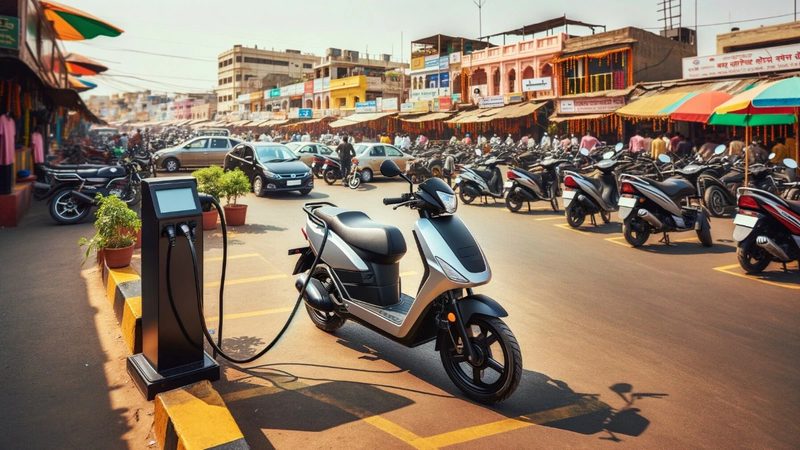
Ask an EV owner what matters most and the answer is rarely the car: it is the charging. India’s electric vehicle story is really three infrastructure stories running in parallel, slow home charging that covers daily driving, fast public chargers for highways and cities, and battery swapping for two- and three-wheelers. Each works differently, costs differently, and suits different users. With the charging network expanding rapidly but unevenly across the country, understanding how EV charging works in India is the single most practical knowledge a prospective buyer can have.
Home charging: the foundation of EV ownership
Around the world, most EV charging happens at home, and India is no exception. The simplest option is the portable charger supplied with the car, which plugs into a standard 15-ampere socket and adds roughly 10 to 15 km of range per hour, slow, but enough to refill a typical day’s driving overnight. Most car owners graduate to a dedicated AC wall box, usually 3.3 kW or 7.4 kW, installed by the dealer or an electrician, which charges two to three times faster and includes safety features like earthing protection. A full overnight charge at domestic electricity tariffs costs a fraction of a petrol fill: roughly 100 to 250 rupees for 300 km of range, depending on your state’s tariff. The catch is access: home charging needs a parking spot with power, which apartment dwellers must negotiate with their housing society, though regulations increasingly support residents’ right to install chargers.
Public fast charging: for highways and top-ups
DC fast chargers are the highway fuel stations of the EV age. Ranging from 25 kW units in cities to 120 kW-plus chargers on major corridors, they can add 100 to 300 km of range in 20 to 45 minutes, with the car dictating the actual speed. India’s fast-charging network has grown from hundreds to thousands of stations, clustered along the Delhi-Jaipur, Mumbai-Pune, Bengaluru-Chennai and other busy corridors, plus malls, offices and petrol pumps in metros. Charging costs more than at home, typically 18 to 30 rupees per kWh, but still undercuts petrol per kilometre. The practical skills are planning, apps like those from Tata Power, Statiq, ChargeZone and others show live charger status, and etiquette: fast chargers slow dramatically past 80 per cent, so charge to 80 and free the plug for the next driver.
Battery swapping: India’s two-wheeler answer
For electric scooters and three-wheelers, India pioneered a different model: battery swapping. Instead of waiting to charge, riders pull into a swapping station and exchange a depleted battery for a full one in under five minutes. Companies like Sun Mobility, Battery Smart and Gogoro’s Indian partners operate networks aimed at delivery riders and fleet operators, for whom downtime is lost income. Swapping solves two problems at once: it removes the high upfront battery cost, since users subscribe to batteries as a service, and it eliminates charging anxiety entirely. Standardisation remains the hurdle: swapping only works when many vehicles share compatible batteries, which is why it thrives in fleets and struggles as a universal consumer solution.
Connectors, standards and compatibility
India’s charging landscape speaks several plug languages, and knowing them avoids frustration.
- CCS2 is the national standard for DC fast charging of cars; nearly all new Indian EVs and public fast chargers use it.
- CHAdeMO, the Japanese standard, survives on older models like the first Nissan Leaf but is fading in India.
- Type 2 is the common AC connector for home and destination charging of cars.
- Bharat AC-001 and DC-001 were early Indian standards for low-power charging, still found on some older public stations.
- Two-wheelers mostly charge from ordinary sockets or proprietary swapping systems, with standardisation still evolving.
Before buying, confirm your car’s connector matches the chargers on the routes you actually drive.
What does charging really cost?
The economics strongly favour home charging. At typical domestic tariffs of 6 to 9 rupees per kWh, a car consuming 150 Wh per km costs about 1 to 1.4 rupees per km. Public fast charging at 20 to 28 rupees per kWh roughly triples that, still half or less than petrol. Battery swapping subscriptions for two-wheelers are priced to undercut petrol per km for delivery riders. Watch for time-of-day tariffs in some states, where night charging is cheaper, and for idle fees at public stations that penalise leaving your car plugged in after charging finishes. Over a year of typical driving, the fuel savings versus petrol run into tens of thousands of rupees.
FAQs
Can I install a home charger in an apartment? Usually yes. Government guidelines support residents’ right to install EV chargers, though you will need society permission for wiring and metering. Many dealers now handle the process.
How long does fast charging really take? Expect 20 to 45 minutes for a 20 to 80 per cent charge on a modern EV at a fast charger. The last 20 per cent is slow by design to protect the battery.
Is it safe to charge in the rain? Yes. Chargers and cars are designed with weatherproofing and safety interlocks; charging is disabled until a safe connection is confirmed.
Charging is the EV’s learning curve, and it is gentler than it looks: home charging covers the week, fast chargers cover the highway, and swapping covers the delivery fleet. Master those three, and the electric transition stops feeling like a compromise and starts feeling like an upgrade.
Compiled by the Khabar 24h Editorial Desk from publicly available sources.

Khabar 24h Editorial Desk — our explainers are prepared by the Khabar 24h editorial team using AI-assisted research tools, and every piece is reviewed by a human editor before publishing. We do not claim original reporting: our work is turning complex topics into simple, accurate summaries. Spotted an error? Write to contact@khabar24h.com — our corrections policy aims for same-day review.
More from this author →