How Electric Cars Work: Batteries, Motors and Charging Explained
Electric cars look like ordinary cars, but under the skin almost everything is different. There is no engine, no gearbox, no exhaust pipe, no fuel tank. In their place: a giant battery under the floor, one or more electric motors, and software managing it all. India is in the middle of an EV transition, with electric two-wheelers already common and electric cars from Tata, Mahindra, MG and BYD multiplying on the roads. Whether you are considering buying one or just curious, understanding how electric cars work, batteries, motors, charging and the famous “range anxiety”, is the key to seeing through both the hype and the scepticism.
The battery: the fuel tank and the price tag
The battery pack is the heart and the most expensive part of an EV, often a third or more of the car’s cost. It sits low in the floor, a flat slab of hundreds or thousands of individual lithium-ion cells wired together, which is why EVs have such spacious interiors and low centres of gravity. Capacity is measured in kilowatt-hours (kWh): a Tata Nexon EV carries around 40 kWh, premium models exceed 80 kWh. More kWh means more range, but also more weight, cost and charging time. A battery management system, essentially a dedicated computer, watches every cell’s voltage and temperature, balancing charge to maximise life and prevent the overheating that leads to fires. Modern EV batteries typically retain most of their capacity for 8 to 10 years, and warranties commonly cover 8 years or 1.6 lakh kilometres.
The motor: simpler and stronger than an engine
Electric motors are marvels of simplicity next to combustion engines: a single moving part, the rotor, spinning inside magnetic fields, versus the hundreds of parts in a petrol engine. They deliver maximum torque instantly from zero speed, which is why even modest EVs feel startlingly quick off the line. Most EVs use permanent-magnet or induction motors driving the wheels through a simple single-speed reduction gear, no multi-gear gearbox needed because motors spin happily from zero to very high revs. Efficiency is the real triumph: electric motors convert over 85 per cent of battery energy into motion, while petrol engines waste roughly two-thirds of fuel energy as heat. Fewer moving parts also means far less maintenance: no oil changes, no spark plugs, no exhaust repairs, with brakes lasting longer thanks to regenerative braking.
How does charging work?
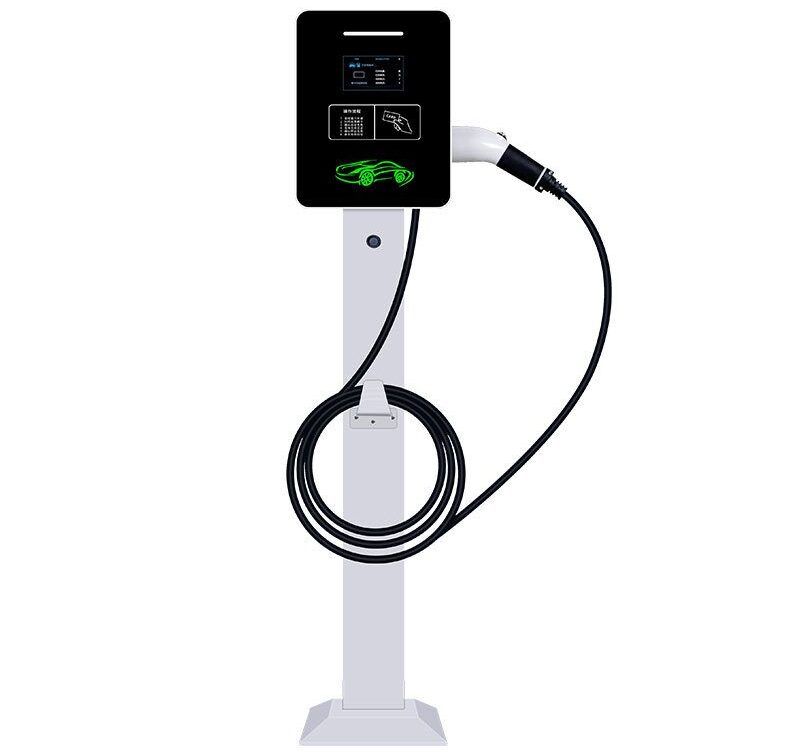
Charging an EV is refuelling in slow motion, and understanding the speeds matters more than anything. Slow AC charging from a home wall box, typically 3 to 7 kW, fills a car overnight and is how most owners charge most of the time. Faster AC and DC fast chargers, from 25 kW to over 150 kW, can add hundreds of kilometres in 30 to 60 minutes and sit along highways and in cities. Charging is not linear: batteries accept power fastest when nearly empty and slow dramatically past 80 per cent, which is why road-trippers charge to 80 and go. In India, the charging network is growing fast but remains patchy outside metros, so home or workplace charging is still the practical foundation of EV ownership, with public fast chargers for occasional long trips.
What about range anxiety?
Range anxiety, the fear of running out of charge, is the EV’s most famous psychological barrier, and it is part real and part outdated. Real, because India’s charging network is still maturing and highway trips need planning. Outdated, because the average Indian car drives under 50 km a day, trivial for any modern EV, and owners who charge at home wake up to a “full tank” every morning, something petrol owners never experience. The honest guidance: if you have home charging and mostly drive in the city, an EV is already more convenient than petrol. If you regularly drive long intercity routes through areas with sparse chargers, check the charging map on your specific routes before buying. Battery range figures also deserve scepticism: treat the ARAI-certified number as optimistic and expect 70 to 80 per cent of it in real mixed driving.
The economics: do EVs save money?
EVs cost more upfront than equivalent petrol cars, but the running maths is compelling.
- Fuel: electricity at home rates costs roughly 1 to 1.5 rupees per km versus 7 to 10 for petrol, a saving that compounds fast for high-mileage drivers.
- Maintenance: with no engine servicing, EV maintenance bills run a fraction of petrol equivalents.
- Incentives: central and state subsidies, plus lower road tax and registration in many states, narrow the purchase-price gap.
- Resale: the used-EV market is still maturing, so resale values are less certain than for petrol cars, though improving.
For drivers covering 1,500 km or more a month, the total cost of ownership already favours electric in most Indian calculations.
FAQs
Do EV batteries catch fire? Fires are rare but real, usually linked to battery damage, poor-quality cells or faulty charging. Reputable manufacturers’ battery management systems make modern EVs statistically no more fire-prone than petrol cars.
How long does the battery last? Expect 8 to 12 years of useful life in the car, with gradual capacity loss. Old EV batteries get second lives in stationary storage before recycling.
Can I charge an EV from a normal 15A home socket? Yes, with the portable charger supplied, though it is slow. A dedicated wall box is faster, safer and strongly recommended.
Electric cars are not magic and not a menace; they are a different engineering answer to the same job, trading the complexity of combustion for the simplicity of electrons. Batteries keep getting cheaper, chargers keep multiplying, and the driving experience, silent, instant, smooth, converts sceptics faster than any brochure. The transition is no longer a question of if, only of how fast.
Source: Autocar India

Khabar 24h Editorial Desk — our explainers are prepared by the Khabar 24h editorial team using AI-assisted research tools, and every piece is reviewed by a human editor before publishing. We do not claim original reporting: our work is turning complex topics into simple, accurate summaries. Spotted an error? Write to contact@khabar24h.com — our corrections policy aims for same-day review.
More from this author →