BRICS Explained: The Bloc Challenging Western Economic Dominance
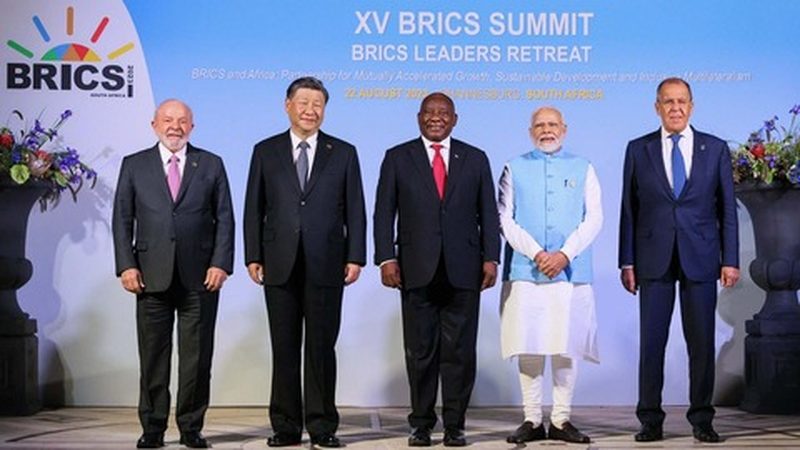
BRICS began as a bankers’ acronym and became a geopolitical project. The bloc of emerging economies, now expanded to ten full members plus partner countries, presents itself as the voice of the Global South and a challenger to Western economic dominance. Its summits draw breathless coverage, its de-dollarisation talk rattles markets, and its actual achievements remain modest. This explainer covers who is in BRICS, what it wants, and whether it can really rival the G7.
From acronym to bloc
The story starts in 2001, when a Goldman Sachs economist coined BRIC for Brazil, Russia, India and China, the big emerging markets to watch. The countries adopted the label, began meeting in 2009, added South Africa in 2010, and built institutions: the New Development Bank in Shanghai and a currency reserve pool. For years BRICS was more talk than action, but the 2024 expansion, adding Egypt, Ethiopia, Iran, the UAE and later Indonesia, transformed it into a sprawling coalition spanning the Middle East, Africa, Asia and Latin America. Saudi Arabia was invited but has kept its distance, hedging between blocs.
What BRICS wants
The bloc’s agenda has three strands. First, reform of global governance: more votes for developing countries at the IMF and World Bank, and an end to Western dominance of economic institutions. Second, financial alternatives: the New Development Bank lends in local currencies, members trade in yuan and rupees, and talk of a common currency surfaces periodically, though a real BRICS currency remains fantasy. Third, political solidarity: a platform where countries chafing at US sanctions and lectures on democracy can coordinate. Russia and China drive the anti-Western edge; India and Brazil prefer a multipolar but not anti-Western framing.
The de-dollarisation debate
BRICS talk of ditching the dollar grabs headlines, and the logic is real: US sanctions on Russia showed the world what dollar dependence costs. Members have boosted local-currency trade, and China’s yuan is gaining ground in commodities. But the dollar still dominates global trade, reserves and finance by huge margins, and BRICS members themselves hold trillions in dollar assets. Economists note that replacing the dollar requires not just will but deep, open capital markets, which China lacks. De-dollarisation is a direction, not a destination, and a distant one.
- Full members: Brazil, Russia, India, China, South Africa, Egypt, Ethiopia, Iran, UAE, Indonesia.
- Expanded BRICS represents roughly half the world’s population.
- The New Development Bank has approved tens of billions in loans since 2015.
- Internal rifts: India-China border tensions, Iran’s pariah status, and members’ competing interests.
Can it rival the G7?
On paper, expanded BRICS outweighs the G7 in population and, by purchasing-power measures, in GDP. In practice, it is far less coherent: a club containing democracies and autocracies, Chinese and Indian rivals, oil exporters and importers, cannot coordinate like the G7. Its institutions remain small; the New Development Bank is a fraction of the World Bank. The bloc’s power is less in what it builds than in what it signals: that a large part of the world wants alternatives to Western-led order, and is willing to organise to get them. That signal alone shapes how Washington, Brussels and Beijing behave.
India’s balancing act
India embodies BRICS’s contradictions: a BRICS founder that is also in the Quad with the US, Japan and Australia, buying Russian oil while deepening Western tech ties. New Delhi uses BRICS for multipolarity and development finance while resisting Chinese attempts to turn it into an anti-Western bloc. This balancing frustrates Beijing and Moscow but reflects the reality of most members: they want options, not a new hegemony. BRICS’s future likely looks like its present: a useful forum for the dissatisfied, not a rival order.
FAQs
What does BRICS stand for? Originally Brazil, Russia, India, China, South Africa; now expanded to ten members spanning four continents.
Will BRICS create its own currency? Leaders discuss it, but economists consider a common currency implausible given members’ divergent economies; local-currency trade is the realistic path.
Is BRICS anti-Western? Russia and China push that framing, but India, Brazil and others see it as a multipolarity platform, not an anti-West alliance.
BRICS matters less for what it has built than for what it represents: the organising of global discontent with Western dominance. Whether it becomes a true alternative or remains a photo-op with a bank attached will be decided by whether its divided members can want the same thing at the same time.
Compiled by the Khabar 24h Editorial Desk from publicly available sources.

Khabar 24h Editorial Desk — our explainers are prepared by the Khabar 24h editorial team using AI-assisted research tools, and every piece is reviewed by a human editor before publishing. We do not claim original reporting: our work is turning complex topics into simple, accurate summaries. Spotted an error? Write to contact@khabar24h.com — our corrections policy aims for same-day review.
More from this author →