How Computer Chips Are Made: From Sand to Silicon Explained
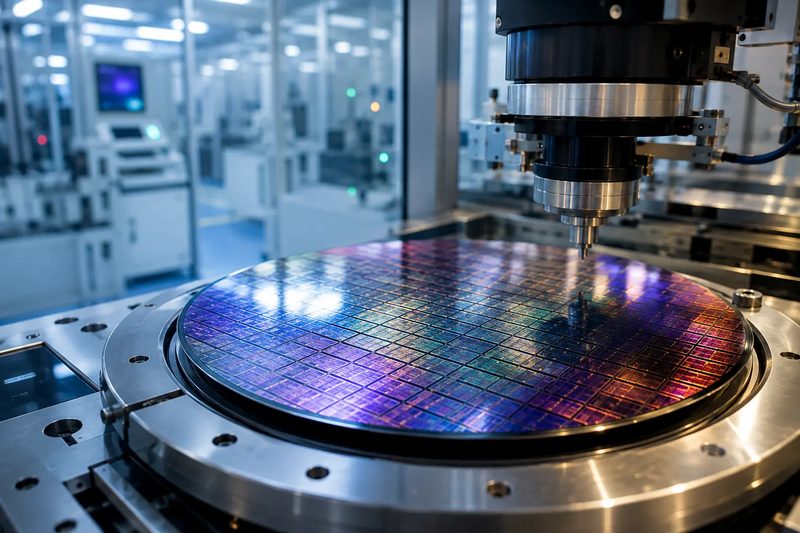
Hold a smartphone and you are holding more transistors than there are stars in the Milky Way, all packed into chips smaller than your fingernail. Each of those chips began life as ordinary sand. The journey from a beach’s worth of quartz to a finished processor is one of the most extraordinary manufacturing feats humans have ever achieved, involving temperatures hotter than lava, purity levels beyond anything in nature, and machines that print patterns smaller than a virus. Understanding how computer chips are made reveals why semiconductors became the most geopolitically contested product on earth.
It starts with sand: making pure silicon
Chips are made from silicon, the second most abundant element in the Earth’s crust, found in sand and quartz. But beach sand is far too impure: chip-grade silicon must be 99.9999999 per cent pure, a level described as “nine nines”. The purification starts by melting quartz with carbon in a furnace above 2,000 degrees Celsius to produce metallurgical-grade silicon, then converting it to gas, distilling it repeatedly, and depositing ultra-pure silicon onto thin rods. These rods are melted again in a crucible, and a small seed crystal is dipped in and slowly rotated and pulled upward, growing a single perfect crystal, a cylindrical ingot up to 300 millimetres wide and over a metre long. A single atomic flaw in this crystal would ruin the chips cut from it.
Slicing the crystal into wafers
The ingot is sliced with diamond wire saws into wafers, discs about as thick as a credit card and polished to a mirror finish flatter than almost any other manufactured surface. A 300 mm wafer, the industry standard, will eventually hold hundreds of individual chips. The wafer’s surface must be atomically smooth because the features printed on it are measured in nanometres, billionths of a metre. At this stage the wafer is just a blank canvas of astonishing perfection, worth far more than its weight in silver, waiting for the months-long process that will turn it into processors.
Printing transistors with light: photolithography
The heart of chipmaking is photolithography, printing circuit patterns onto the wafer using light. The wafer is coated with a light-sensitive chemical called photoresist, then exposed to deep-ultraviolet light shining through a mask, essentially a stencil of the chip’s design. Where light hits, the chemical changes, allowing the pattern to be developed and etched into the silicon. This process repeats dozens of times, building up transistors and their interconnecting wires layer by layer, like printing a hundred-storey skyscraper one floor at a time. The most advanced machines, made only by the Dutch company ASML, use extreme ultraviolet light with a wavelength of 13.5 nanometres to print features just a few nanometres wide. Each machine costs over 150 million dollars, weighs 180 tonnes, and is among the most complex devices ever built.
From wafer to finished chips
After weeks or months passing through hundreds of steps, doping silicon with impurities to create transistors, depositing metal layers, etching, cleaning, the wafer holds hundreds of complete chips. It is tested while still whole: microscopic probes check each chip, and the duds are marked with ink, a digital map these days. Then diamond saws dice the wafer into individual dies, each mounted onto a package that protects it and connects it to the outside world through tiny pins or solder balls. Final testing weeds out more failures, the survivors are labelled, and they ship to phone makers, car companies and computer manufacturers. From sand to shelf, a leading-edge chip takes three to four months and passes through facilities collectively worth tens of billions of dollars.
Why this process matters geopolitically
Chipmaking concentrates extraordinary capability in very few hands: most advanced logic chips are made in Taiwan, most lithography machines in the Netherlands, much design software in America. That concentration is why governments from Washington to New Delhi now treat semiconductors as strategic assets, pouring subsidies into domestic fabrication. India’s own semiconductor mission is backing fab and assembly projects precisely because understanding this pipeline makes one thing clear: whoever controls chip manufacturing holds leverage over every digital industry on the planet.
FAQs
Why are chips made from silicon and not something else? Silicon is abundant, cheap, and has ideal semiconductor properties: its conductivity can be precisely controlled by adding tiny impurities. Alternatives like gallium arsenide are used for specialised applications but cannot match silicon’s economics.
How small are transistors today? Leading chips pack over 100 million transistors per square millimetre, with features just a few nanometres wide, tens of atoms across.
Why do chips take months to make? A single wafer passes through hundreds of sequential steps, lithography, etching, deposition, cleaning, each requiring extreme precision. There is no shortcutting the queue.
From sand to supercomputer in a few months: chip manufacturing compresses geology, chemistry, optics and economics into the densest expression of human ingenuity ever mass-produced. The next time your phone does something remarkable, remember it started as a bucket of quartz.
Compiled by the Khabar 24h Editorial Desk from publicly available sources.

Khabar 24h Editorial Desk — our explainers are prepared by the Khabar 24h editorial team using AI-assisted research tools, and every piece is reviewed by a human editor before publishing. We do not claim original reporting: our work is turning complex topics into simple, accurate summaries. Spotted an error? Write to contact@khabar24h.com — our corrections policy aims for same-day review.
More from this author →