Duckworth-Lewis-Stern Method Explained: How Rain Rules Change Cricket Scores
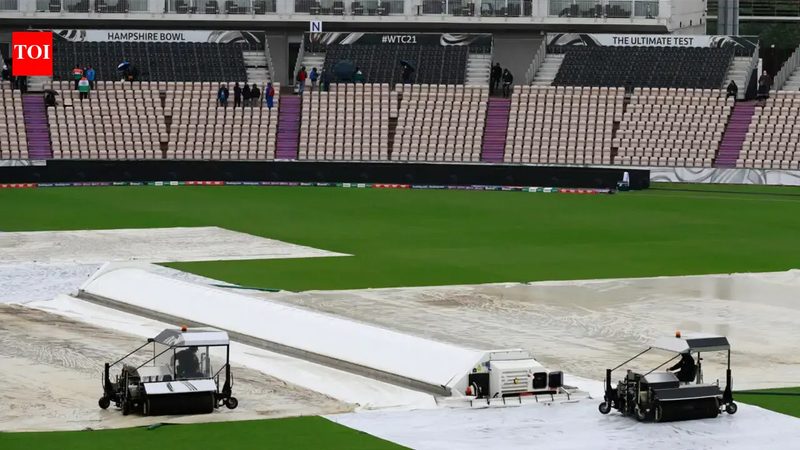
Few things in cricket provoke as much confusion and argument as a rain-interrupted limited-overs match. One moment a team is cruising towards victory; the next, the covers are on, and when play resumes the target has changed in ways that seem to defy common sense. The system responsible is the Duckworth-Lewis-Stern method, usually shortened to DLS, a mathematical formula that resets targets in rain-affected one-day and T20 matches. This guide explains how it works, why it exists, and why it remains one of the most debated innovations in the sport.
Why cricket needed a rain rule
Before DLS, rain-ruined matches were decided by crude methods. The earliest approach simply compared average run rates, which punished the team batting first for building an innings sensibly and rewarded reckless hitting. The most infamous failure came in the 1992 World Cup semi-final, when South Africa needed 22 runs off 13 balls and, after a rain delay, returned to need 22 off a single ball. The farce was broadcast to a global audience and made a fairer system an urgent priority. Two English statisticians, Frank Duckworth and Tony Lewis, devised a method based on the insight that a team’s scoring resources are not just overs remaining but overs remaining combined with wickets in hand. Their system was adopted in the late 1990s, and in 2014 it was updated by Australian academic Steven Stern to reflect modern scoring rates, giving the method its current name.
How the DLS calculation actually works
The core idea is that at any point in an innings, a batting side has a certain quantity of run-scoring resources left, expressed as a percentage. A team starting its innings with all ten wickets and a full allocation of overs has 100 per cent of its resources. As overs are used up and wickets fall, that percentage declines, but not in a straight line: losing early wickets damages future scoring potential far more than losing the same number of wickets late in the innings, because the new batters have less time to build. The method uses published tables that map every combination of overs remaining and wickets lost to a resource percentage, and these tables were recalibrated by Stern using data from modern high-scoring cricket.
When rain interrupts, the umpires and the match referee calculate the resources each team had or will have. If the team batting second loses overs to rain, their target is reduced in proportion to the resources lost, but the reduction is not simply pro-rata. Suppose the team batting first used 100 per cent of its resources to score 300. If rain then cuts the second innings so that the chasing team has only 70 per cent of resources available, their target becomes roughly 70 per cent of the first innings score, adjusted by a formula that also accounts for the fact that a team with fewer overs can bat more aggressively per over. The precise arithmetic is done by software and the match officials; captains receive a revised target and a revised number of overs, often displayed on the scoreboard as something like 187 needed off 32 overs.
What is a par score?
Viewers often hear commentators mention the par score during a rain threat, and it is worth understanding. The par score is the total the team batting second would need at the exact moment of an interruption to be level with the team that batted first, after adjusting for resources used. If rain ends the match at that moment and the chasing team is ahead of par, they win; if behind, they lose. This is why teams in a rain-threatened chase sometimes play aggressively to stay ahead of par, or shut up shop to protect their position. The par score is a snapshot, while the revised target is the full recalculation for the overs that remain.
Why DLS still causes controversy
For all its statistical rigour, DLS regularly produces outcomes that feel wrong. The most common complaint is that it can favour the chasing team in T20 cricket, where a short, sharp innings bears little resemblance to the resource curves built from longer data. The method also struggles with the modern reality that teams pace T20 innings in distinct phases, accelerating hard at the death, which the smooth resource tables only approximate. Famous controversies, from World Cup matches to domestic finals, tend to follow the same pattern: a team that looked comfortably placed loses after a recalculation, and fans conclude the maths must be broken.
- DLS applies only to limited-overs cricket. Test matches have no recalculated targets; drawn games simply end as draws.
- A minimum number of overs must be bowled for a result: 20 overs per side in ODIs and 5 overs per side in T20 internationals.
- The resource tables were last significantly updated to reflect the higher scoring rates of the modern T20 era.
- Umpires signal a DLS adjustment to the scorers, and the revised target is confirmed by the match referee before play resumes.
FAQs
Who invented the Duckworth-Lewis-Stern method? Frank Duckworth and Tony Lewis created the original method in the 1990s; Steven Stern updated it in 2014 to account for modern scoring patterns.
Does DLS favour the team batting first or second? Studies suggest it is broadly neutral in ODIs, but many analysts believe short T20 chases can slightly favour the side batting second after a recalculation.
Can players challenge a DLS target? No. The calculation is performed by the officials using approved software, and the revised target is final.
Rain will always be part of cricket, and no formula will ever make an interrupted match feel perfectly fair to the losing side. But the Duckworth-Lewis-Stern method replaced guesswork and farce with transparent mathematics, and for all the arguments it still provokes, the game is better for it.
Compiled by the Khabar 24h Editorial Desk from publicly available sources.
Related stories
View all →
Virat Kohli Confirms 2027 World Cup Will Be His Last for India
Virat Kohli has confirmed that the 2027 ODI World Cup will be his final appearance at the tournament for India. The 37-year-old…

Gambhir Warns Hardik Pandya: No Half-Cooked Comeback
Gautam Gambhir has warned Hardik Pandya that he cannot return half-cooked, urging the injured star to be fully fit before his ODI…

IPL Auction Returns to India: BCCI Announces Venue
The IPL auction is returning to India, with BCCI secretary Saikia announcing the venue, ending the league's recent overseas experiments.

Khabar 24h Editorial Desk — our explainers are prepared by the Khabar 24h editorial team using AI-assisted research tools, and every piece is reviewed by a human editor before publishing. We do not claim original reporting: our work is turning complex topics into simple, accurate summaries. Spotted an error? Write to contact@khabar24h.com — our corrections policy aims for same-day review.
More from this author →