What Is Computer Vision? How AI Learns to See the World
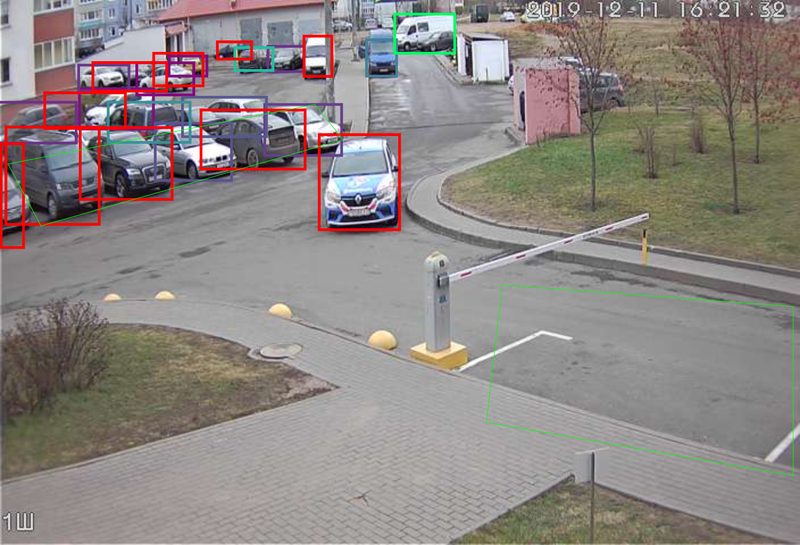
Your phone unlocks when it sees your face. Your car warns you about pedestrians you have not noticed. Warehouses count inventory with cameras, and doctors get a second opinion from software that reads scans. All of this is computer vision: the field of AI that teaches machines to interpret the visual world. It is one of the oldest branches of artificial intelligence and, thanks to deep learning, one of its most successful. This guide explains how AI learns to see, from pixels to modern vision transformers.
What computer vision actually does
Computer vision turns arrays of pixel values into understanding. Its core tasks form a ladder of difficulty. Image classification answers what is in this picture, a cat or a dog. Object detection goes further, drawing boxes around each object and naming them. Semantic segmentation labels every single pixel, separating road from pavement from pedestrian. Pose estimation tracks the joints of a human body in motion. And visual tracking follows objects across video frames. Each task builds on the same foundation: learning patterns in pixel data that correspond to meaningful structures in the world. A camera provides the eyes; computer vision provides the visual cortex.
How convolutional networks learned to see
The breakthrough that made modern computer vision possible was the convolutional neural network, or CNN. A CNN processes an image through layers of small filters that slide across the picture, each learning to detect a simple pattern: an edge, a corner, a texture. Deeper layers combine these into parts, a wheel, an eye, and deeper still into whole objects and scenes. This hierarchy mirrors, loosely, how the visual cortex works. In 2012, a CNN called AlexNet crushed an image-recognition competition and ignited the deep learning revolution; within a few years, machines were matching human accuracy on standard benchmarks. CNNs remain superb at extracting visual features efficiently, and they power countless deployed systems today.
The transformer era of vision
Recently, the transformer architecture behind chatbots has conquered vision too. Vision transformers chop an image into patches and let attention mechanisms weigh relationships between all patches at once, capturing global context that convolutions build up only gradually. Trained on billions of image-text pairs from the web, models like CLIP learned to connect images with language, enabling systems that can classify images they were never explicitly trained on, simply by matching them to text descriptions. This vision-language fusion is what lets modern AI describe photographs, answer questions about images and generate pictures from text prompts. The boundary between seeing and understanding language has effectively dissolved.
Where computer vision works today
The technology is embedded in daily life, often invisibly.
- Healthcare: detecting tumours in scans, diabetic damage in retinal photos and abnormalities in X-rays, often catching what tired eyes miss.
- Transport: lane detection, pedestrian warnings and full self-driving stacks built on camera perception.
- Retail and logistics: checkout-free stores, warehouse robots and automated quality inspection on factory lines.
- Agriculture: drones that spot crop disease and robots that weed fields with centimetre precision.
- Security: facial recognition for phone unlocking and access control, alongside more controversial public surveillance uses.
- Everyday apps: photo search, live translation of signs, background blur on video calls and AR filters.
When vision works, it feels like magic; when it fails, the failures are instructive about how differently machines see.
How machine seeing differs from human seeing
AI vision is powerful but alien. Models can be fooled by changes invisible to humans: a few pixels of carefully crafted noise can make a system confidently mislabel a school bus as an ostrich, an attack called adversarial perturbation. They sometimes latch onto spurious correlations, classifying images by background rather than subject because the training data was biased. They lack the common-sense understanding of physics and causality that lets a child know a floating car is wrong. And they inherit the biases of their training data, performing worse on underrepresented groups. These are not minor bugs but reminders that recognising patterns in pixels is not the same as understanding the world.
FAQs
Can AI see better than humans? At narrow tasks like spotting tiny tumours in scans or reading licence plates at speed, yes. At general visual understanding of novel scenes, humans remain far ahead.
How much data does computer vision need? Training from scratch needs millions of labelled images, but pre-trained models can be adapted to new tasks with hundreds or thousands of examples.
Is facial recognition accurate? On clear, frontal photos of well-represented demographics it is highly accurate. Accuracy drops with poor lighting, angles and underrepresented groups, which is why deployment remains controversial.
Computer vision gave machines something humans take for granted: the ability to look at the world and know what they are looking at. From saving lives in hospitals to guiding robots in warehouses, it is AI’s most quietly deployed success story, and its strangest failures remind us that seeing, for a machine, is still pattern-matching without comprehension.
Compiled by the Khabar 24h Editorial Desk from publicly available sources.
Related stories
View all →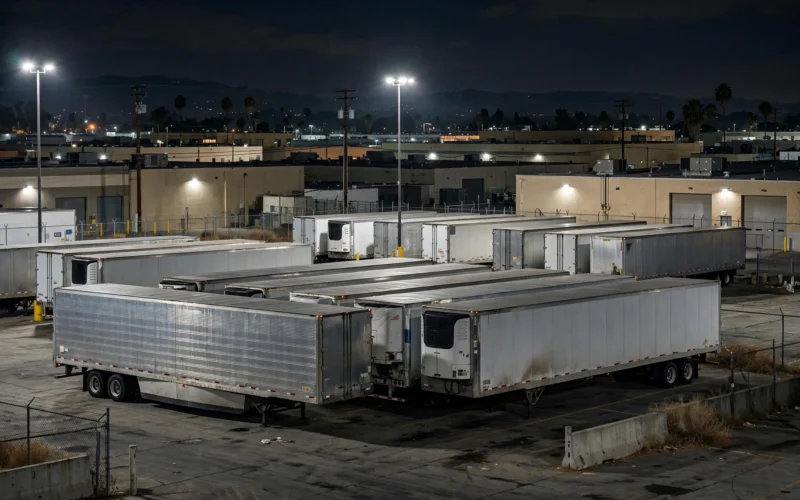
Thieves Steal Nvidia Trailers, Find 20 Tons of Sand
Thieves who stole two trailers branded with the Nvidia logo got a surprise: each was loaded with about 20,000 pounds of sand.…
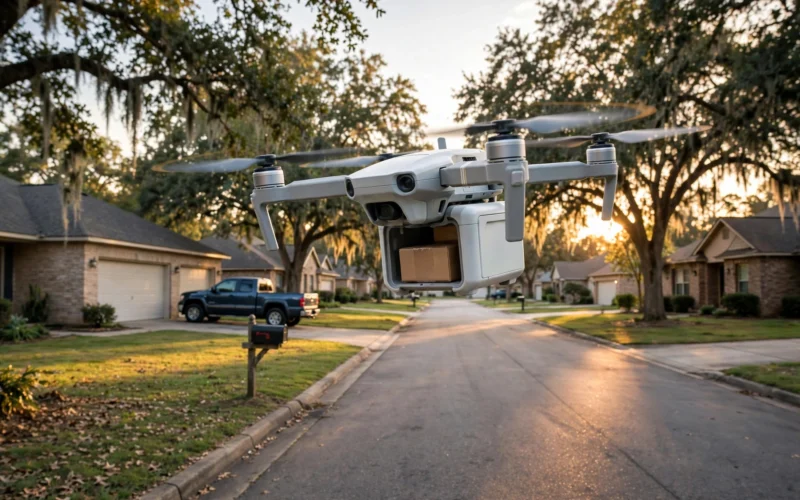
Amazon drones drive Texas neighborhood mad with noise
Residents near Amazon’s drone delivery hub in College Station, Texas, say the company’s delivery drones have turned their neighborhood into a daily…

FTC Chair: AI Developers Can’t Dodge Blame for Agent Actions
The chair of the Federal Trade Commission said on September 25 that AI developers should not be allowed to treat their AI…

Khabar 24h Editorial Desk — our explainers are prepared by the Khabar 24h editorial team using AI-assisted research tools, and every piece is reviewed by a human editor before publishing. We do not claim original reporting: our work is turning complex topics into simple, accurate summaries. Spotted an error? Write to contact@khabar24h.com — our corrections policy aims for same-day review.
More from this author →