How Women’s Cricket Leagues Are Changing the Game Worldwide
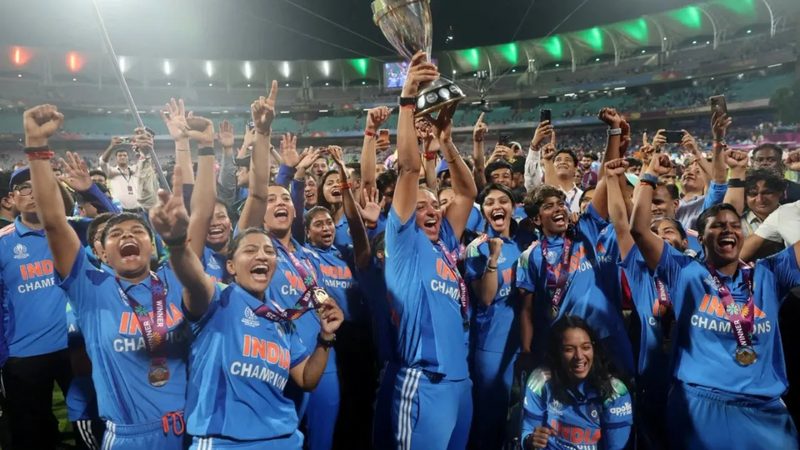
Women’s cricket has undergone a professional revolution in less than a decade, driven by franchise leagues that turned amateur internationals into household names. The Women’s Big Bash League lit the fuse, The Hundred innovated the format, and the Women’s Premier League detonated the economics. Together, these leagues are changing how women’s cricket is played, watched and paid for. This is how the revolution works.
How did the league era begin?
For most of its history, women’s cricket survived on dedication: players held day jobs, toured on shoestring budgets and played before sparse crowds. Australia’s Women’s Big Bash League, launched in 2015, was the first to treat the women’s game as a commercial product: city franchises, prime-time television, professional standards. England followed with the Kia Super League and then The Hundred, which put men’s and women’s competitions on the same stage as equals. The leagues proved three things: the cricket was excellent, audiences would watch, and sponsors would pay. Each season raised standards: better coaching, better fitness, better pay, creating a virtuous circle that lifted the international game too.
What did the WPL change?
The Women’s Premier League, launched by the BCCI in 2023, changed the economics overnight. Backed by IPL franchises and broadcast deals worth hundreds of crores, the WPL’s first auction saw Indian and international stars earn sums previously unimaginable in women’s cricket: the top bids crossed three crore rupees. Five teams, packed stadiums in Mumbai and later multi-city hosting, and television ratings that exceeded expectations announced that women’s cricket in India had arrived as a commercial force. The WPL’s impact radiated globally: it reset salary expectations in every league, gave young Indian cricketers a visible pathway, and proved that the world’s biggest cricket market would embrace the women’s game.
How do the leagues differ?
Each league has its own character. The WBBL, with eight teams and a long season, remains the deepest competition, played in the Australian summer with the world’s best facilities. The Hundred’s 100-ball format and double-header scheduling, women’s and men’s games on the same ticket, pioneered the equality model. The WPL is the financial giant: shorter, intense, and the best-paid. The Caribbean’s Women’s CPL and Pakistan’s emerging competitions add regional flavour. Players now build year-round careers moving between leagues, like their male counterparts, and the leagues compete for talent: an international star’s calendar is a negotiation between boards, franchises and workload management.
How have the leagues improved the cricket?
The standard of women’s cricket has leapt. Professional training, full-time coaching and regular high-pressure matches have raised fitness levels, fielding standards and power-hitting dramatically. Young players develop faster: a teenager debuting in the WPL faces the world’s best bowlers in front of huge crowds, an education no domestic circuit can match. Tactical sophistication has grown, with data analysis, specialist coaches and varied bowling attacks. The international game benefits directly: bilateral series now feature athletes hardened by franchise cricket, and World Cups showcase depth that did not exist a decade ago. The leagues have not just commercialised women’s cricket; they have improved it.
What challenges remain?
The revolution is incomplete. Pay, while transformed at the top, remains modest for domestic players outside the big leagues, and the gap with the men’s game is still vast. Scheduling congestion strains players, with boards and leagues competing for limited calendar space. The talent pipeline needs investment: leagues showcase stars, but grassroots systems produce them, and many nations still underfund girls’ cricket. Media coverage, though improved, lags the men’s game. And the ultimate test is sustainability: leagues must remain commercially viable without perpetual subsidy, which means growing audiences year after year. The trajectory is thrilling, but the work is unfinished.
What comes next?
Expansion is the watchword: more teams, longer seasons, new markets. The WPL is expected to grow beyond five teams, and new leagues in other nations will deepen the professional circuit. A women’s Champions League-style global club competition is discussed. Player power is rising: women’s player associations are organising for better conditions. And the cultural shift may be the biggest prize: girls growing up watching WPL stars see cricket as a career, not a hobby. The leagues have changed the game’s economics; the next decade will show whether they change its soul.
FAQs
When was the Women’s Premier League launched? The WPL’s inaugural season was held in 2023, with five teams backed by IPL franchises.
Which is the oldest women’s franchise league? Australia’s Women’s Big Bash League, launched in 2015, pioneered the women’s franchise model.
How many teams play in the WPL? Five teams contested the initial seasons, with expansion widely expected.
From amateur dedication to professional spectacle in under a decade: women’s cricket leagues have rewritten the sport’s possibilities. The revolution is televised, and it is just getting started.
Source: International Cricket Council women’s cricket review

Khabar 24h Editorial Desk — our explainers are prepared by the Khabar 24h editorial team using AI-assisted research tools, and every piece is reviewed by a human editor before publishing. We do not claim original reporting: our work is turning complex topics into simple, accurate summaries. Spotted an error? Write to contact@khabar24h.com — our corrections policy aims for same-day review.
More from this author →