How Athletics Events Work: Track, Field and Combined Events Explained
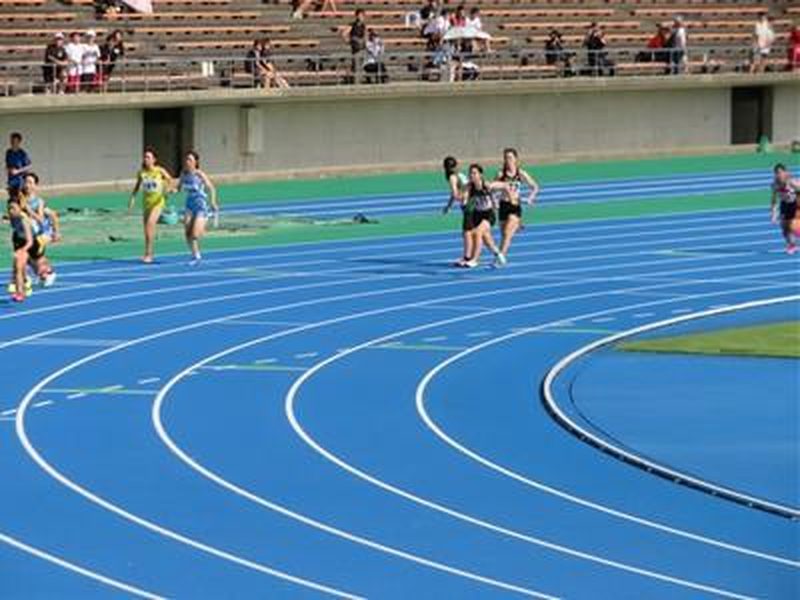
Athletics is the oldest organised sport in the world and the centrepiece of the Olympic Games, yet its programme can bewilder newcomers. Track events, field events, combined events, heats, qualification rounds, finals: the terminology piles up fast. This guide explains how athletics events work, how athletes progress from heats to medals, and how performances are measured across the sport’s many disciplines.
What are track events?
Track events are the races, contested on the 400-metre oval that defines the athletics stadium. Sprints cover 100, 200 and 400 metres and are run in lanes from start to finish, with the 100 metres the sport’s blue-riband event. Middle-distance races, the 800 and 1500 metres, blend speed with tactics as runners jostle for position. Long-distance events, the 5000 and 10000 metres, are tests of endurance and race craft. Hurdle races, the 110-metre hurdles for men, 100 metres for women, and the 400-metre hurdles, add barriers that must be cleared at speed. The steeplechase, over 3000 metres, adds barriers and a water jump. Relays, the 4×100 and 4×400 metres, are team events where baton exchanges can win or lose medals. Road events, the marathon and race walks, are technically part of athletics but held outside the stadium.
How do heats, semifinals and finals work?
In most track events, the field is too large for a single race, so athletes progress through rounds. Heats divide the entrants into groups, with the fastest finishers in each heat, usually the top two or three, qualifying automatically, denoted by Q, and the next fastest overall times filling the remaining places, denoted by q. Semifinals repeat the process with stronger fields, and the final, usually eight or nine athletes, decides the medals. In the sprints, the rounds are brutal: athletes may run a heat, semifinal and final within 48 hours. Lane draws in finals are seeded, with the fastest qualifiers given the preferred middle lanes. False starts are punished ruthlessly: one false start and the athlete is disqualified.
What are field events?
Field events are the jumps and throws contested in the stadium’s infield. The four throwing events are the shot put, discus, hammer and javelin, each with its own technique and implement weight, which varies between men’s and women’s competitions. The four jumping events are the long jump, triple jump, high jump and pole vault. Throws and horizontal jumps work on a simple principle: each athlete gets a set number of attempts, usually three in qualification and six in finals, and the best legal attempt counts. The high jump and pole vault work differently: athletes choose their starting height and are eliminated after three consecutive failures, with the bar rising until one athlete remains.
How are field event finals structured?
Field events begin with a qualification round, where athletes must either achieve a qualifying standard or finish among the top twelve to reach the final. In the final, all twelve get three attempts, after which only the top eight continue for three more. This cut creates drama: a favourite who fouls early can be eliminated before the medal attempts begin. In the vertical jumps, the competition is a war of attrition as the bar climbs, and athletes can pass heights strategically to conserve energy. Ties are broken by countback: fewer failures at the decisive height wins, a rule that rewards clean jumping under pressure.
What are combined events?
Combined events crown the most versatile athletes in the sport. Men contest the decathlon, ten events across two days: 100 metres, long jump, shot put, high jump and 400 metres on day one, then 110-metre hurdles, discus, pole vault, javelin and 1500 metres on day two. Women contest the heptathlon, seven events across two days. Each performance is converted to points using scoring tables, and the athlete with the highest total wins. The tables are calibrated so that world-class performances in different disciplines yield similar points, though in practice athletes build their totals around their strengths. Combined events are a supreme test of durability: ten events mean ten chances for something to go wrong.
How are athletics performances measured?
Precision is the soul of athletics. Track times are measured electronically to the hundredth of a second, with photo-finish cameras resolving the closest sprints. In the 100 metres, reaction times are monitored, and a start faster than 0.1 seconds is judged a false start. Throws and horizontal jumps are measured to the centimetre from the nearest mark to the take-off line or circle edge. Wind matters: in sprints up to 200 metres and in the horizontal jumps, a tailwind above 2.0 metres per second invalidates the performance for record purposes, though the result still stands. These fine margins are why athletics produces the most objective champions in sport: the clock and the tape do not argue.
FAQs
How many events are there in Olympic athletics? The Olympic athletics programme features 48 events across track, field, combined and road disciplines, contested by men and women.
What is the difference between heats and semifinals? Heats are the opening round that reduces a large entry to semifinalists; semifinals then reduce the field to the eight or nine finalists who contest the medals.
How does the decathlon scoring work? Each of the ten performances is converted to points via scoring tables, and the athlete with the highest total across all events wins.
Why do sprinters get disqualified for false starts? A single false start leads to disqualification to keep races fair and schedules tight; electronic blocks detect starts faster than 0.1 seconds.
From the gun in the 100 metres to the final attempt in the pole vault, athletics is a festival of measurable excellence. Understand the rounds, the attempts and the scoring, and the Olympic stadium becomes the most readable arena in sport.
Source: World Athletics competition rules

Khabar 24h Editorial Desk — our explainers are prepared by the Khabar 24h editorial team using AI-assisted research tools, and every piece is reviewed by a human editor before publishing. We do not claim original reporting: our work is turning complex topics into simple, accurate summaries. Spotted an error? Write to contact@khabar24h.com — our corrections policy aims for same-day review.
More from this author →