Kabaddi at the Asian Games: India’s Dominance Explained
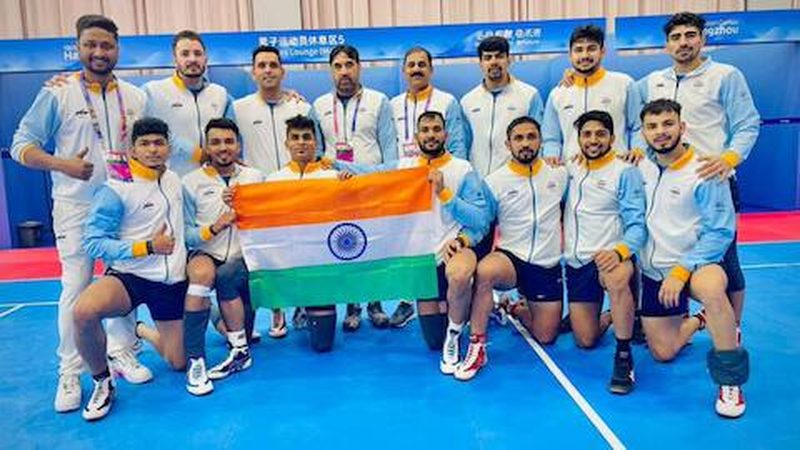
Kabaddi entered the Asian Games in 1990, and India promptly made the tournament its own. Across eight editions of the men’s competition, India won gold seven times, a record of dominance matched by few teams in any sport at any multi-sport event. The women’s tournament, added in 2010, tells a similar story of Indian supremacy. This is how that dominance was built, who threatened it, and what the Asian Games mean for kabaddi’s future.
How did kabaddi reach the Asian Games?
Kabaddi’s journey to the Asian Games began with demonstration appearances and sustained lobbying by the Amateur Kabaddi Federation of India and the Asian Kabaddi Federation. When the sport debuted as a medal event at the 1990 Beijing Asian Games, it was a landmark moment: a traditional South Asian game recognised on the continent’s biggest sporting stage. Only men’s kabaddi was included initially, with a handful of nations competing. The women’s event followed at Guangzhou 2010, reflecting the sport’s growing female participation. Inclusion in the Asian Games gave kabaddi something it had never possessed: a quadrennial championship that national federations and governments took seriously, unlocking funding, training camps and prestige.
Why has India been so dominant?
India’s dominance rests on depth that no other nation can match. Kabaddi is woven into India’s sporting culture: it is played in villages, schools and military units across the country, producing a talent pool of millions. The domestic structure, from state championships to the Services teams, meant India arrived at every Asian Games with battle-hardened players. Tactical sophistication helped too: Indian coaches pioneered the modern blend of agile raiding and chain tackling that became the global template. And once the Pro Kabaddi League launched in 2014, Indian players gained professional conditioning, video analysis and high-pressure match practice that widened the gap further. Winning became a habit, and the habit became an expectation.
Who has challenged India’s supremacy?
Dominance has never meant invincibility. Iran emerged as India’s great rival, building a powerful programme around strong, physical players and reaching multiple finals. The shock came at the 2018 Jakarta Asian Games, when Iran defeated India in the men’s semifinal, ending India’s unbeaten run and claiming gold. It was kabaddi’s equivalent of a seismic upset and a wake-up call for Indian administrators. South Korea, Pakistan and Bangladesh have all produced competitive sides, with Korea’s speed-based game troubling India on occasion. In the women’s event, Iran and Chinese Taipei have pushed India hard. Each challenge has forced India to evolve, and the rivalry with Iran is now the fixture that defines the sport internationally.
How did India respond to the 2018 defeat?
The Jakarta loss triggered a thorough reset. The federation overhauled selection, bringing Pro Kabaddi League form firmly into national-team calculations and investing in sports science and video analysis at the camp level. Young raiders who had grown up in the professional era were blooded, and the coaching setup studied Iran’s physical, methodical style to develop counters. The response was emphatic: at the Hangzhou Asian Games in 2023, India reclaimed both the men’s and women’s gold medals, beating Iran in the men’s final in a controversial, fiercely contested match that went down to the final raid. The restoration of the throne was complete, but the message of 2018 lingered: the gap is no longer a chasm.
What do the Asian Games mean for kabaddi’s Olympic dream?
Kabaddi’s supporters have long campaigned for Olympic inclusion, and the Asian Games record is central to the case. A sport contested at a continental multi-sport event with standardised rules, anti-doping protocols and growing global participation ticks many of the International Olympic Committee’s boxes. The challenge is geographic spread: Olympic sports need genuine competitiveness across continents, and kabaddi remains concentrated in Asia. The Asian Games serve as both showcase and laboratory, demonstrating the sport’s television appeal and organisational maturity. Every successful edition strengthens the dossier that kabaddi’s administrators will one day place before the IOC.
Memorable Asian Games kabaddi moments
- 1990 Beijing: kabaddi debuts as a medal sport; India wins the first men’s gold.
- 2010 Guangzhou: women’s kabaddi joins the programme; India takes gold.
- 2014 Incheon: India completes another golden double in front of passionate crowds.
- 2018 Jakarta: Iran stuns India in the men’s semifinal, ending years of dominance.
- 2023 Hangzhou: India reclaims both golds, edging Iran in a dramatic men’s final.
FAQs
When did kabaddi debut at the Asian Games? Men’s kabaddi became a medal sport at the 1990 Beijing Asian Games; the women’s event was added at Guangzhou 2010.
How many Asian Games golds has India won in kabaddi? India has won the men’s title seven times in eight editions and has dominated the women’s event since its introduction.
Which country broke India’s winning streak? Iran, which beat India in the men’s semifinal at the 2018 Jakarta Asian Games and went on to win gold.
Seven golds in eight attempts is a record that commands respect, but the modern story of kabaddi at the Asian Games is not just Indian dominance. It is the rise of genuine rivalry, and rivalry is what turns a coronation into a contest.
Source: Olympic Council of Asia records

Khabar 24h Editorial Desk — our explainers are prepared by the Khabar 24h editorial team using AI-assisted research tools, and every piece is reviewed by a human editor before publishing. We do not claim original reporting: our work is turning complex topics into simple, accurate summaries. Spotted an error? Write to contact@khabar24h.com — our corrections policy aims for same-day review.
More from this author →