Women’s Football in India: Growth, Challenges and the Future
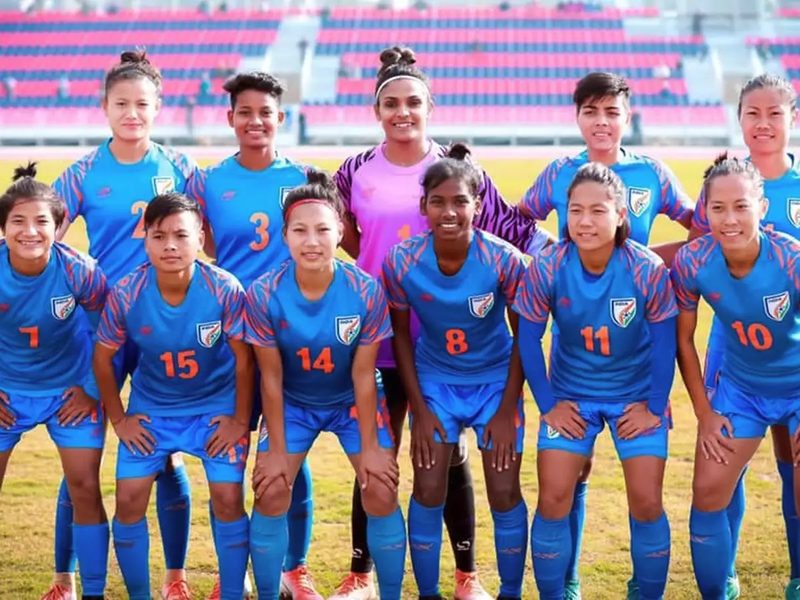
Women’s football in India is living through its most promising era. A national league with growing visibility, an expanding player base, and a generation of young footballers inspired by the global boom in the women’s game have combined to create genuine momentum. Yet the sport still battles familiar obstacles: funding gaps, limited infrastructure, and the cultural barriers that keep too many girls from the pitch. This guide charts the growth of women’s football in India, examines its challenges honestly, and looks at what the future could hold.
Growth: the league and the rising standard
The foundation of the women’s game’s growth is the Indian Women’s League, the national competition that brings together the country’s best clubs and players. Its launch and subsequent expansion gave women’s football something it had never possessed: a regular, visible, competitive platform. Standards have risen steadily: better coaching, improved fitness, and tactical sophistication that reflects the global development of the women’s game. State leagues and age-group competitions feed the pyramid, and the national team’s performances, including historic qualifications and competitive showings in Asian tournaments, have provided moments of genuine pride. Media coverage, once negligible, now treats the women’s game as a serious beat, and sponsors have begun to recognise its value. The virtuous circle, visibility bringing investment bringing quality, is finally turning.
New stars and the inspiration effect
Every sporting movement needs faces, and Indian women’s football is producing them: skilful forwards, commanding defenders and goalkeepers whose performances have won admirers beyond the usual football audience. Some have earned moves to clubs abroad, testing themselves in stronger leagues and bringing that experience back to the national team. Their stories matter enormously, because in a country where girls’ sporting participation faces deep cultural resistance, visible role models change what families believe is possible. Grassroots programmes, from FIFA-backed initiatives to NGO-run academies in underserved regions, report surging interest from girls who now have heroines to emulate. The inspiration effect is the growth story’s most powerful engine: each televised goal plants the idea in a thousand young minds that football could be for them too.
Challenges: money, facilities and mindsets
The obstacles remain formidable. Funding lags far behind the men’s game: player salaries, though improving, rarely sustain professional careers, forcing many footballers to juggle jobs or quit. Infrastructure is patchy, with quality pitches, training facilities and sports science support concentrated in a few centres. The domestic calendar, while expanded, still offers fewer competitive matches than players need to develop fully. And beneath the structural issues lie cultural ones: in many communities, girls playing football still confronts conservative attitudes about gender roles, safety and priorities. Administrative commitment, while improved, needs to be sustained and deepened, with long-term investment rather than token gestures. The gap between the women’s game’s potential and its resources is still the defining tension.
The future: what comes next
The roadmap for women’s football in India is increasingly clear. Professionalising the league, longer seasons, better pay, full-time squads, is the essential next step, and expansion of the IWL’s footprint would deepen the talent pool. Youth development needs systematic investment: academies, school competitions and coaching pathways for girls in every state. The national team’s ambitions, qualifying regularly for the AFC Women’s Asian Cup and dreaming of the World Cup, require consistent high-level fixtures and exposure tours. Commercially, the women’s game needs its own broadcast and sponsorship strategies rather than riding the men’s coattails. The global context is favourable: women’s football is booming worldwide, and India, with its vast population and growing sports economy, has every ingredient to become a major force. The future is unwritten, but for the first time, it looks bright.
- The Indian Women’s League provides the national competitive platform, feeding the national team.
- Player salaries and professionalism are improving but still lag the men’s game significantly.
- Role models and grassroots programmes are driving surging participation among girls.
- Professionalisation, youth development and more fixtures are the key next steps.
FAQs
What is the top women’s football league in India? The Indian Women’s League (IWL), the national championship featuring the country’s leading clubs.
Has India qualified for the Women’s World Cup? The senior team continues to chase a maiden World Cup appearance, with Asian Cup qualification the key stepping stone.
How can girls start playing football in India? Through school programmes, state association leagues, grassroots academies and IWL club youth setups now operating across the country.
Women’s football in India has the momentum, the talent and the moment. Turning promise into permanence is the task of the next decade, and it is a task worth completing.
Compiled by the Khabar 24h Editorial Desk from publicly available sources.

Khabar 24h Editorial Desk — our explainers are prepared by the Khabar 24h editorial team using AI-assisted research tools, and every piece is reviewed by a human editor before publishing. We do not claim original reporting: our work is turning complex topics into simple, accurate summaries. Spotted an error? Write to contact@khabar24h.com — our corrections policy aims for same-day review.
More from this author →