Women’s Cricket in India: History, Growth and the Road Ahead
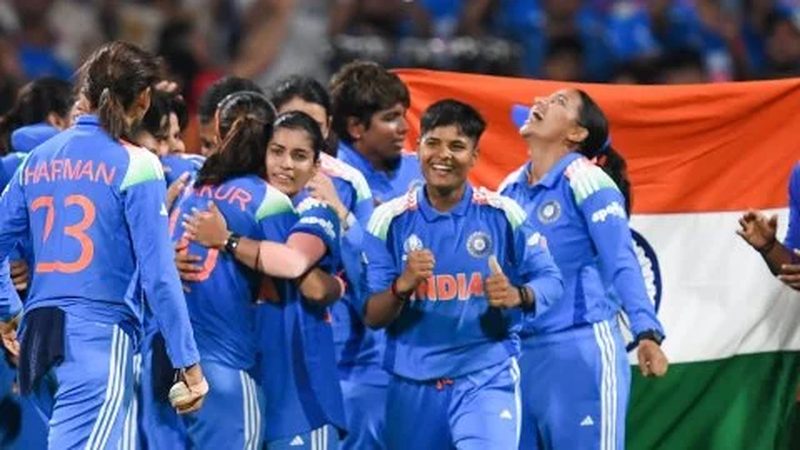
There was a time, not long ago, when the Indian women’s cricket team played in front of empty stands, travelled in obscurity, and fought for basic recognition. Today, they play World Cup finals in packed stadiums, headline a franchise league that made global headlines, and inspire a generation of girls picking up bats in every corner of the country. The transformation of women’s cricket in India is one of the great sporting stories of the century: a journey from neglect to prominence driven by the players’ perseverance and a series of breakthrough moments. This is that story, and a look at where the road leads next.
The early years: playing for love alone
Women’s cricket in India began in earnest in the 1970s, with the formation of associations and the first domestic competitions played with minimal funding and almost no attention. India played its first women’s Test in 1976 and its first ODI in 1978, fielding teams of pioneers who balanced jobs and studies with international cricket. For decades the story was one of struggle: poor facilities, negligible pay, sporadic fixtures and administrative indifference. The players persevered because they loved the game, touring on shoestring budgets and celebrating victories that barely made the newspapers. The BCCI’s takeover of women’s cricket in 2006 was a turning point, bringing the women’s game under the same administrative and financial umbrella as the men’s, with central contracts, better pay and structured domestic competitions following in stages.
Breakthrough moments on the world stage
The team’s rise to prominence came through performances that the country could not ignore. The run to the final of the 2017 ODI World Cup, carried by a heroic semi-final innings that became instant folklore, introduced the team to a mass television audience and changed the conversation overnight. The 2020 T20 World Cup final, played before a record crowd in Melbourne, confirmed that this was no fleeting moment. Individual stars became household names: record-breaking batters, world-class spinners and pace bowlers whose skills drew genuine admiration rather than patronising praise. Sponsors followed the audience, pay improved dramatically, and for the first time, a young girl in India could realistically dream of a professional cricket career. The team’s subsequent triumphs, including long-awaited global titles, completed the journey from plucky underdogs to genuine heavyweights.
Growth: the league, the money and the pathways
The launch of the Women’s Premier League supercharged the growth. A franchise T20 league with serious money, prime-time television and the world’s best players gave women’s cricket in India a commercial engine it had never possessed. Domestic players earned life-changing contracts, young talent got to share dressing rooms with global stars, and the standard of the domestic game rose visibly. Alongside the league, the BCCI expanded the domestic calendar, improved pay at all levels, and invested in age-group pathways, so the pipeline from school cricket to the national team is now structured rather than accidental. Media coverage, once an afterthought, now treats the women’s game as a serious beat. The virtuous circle is spinning: visibility brings money, money brings professionalism, professionalism brings success, and success brings visibility.
The road ahead: challenges and ambitions
For all the progress, challenges remain. The pay gap with the men’s game, though narrowed, is still vast. Domestic depth needs continued investment so that success does not depend on a handful of stars. Test cricket for women remains rare, and the calendar, while improved, still offers fewer fixtures than the players deserve. There are also cultural battles to keep winning: ensuring that the inspiration of the national team translates into participation at the grassroots, with facilities, coaching and family support for girls in every state. But the direction is unmistakable. With a professional league, a competitive national team, growing audiences and institutional backing, women’s cricket in India has crossed the threshold from movement to establishment. The road ahead is about consolidation: more matches, deeper talent, bigger stages, and the ultimate prize of sustained global dominance.
- India’s women played their first Test in 1976 and first ODI in 1978.
- The BCCI took over women’s cricket administration in 2006.
- The 2017 World Cup final run was the breakthrough moment for mass popularity.
- The Women’s Premier League launched a professional franchise era with major commercial backing.
FAQs
When did women’s cricket become professional in India? The BCCI takeover in 2006 brought central contracts and structure; the last decade, culminating in the WPL, made it genuinely professional.
Do women cricketers earn the same as men now? Match fees for internationals have been equalised, but overall earnings, driven by the men’s larger commercial market, still differ significantly.
How can girls start playing cricket in India? Through school cricket, state association age-group trials, and BCCI domestic pathways that now run from under-15 levels upward.
From empty grounds to packed stadiums, the journey of women’s cricket in India is a testament to the players who refused to give up. The best chapters may still be unwritten.
Compiled by the Khabar 24h Editorial Desk from publicly available sources.

Khabar 24h Editorial Desk — our explainers are prepared by the Khabar 24h editorial team using AI-assisted research tools, and every piece is reviewed by a human editor before publishing. We do not claim original reporting: our work is turning complex topics into simple, accurate summaries. Spotted an error? Write to contact@khabar24h.com — our corrections policy aims for same-day review.
More from this author →