How BARC Powers India’s Nuclear Research, From Reactors to Isotopes
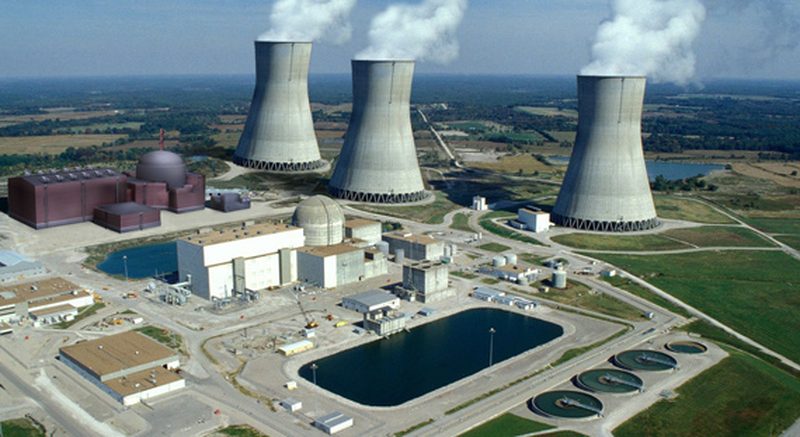
In 1954, on a sandy stretch at Trombay outside Bombay, Homi Bhabha founded the Atomic Energy Establishment, the cradle of India’s nuclear programme. Renamed after his death in 1966, the Bhabha Atomic Research Centre, BARC, has grown into one of the world’s great multidisciplinary research institutions: designer of India’s reactors, producer of its medical isotopes, developer of its nuclear agriculture, and the R and D backbone of a programme that today supplies about 3 per cent of India’s electricity with plans for far more. BARC’s work spans from fundamental physics to farmers’ fields, from cancer hospitals to desalination plants. As India pursues its three-stage nuclear programme toward thorium-fuelled energy independence, BARC remains its scientific engine. Here is how it powers the nation’s nuclear research.
Reactors: from Apsara to the thorium dream
BARC’s reactor lineage began with Apsara, Asia’s first nuclear reactor, which went critical in 1956, a swimming-pool-type research reactor built with British assistance. CIRUS, a larger reactor built with Canadian help, followed in 1960, producing plutonium for research, and the plutonium from CIRUS fuelled India’s 1974 peaceful nuclear explosion, the event that reshaped global non-proliferation politics. Dhruva, commissioned in 1985 and still operating, is India’s workhorse research reactor, producing the bulk of the country’s medical and industrial radioisotopes. These research reactors underpin the power programme: BARC designed the Pressurised Heavy Water Reactors, PHWRs, that form India’s nuclear fleet, now standardised in 700-megawatt units being built in fleet mode. The long game is the three-stage programme Bhabha envisioned: natural-uranium PHWRs breeding plutonium, fast breeder reactors multiplying fuel, and finally thorium-based reactors exploiting India’s vast thorium reserves, among the world’s largest. The Prototype Fast Breeder Reactor at Kalpakkam and the Advanced Heavy Water Reactor design are steps toward that thorium future.
Isotopes for health, farms and industry
BARC’s most direct human impact comes from radioisotopes. The Board of Radiation and Isotope Technology distributes isotopes nationwide: iodine-131 and lutetium-177 for thyroid and prostate cancer therapy, technetium-99m generators for millions of diagnostic scans yearly, phosphorus-32 and cobalt-60 for treatment and sterilisation. BARC-developed cancer drugs and the Bhabhatron teletherapy machine brought affordable radiotherapy to Indian hospitals. In agriculture, BARC’s mutation breeding, using gamma radiation to induce useful crop mutations, has produced dozens of groundnut, mustard, rice and pulse varieties grown across millions of hectares; its food irradiation plants extend shelf life and ensure phytosanitary safety for exports. Industry uses BARC’s radiotracers to find pipeline leaks, gamma scanners to inspect welds, and radiation to sterilise medical equipment. Desalination is another spin-off: BARC’s plants at Kalpakkam demonstrate nuclear desalination, coupling reactors to freshwater production for coastal regions. Few research institutions on Earth touch so many sectors of national life.
Science, strategy and the road ahead
BARC is also a basic-science powerhouse: its physicists work on particle accelerators, its chemists on fuel reprocessing, its engineers on robotics for hazardous environments, and its supercomputers rank among India’s fastest. The strategic dimension is inseparable: BARC’s expertise underwrote the 1998 Pokhran tests that declared India a nuclear-weapons state, and the Department of Atomic Energy’s closed fuel cycle, reprocessing spent fuel to recover plutonium and uranium, is both an energy strategy and a strategic posture. The road ahead is ambitious: scaling nuclear power toward the government’s targets, commissioning fast breeders, demonstrating thorium utilisation, expanding isotope production for the growing cancer burden, and deploying small modular reactors for industrial heat and remote power. Challenges include public acceptance after Fukushima, uranium supply constraints, and the economics of nuclear versus solar. But BARC’s seven-decade record, from Asia’s first reactor to a thorium roadmap no other country pursues as seriously, makes it the institution on which India’s nuclear future rests.
- Apsara, Asia’s first reactor, went critical at Trombay in 1956.
- Dhruva, operating since 1985, produces most of India’s medical radioisotopes.
- India’s three-stage programme aims ultimately at thorium-fuelled reactors.
- BARC’s mutation-bred crop varieties are grown across millions of hectares.
- Nuclear power provides about 3 per cent of India’s electricity, with expansion planned.
FAQs
What does BARC stand for? The Bhabha Atomic Research Centre, named for Homi Bhabha, founder of India’s nuclear programme, headquartered at Trombay, Mumbai.
Is India’s nuclear programme under safeguards? Civilian facilities are under International Atomic Energy Agency safeguards; military and some strategic facilities are not, under India’s separation plan.
Why thorium? India holds about a quarter of the world’s thorium reserves but little uranium; thorium-fuelled reactors promise long-term energy independence.
From a research reactor in 1956 to a thorium-powered vision of energy independence, BARC has been the constant engine of India’s nuclear journey: reactors, isotopes, crops and cures from a single campus by the sea.
Compiled by the Khabar 24h Editorial Desk from publicly available sources.

Khabar 24h Editorial Desk — our explainers are prepared by the Khabar 24h editorial team using AI-assisted research tools, and every piece is reviewed by a human editor before publishing. We do not claim original reporting: our work is turning complex topics into simple, accurate summaries. Spotted an error? Write to contact@khabar24h.com — our corrections policy aims for same-day review.
More from this author →