Science From the Ice: What India’s Maitri and Bharati Stations Study in Antarctica
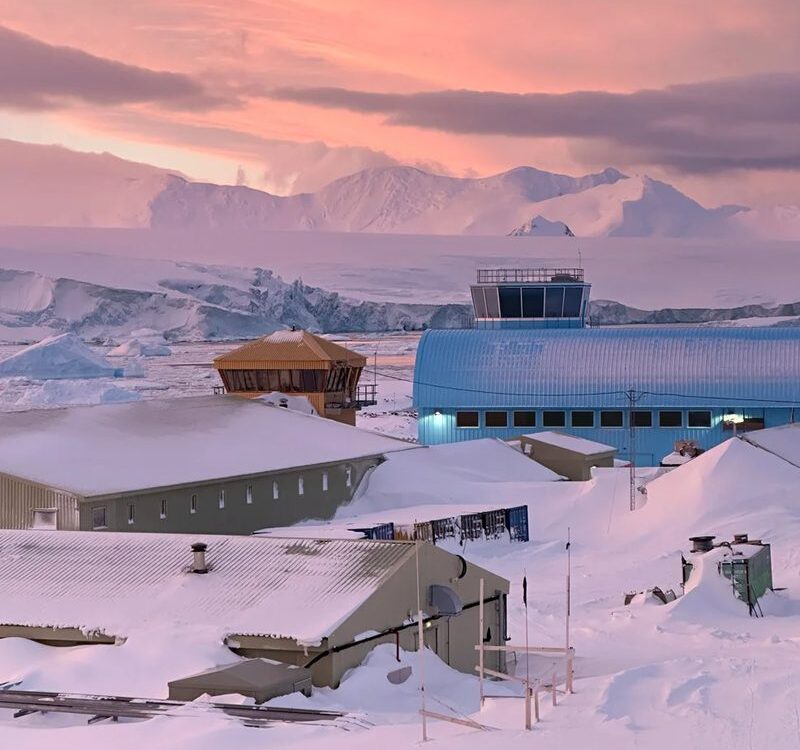
Each austral summer, Indian scientists fly to the bottom of the world, to a continent of ice larger than India and China combined, where winter temperatures plunge below minus 80 degrees Celsius and the Sun vanishes for months. India operates two research stations in Antarctica: Maitri, established in 1989 on the Schirmacher Oasis, and Bharati, commissioned in 2012 at Larsemann Hills, a state-of-the-art facility on stilts designed to survive the harshest climate on Earth. Under the Antarctic Treaty, which reserves the continent for peace and science, some 30 nations run research programmes there. India’s Antarctic science spans atmospheric physics, glaciology, climate history, geology and biology, and its findings feed directly into monsoon forecasting, sea-level projections and ozone policy. Here is what India studies in the ice.
Why Antarctica matters to India
Antarctica is the planet’s climate archive and its air conditioner. Its ice sheet holds about 70 per cent of Earth’s freshwater; its complete melting would raise seas by 58 metres, and even partial loss from West Antarctica threatens coastal cities from Mumbai to Kolkata within this century. The Southern Ocean surrounding it absorbs vast amounts of heat and carbon dioxide, regulating the global climate that delivers India’s monsoon. The Antarctic ozone hole, discovered in 1985, was the crisis that proved international environmental action could work: the Montreal Protocol’s CFC ban is healing it, and Indian atmospheric scientists monitor its recovery. For India specifically, Antarctic research is not exotic indulgence but strategic science: the continent’s ice and ocean drive the systems that water Indian farms and threaten Indian coasts. The National Centre for Polar and Ocean Research in Goa coordinates the programme, mounting annual expeditions that keep India among the Treaty’s Consultative Parties with full decision-making status.
What the stations actually study
The research portfolio is broad. Atmospheric scientists at Maitri monitor greenhouse gases, aerosols and the ozone layer, contributing to global networks that track the atmosphere’s health; Maitri’s long records are valuable precisely because the air is among the cleanest on Earth. Glaciologists drill ice cores and stake out glacier motion, reading past climates in trapped air bubbles and measuring how fast the ice responds to warming. Geologists study the ancient rocks of East Antarctica, which were once joined to India’s Eastern Ghats in the supercontinent Gondwana, matching rock formations across the continents to reconstruct the breakup. Biologists probe extremophile microbes in subglacial lakes and study how Antarctic ecosystems, from krill to penguins, respond to change. Bharati’s location enables oceanographic work in Prydz Bay, where dense bottom water forms and drives global ocean circulation. Indian scientists have also participated in international ice-core projects reaching back 800,000 years of climate history, context that makes today’s warming unmistakable.
Life and logistics at the bottom of the world
Working in Antarctica is an expedition in the heroic mould, updated with satellite links. Expedition teams sail from Cape Town on ice-class vessels, then fly or traverse to the stations; wintering teams, who stay through the months of darkness, are selected for psychological resilience as much as scientific skill. Bharati’s stilted design lets blizzards blow beneath it, and its systems recycle water and manage waste to meet the Treaty’s strict environmental protocols: nothing is left behind, and wildlife disturbance is minimised. The science faces growing urgency: recent years have seen record-low sea ice, alarming ice-shelf collapses and accelerating glacier flow, all with direct implications for sea-level rise that Indian coastal planners must heed. India’s planned replacement for the ageing Maitri, Maitri-2, will modernise the programme for decades ahead. From the ice, India watches the planet’s vital signs, and what the ice reports, in melting shelves and shifting winds, is increasingly a warning addressed to us all.
- Maitri was established in 1989; Bharati, on stilts, was commissioned in 2012.
- Antarctica holds about 70 per cent of Earth’s freshwater as ice.
- Complete melting would raise global sea levels by about 58 metres.
- East Antarctica’s rocks were once joined to India’s Eastern Ghats in Gondwana.
- Ice cores preserve 800,000 years of climate history in trapped air bubbles.
FAQs
Who owns Antarctica? No one. The Antarctic Treaty reserves it for peaceful scientific use, freezing territorial claims; India is a Consultative Party with decision-making status.
How cold does it get? Below minus 80 degrees Celsius in the interior winter; coastal stations like India’s see minus 40s in winter.
Can tourists visit? Yes, under strict Treaty guidelines, but Indian stations are research facilities, not tourist destinations.
From Maitri and Bharati, India reads the planet’s coldest archives and monitors its most consequential changes. The ice remembers everything, and it is telling us the climate is changing.
Compiled by the Khabar 24h Editorial Desk from publicly available sources.

Khabar 24h Editorial Desk — our explainers are prepared by the Khabar 24h editorial team using AI-assisted research tools, and every piece is reviewed by a human editor before publishing. We do not claim original reporting: our work is turning complex topics into simple, accurate summaries. Spotted an error? Write to contact@khabar24h.com — our corrections policy aims for same-day review.
More from this author →