Mangroves: The Coastal Forests That Shield India From Cyclones
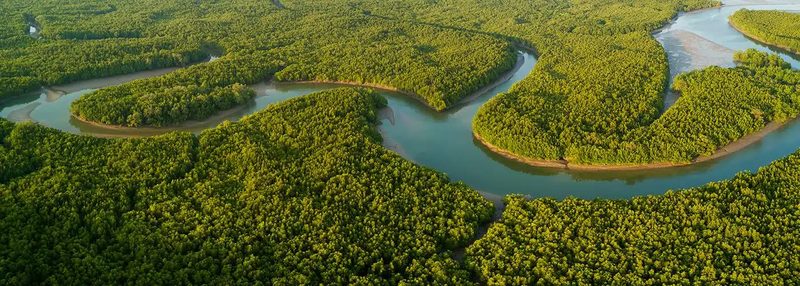
When a cyclone barrels toward India’s coast, the first line of defence is not concrete but trees: mangroves, the salt-tolerant forests that fringe estuaries and deltas from the Sundarbans to the Gulf of Kutch. Their tangled roots dissipate wave energy, trap storm surges and hold the shoreline together, while their canopies shelter some of the richest nurseries in the sea. Mangroves are among the most valuable ecosystems on Earth, and India is learning, sometimes the hard way, what happens when they are lost.
How mangroves blunt a cyclone
The physics is straightforward. As storm waves and surges push through a mangrove belt, the dense network of prop roots, pneumatophores and trunks creates enormous drag, bleeding energy from the water. Studies show that a few hundred metres of healthy mangrove can cut wave heights dramatically and reduce storm-surge flooding inland; during the 1999 Odisha super cyclone, villages behind intact mangroves suffered markedly less damage than exposed ones. The 2004 tsunami reinforced the lesson across Asia: coasts with mangrove buffers fared better.
Mangroves also build land. Their roots trap sediment, raising the forest floor and helping deltas keep pace with sea-level rise, while the accreted mud locks away carbon. This land-building is why the Sundarbans, the world’s largest mangrove forest, shared by India and Bangladesh, has grown seaward in places even as erosion eats other stretches. A mangrove is not just a shield but a living, self-repairing sea wall.
Life in the salt forest
Mangroves are extremophiles among trees. They breathe through pneumatophores, root snorkels that poke above the mud at low tide; they excrete salt through leaf glands or concentrate it in sacrificial leaves; and their seeds germinate while still attached to the parent, dropping as ready-to-plant seedlings that can float for months. India’s mangroves host around 50 true mangrove species, from the Sundarbans’ sundari trees to the salt-tolerant Avicennia of the western coast.
The forests are nurseries for the sea. Shrimp, crabs, mullet and countless other species spend their juvenile stages among the roots, safe from predators, before recruiting to offshore fisheries; economists value this nursery service in billions of dollars. Royal Bengal tigers swim between Sundarbans islands, fishing cats prowl the creeks, and migratory birds crowd the canopy. Remove the mangroves and the fisheries, the tigers and the storm shield go with them.
- Storm shield: dense roots dissipate wave and surge energy before it reaches land.
- Land builders: trapped sediment raises deltas, countering sea-level rise.
- Blue carbon: mangrove soils store carbon for millennia, per hectare rivaling rainforests.
- Nurseries: juvenile fish, shrimp and crabs shelter among the roots.
- Indian extent: ~5,000 sq km, from the Sundarbans to Gujarat and the Andamans.
Blue carbon and the restoration push
Mangroves are climate heroes twice over. They protect coasts from climate-driven storms, and their waterlogged soils bury carbon at extraordinary rates, storing it for thousands of years. Per hectare, mangroves can hold several times the carbon of tropical rainforests, which is why they anchor blue carbon markets and national climate pledges. India has launched mangrove restoration drives, including MISHTI, the Mangrove Initiative for Shoreline Habitats and Tangible Incomes, aiming to restore hundreds of square kilometres.
Restoration is harder than it looks. Planting the wrong species in the wrong tidal zone fails; shrimp farms, salt pans and ports keep converting mangroves; and sea-level rise may drown forests where sediment supply is cut by upstream dams. Success stories, like community-led restoration in Odisha and Tamil Nadu’s Pichavaram, show the formula: the right hydrology first, local communities as owners, and patience. A mangrove planted today shields the grandchildren’s coastline.
FAQs
How do mangroves survive salt water? Salt exclusion at the roots, salt excretion through leaves, and water-conserving succulent tissues.
What is blue carbon? Carbon captured by ocean and coastal ecosystems, mangroves, seagrasses and salt marshes, stored long-term in biomass and soils.
Where are India’s largest mangroves? The Sundarbans of West Bengal, the world’s largest mangrove forest, shared with Bangladesh.
Mangroves are the coast’s immune system: storm shield, fish nursery, carbon vault and land builder in one salt-tolerant package. India, with its cyclone-battered 7,500-kilometre coastline, cannot afford to lose them, and the science is clear that every hectare kept or restored pays for itself many times over.
Source: International Union for Conservation of Nature

Khabar 24h Editorial Desk — our explainers are prepared by the Khabar 24h editorial team using AI-assisted research tools, and every piece is reviewed by a human editor before publishing. We do not claim original reporting: our work is turning complex topics into simple, accurate summaries. Spotted an error? Write to contact@khabar24h.com — our corrections policy aims for same-day review.
More from this author →