Microplastics in the Ocean: Where They Come From and Where They Go
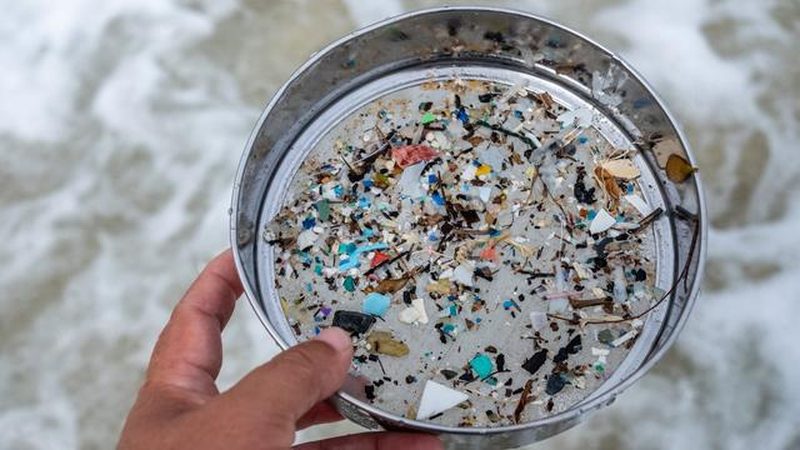
Plastic has reached everywhere: the Mariana Trench, Arctic ice, the air over remote mountains, and inside the bodies of marine animals from plankton to whales and everything in between. Much of it arrives as microplastics, fragments smaller than five millimetres, born from the breakdown of larger debris, shed from textiles and tyres, or manufactured tiny for cosmetics and industrial uses. The ocean, downstream of every river and coastline, has become their great and growing reservoir. Tracing where microplastics come from and where they go reveals a pollution cycle as global and as relentless as the water cycle itself.
Where they come from
Microplastics enter the ocean through two routes. Primary microplastics are manufactured small: microbeads once common in cosmetics, industrial abrasives and plastic pellets spilled during transport. Far larger is the secondary flood: big plastic litter, bottles, bags, fishing nets, fragmenting under sunlight and wave action into ever-smaller pieces. Less visible sources matter enormously: synthetic textiles shed thousands of fibres per wash, car tyres abrade into dust washed off roads, and city dust carries it all to the sea. Recent research suggests tyre wear and textiles rival packaging as sources, shifting the blame from litter alone to everyday materials.
The journey to the sea
Rivers are the great conveyors. A handful of large rivers, mostly in Asia, carry a disproportionate share of ocean plastic, fed by dense populations and waste management gaps. But microplastics also travel by air: fibres and fragments have been found in rain over the Pyrenees and in Arctic snow, meaning the atmosphere is a parallel and largely invisible highway. Wastewater treatment plants catch much but not all; sludge spread on fields returns fibres to rivers. The result is a planetary circulation of plastic, moving through air, rivers and currents with no respect for borders.
Where they end up
The ocean sorts plastic by physics. Buoyant fragments accumulate in the five great garbage patches, rotating gyres where currents concentrate debris, the largest sprawling across the North Pacific. But the patches are only the visible fraction. Denser particles sink: deep-sea sediments hold staggering concentrations, with trench muds among the most contaminated places sampled. Arctic ice traps particles during freezing and releases them on melting. Beaches grind debris into their sand. And a significant fraction simply remains suspended in the water column, drifting with currents from surface to abyss.
What they do to marine life
The biological toll is increasingly documented. Filter feeders like mussels and oysters ingest particles with their food; zooplankton mistake them for algae; seabirds feed them to chicks. Laboratory studies show effects from gut blockage to chemical leaching, as plastics carry additives and absorb pollutants from seawater. Microplastics have been found in fish sold for human consumption, in drinking water and even in human blood, though health effects at environmental concentrations remain under active study. The ecological risk is clearest for the smallest organisms at the food web’s base, where contamination is hardest to avoid.
Can the flow be stopped?
Cleanup schemes grab headlines but cannot solve the problem of a tap that keeps running. The emerging consensus prioritises the source:
- Better waste management, especially in the rapidly developing economies that dominate river inputs.
- Product redesign: fewer single-use plastics, textiles that shed less, tyres formulated for lower wear.
- Wastewater upgrades to capture fibres and fragments before discharge.
- The global plastics treaty under negotiation, aiming to cap production and harmonise rules.
FAQs
Are microplastics in my food dangerous? They are widespread in food and water, but science has not established clear health harm at typical exposures; research is urgently ongoing.
Does recycling solve it? Only partly. Most plastic is never recycled, and recycling itself can generate microplastics; reduction matters more.
Which is worse, micro or macro plastic? Large debris kills visibly through entanglement and ingestion; microplastics contaminate invisibly through food webs. Both matter.
Microplastics are the signature of the plastic age written into the ocean itself: particles from our clothes, tyres and packaging circulating through water, air and food webs. The ocean will hold them for centuries to come; whether we keep adding to the stock is a choice being made now, in product designs, waste systems and treaty rooms.
Source: United Nations Environment Programme

Khabar 24h Editorial Desk — our explainers are prepared by the Khabar 24h editorial team using AI-assisted research tools, and every piece is reviewed by a human editor before publishing. We do not claim original reporting: our work is turning complex topics into simple, accurate summaries. Spotted an error? Write to contact@khabar24h.com — our corrections policy aims for same-day review.
More from this author →