Small Modular Reactors: The Future of Nuclear Power?
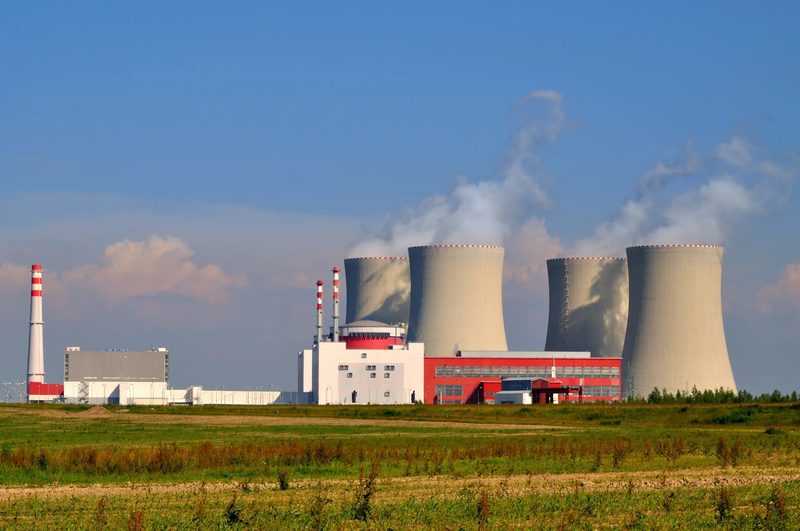
Today’s nuclear reactors are cathedrals: gigawatt-scale behemoths built on site over a decade at staggering cost. Small modular reactors promise the opposite, nuclear power more like an appliance. SMRs are compact reactors, typically under 300 megawatts, designed to be built in factories, shipped to site, and installed in multiples. Advocates say factory production will slash costs and construction times, opening nuclear power to countries and grids that could never afford a conventional plant. Sceptics reply that the economies of scale run the other way, and that SMRs must prove they can be cheap, not just small.
What makes them modular
The modularity is the point. Instead of custom-building each reactor on location, an SMR vendor designs one standard unit and manufactures it repeatedly, like aircraft. Factory production enables quality control, learning curves and standardised licensing: approve the design once, deploy it many times. Units can be added incrementally as demand grows, so a utility need not bet billions on a single giant plant. Some designs are small enough to replace coal plant boilers on existing sites, reusing grid connections and workforces, while others target remote communities, mines or industrial heat.
The safety pitch
SMRs lean heavily on passive safety, systems driven by physics rather than pumps and operators. Many designs cool themselves through natural circulation: hot water rises, cool water sinks, no electricity required. Some use fuels, like TRISO particles, that trap radioactive material in ceramic-coated spheres even at extreme temperatures. Underground installation adds protection against everything from storms to sabotage. Vendors argue that smaller cores with lower power density are inherently easier to keep cool, and several designs aim for safety cases that need no offsite emergency planning, a radical simplification if regulators accept it.
The designs in the race
Dozens of SMR concepts are in development worldwide, spanning several reactor families:
- Light-water SMRs, scaled-down versions of today’s reactors, the closest to licensing and deployment.
- High-temperature gas reactors, aiming for industrial process heat as well as electricity.
- Molten salt reactors, with liquid fuel that promises efficiency and waste advantages.
- Fast neutron SMRs, which can burn existing nuclear waste as fuel.
The economic question
Here the debate sharpens. Nuclear power has historically benefited from economies of scale: bigger plants produce cheaper electricity. SMRs bet that economies of multiples, factory learning, standardisation, shorter construction, will outweigh the loss of scale. But no SMR has yet been mass-produced, so the bet is unproven, and first-of-a-kind costs are running high. Critics note that small reactors still need security, operators and licensing, costs that do not shrink proportionally. The honest answer: SMRs might be cheaper, but only after someone builds enough of them to find out.
Where SMRs could matter most
The strongest cases are not in grids that already have cheap renewables, but where firm power is scarce: replacing coal plants while reusing their sites and workers, powering remote regions and islands, decarbonising heavy industry with high-temperature heat, and giving developing nations a manageable entry into nuclear power without betting the national budget on a single project. India, with its vast coal fleet and industrial heat demand, is watching closely, alongside its own advanced reactor programmes. If SMRs deliver on cost, they could extend nuclear power’s reach far beyond today’s nuclear nations.
FAQs
Are SMRs safer than big reactors? Their designs target enhanced safety through passive systems and smaller cores, but safety is ultimately proven by operation and regulation, not design claims.
When will SMRs be operating commercially? First units are under construction or in advanced licensing in several countries, with commercial operation expected in the late 2020s to early 2030s.
Do SMRs produce less waste? Per unit of energy, waste is similar, though some advanced designs can consume existing waste. Smaller cores do not automatically mean smaller waste problems.
Small modular reactors are nuclear power’s great reboot attempt: the industry’s great bet that it can finally learn the lessons of manufacturing from every other technology. Whether the future of nuclear is small and many, or whether the economics still favour the gigawatt giants, will be decided not in brochures but in the first factories, and in the electricity bills of the first customers.
Source: International Atomic Energy Agency

Khabar 24h Editorial Desk — our explainers are prepared by the Khabar 24h editorial team using AI-assisted research tools, and every piece is reviewed by a human editor before publishing. We do not claim original reporting: our work is turning complex topics into simple, accurate summaries. Spotted an error? Write to contact@khabar24h.com — our corrections policy aims for same-day review.
More from this author →