Why Sriharikota Sits on India’s East Coast: The Science of Launch Sites
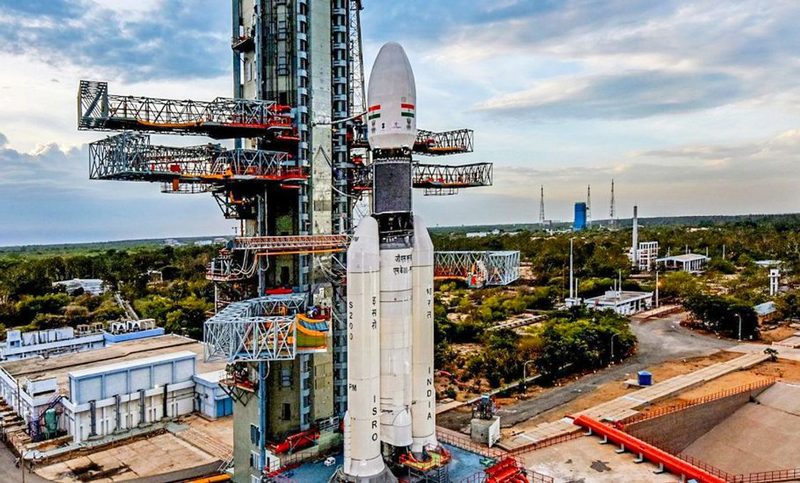
Every Indian rocket that heads for orbit lifts off from the same place: the Satish Dhawan Space Centre at Sriharikota, a barrier island on India’s east coast in Andhra Pradesh. The choice was not political or convenient; it was physics. Launch sites are constrained by the rotation of the Earth, the geography of safe flight paths, and the logistics of moving enormous rockets. Sriharikota satisfies all three so neatly that it has served India since the 1970s, and understanding why reveals the hidden science of where spaceflight begins.
The free boost from Earth’s spin
The single biggest factor is latitude. Earth rotates eastward, and the surface moves fastest at the equator, about 465 metres per second, slowing toward the poles. A rocket launched eastward from near the equator inherits that velocity for free, meaning it needs less of its own fuel to reach orbital speed. Sriharikota sits at about 13.7 degrees north latitude, giving it a healthy slice of that boost. Moving the spaceport significantly north would forfeit free velocity on every launch; moving it to the equator itself would be ideal in theory, but geography and national borders rarely cooperate with physics.
Why the east coast matters
Rockets fly east to harvest Earth’s rotational boost, and what lies east of the launch pad matters enormously. Rockets shed stages as they climb, and those heavy, sometimes toxic pieces fall back along the flight path. Launching from an east coast means the early trajectory passes over open ocean rather than populated land. Sriharikota is a narrow island with the Bay of Bengal stretching eastward for thousands of kilometres, an ideal safety corridor. An inland or west-coast site launching eastward would drop debris over land or force wasteful dogleg manoeuvres to avoid it.
Polar launches and the southern tip
Not every mission flies east. Earth-observation satellites often head for polar orbits, launching southward or northward. From Sriharikota, a due-south launch would overfly Sri Lanka, which is politically and practically unacceptable. ISRO’s workaround is a clever manoeuvre: rockets initially fly southeast, then execute a dogleg turn around Sri Lanka once safely over the ocean, sacrificing some performance for safety. For small polar missions, India has also developed the Thumba launch site near Thiruvananthapuram at the southern tip, where sounding rockets can fly safely over the ocean.
The logistics of a spaceport
A launch site is also a port in the most literal sense. Rocket stages are too large to travel by road or rail over long distances, so Sriharikota’s coastal location allows hardware to arrive by ship. The centre maintains integration facilities, solid propellant processing plants, tracking stations and a mission control complex, all of which benefit from the island’s isolation: restricted access improves security, and distance from cities reduces noise and safety concerns. The humid coastal climate brings its own challenges, including corrosion and monsoon scheduling, but the physics advantages outweigh them.
How other countries chose their sites
The same logic governs spaceports worldwide. Europe launches from Kourou in French Guiana, nearly on the equator, precisely for the rotational boost. NASA’s Kennedy Space Center sits on Florida’s east coast at 28.5 degrees north, balancing physics with American geography. Russia, lacking warm-water equatorial territory, launches from high-latitude Baikonur and pays a fuel penalty on every geostationary mission. China’s Wenchang site on Hainan Island mirrors Sriharikota’s logic: low latitude, east coast, ocean downrange. The map of the world’s spaceports is, in effect, a map of applied orbital mechanics.
FAQs
Why not launch from the southernmost tip of India? Kanyakumari is farther south, but it lacks a large island with room for a full spaceport complex, and its surrounding seas complicate range safety. Sriharikota’s barrier island was the better compromise.
Do rockets ever launch westward? Rarely, and only for special retrograde orbits. Launching west fights Earth’s rotation, wasting enormous fuel, so it is avoided whenever possible.
Will India build a second orbital launch site? ISRO has been developing a small-satellite launch complex at Kulasekarapattinam in Tamil Nadu, optimised for polar missions without the Sri Lanka dogleg.
Sriharikota looks like a dot on the map, but it is positioned by the deepest forces in orbital mechanics: a spinning planet, an ocean to the east, and the tyranny of the rocket equation. Every Indian satellite in orbit today passed through that narrow island, riding physics that was fixed long before rockets existed.
Source: ISRO

Khabar 24h Editorial Desk — our explainers are prepared by the Khabar 24h editorial team using AI-assisted research tools, and every piece is reviewed by a human editor before publishing. We do not claim original reporting: our work is turning complex topics into simple, accurate summaries. Spotted an error? Write to contact@khabar24h.com — our corrections policy aims for same-day review.
More from this author →