Why ISRO’s Reusable Launch Vehicle Could Slash the Cost of Spaceflight
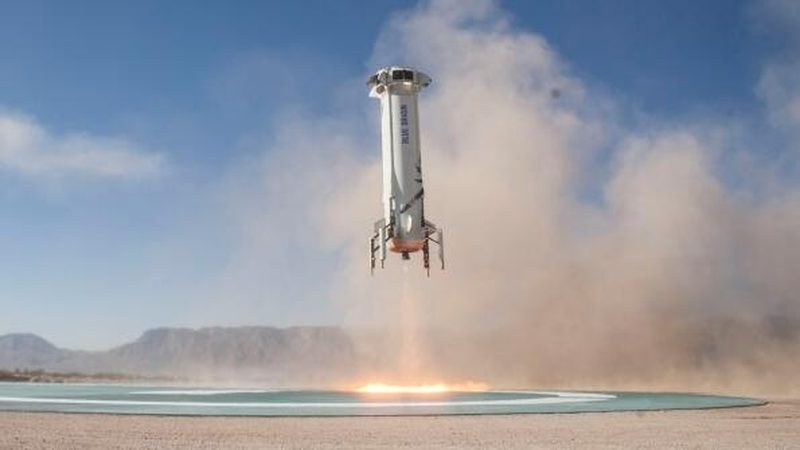
The cheapest part of a spaceflight is the fuel; the most expensive part is the vehicle itself, which is usually thrown away. Every conventional rocket discards its carefully engineered stages into the ocean after a single use, which is why access to space has stayed costly for six decades. ISRO’s Reusable Launch Vehicle, or RLV, attacks exactly this problem: a winged spacecraft designed to fly toward orbit, glide back through the atmosphere and land on a runway like an aircraft, ready to fly again. If it works at scale, it could fundamentally change the economics of Indian spaceflight.
The promise: aircraft-like operations to space
The vision behind the RLV is simple to state and hard to achieve. Instead of building a new rocket for every mission, ISRO wants a vehicle that returns intact so its expensive structures, avionics and engines can be reused dozens of times. The agency has described the goal as cutting the cost of putting a kilogram into orbit by as much as 80 percent compared with expendable launchers. That matters enormously for India, whose commercial launch arm competes in a global market where partially reusable rockets have already reset customer expectations on price.
What ISRO has already demonstrated
Rather than leaping straight to an orbital spaceplane, ISRO has tested the concept in careful stages. In 2016, the RLV-TD technology demonstrator flew a suborbital flight that validated hypersonic flight, autonomous navigation and thermal protection as it splashed down in the Bay of Bengal. Later came the landing experiments: in the RLV LEX missions, a prototype was released from a helicopter and steered itself to a precise autonomous touchdown on a runway at a defence airfield. Those landings proved the trickiest part of the concept, guiding a winged body with the aerodynamics of a brick safely home without a pilot.
Why landing is the hard part
A returning spacecraft arrives at the top of the atmosphere travelling at more than twenty times the speed of sound. It must bleed off that energy through a carefully angled descent while its heat shield endures temperatures above 1,600 degrees Celsius. Unlike a capsule that simply parachutes into the sea, a winged vehicle must stay controllable through every regime of flight, from hypersonic glide to subsonic runway approach, and touch down within metres of its target. Each of those phases demands different control strategies, and the vehicle’s shape is a compromise between surviving re-entry heating and flying well enough to land.
The two-stage vision: RLV as a flying first stage
The full-scale concept ISRO is working toward is a two-stage-to-orbit system. The winged RLV would serve as the reusable first stage, carrying an expendable upper stage. After boosting the stack toward space, the RLV would separate, turn around and fly back to land, while the upper stage continues to orbit. This mirrors the logic of reusable first stages flown elsewhere, except that ISRO’s stage would land on a runway like an aircraft rather than propulsively on its tail. Wings simplify the landing, at the cost of extra mass carried all the way uphill.
What reuse really saves, and what it costs
Reusability is not free. A vehicle that must survive re-entry needs heat shields, landing gear and extra structure, all of which eat into payload capacity. It also needs inspection, refurbishment and recertification between flights. The economic bet is that these costs stay far below the price of building a new vehicle each time. Experience elsewhere suggests the bet can pay off:
- Airframes and avionics are the most valuable reused components, since they contain the bulk of the vehicle’s cost.
- Engines benefit most from reuse because they are precision machines that are expensive to manufacture and test.
- Turnaround time is the hidden variable: a reusable vehicle beats an expendable one only if refurbishment stays quick and cheap.
FAQs
Is the RLV the same as the space shuttle? The concept is similar, a winged reusable spacecraft, but ISRO’s design is uncrewed and aimed at satellite launches, with a planned two-stage configuration.
When will the RLV fly to orbit? ISRO has demonstrated hypersonic flight and autonomous landing separately; an orbital demonstration mission is the next major milestone, with development continuing through the decade.
Why does reuse cut costs so much? Because the vehicle, not the fuel, dominates launch cost. Flying the same airframe and engines many times spreads their manufacturing cost across many missions.
ISRO’s reusable launch vehicle is still a work in progress, but the logic behind it is unassailable: the road to cheap spaceflight runs through vehicles that come home. If the RLV programme delivers, India will not just launch cheaper, it will launch on its own terms.
Source: ISRO

Khabar 24h Editorial Desk — our explainers are prepared by the Khabar 24h editorial team using AI-assisted research tools, and every piece is reviewed by a human editor before publishing. We do not claim original reporting: our work is turning complex topics into simple, accurate summaries. Spotted an error? Write to contact@khabar24h.com — our corrections policy aims for same-day review.
More from this author →