What Is Vote Bank Politics? How Parties Build Electoral Coalitions
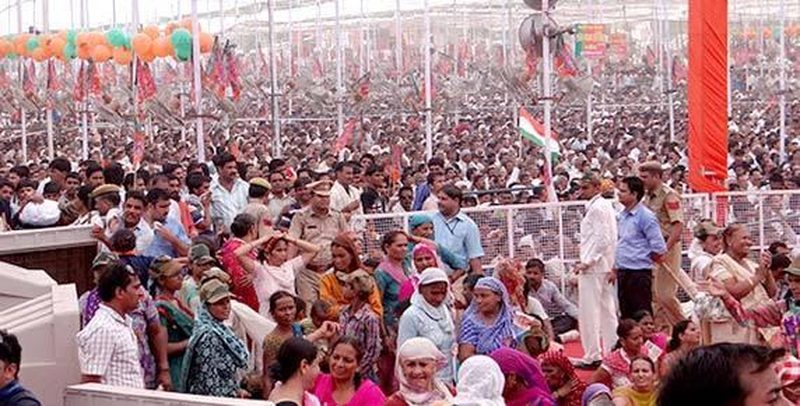
Vote bank politics — the strategy of winning elections by delivering targeted benefits to loyal community blocs — is Indian democracy’s most debated practice. Parties cultivate Muslims, Dalits, Yadavs or farmers as vote banks: groups expected to vote en bloc in exchange for representation, reservations or schemes. Critics call it divisive appeasement that fragments the national interest; defenders call it how marginalised groups get heard. This explainer examines how electoral coalitions are actually built.
What is a vote bank?
A vote bank is a community whose votes a party can reliably count on — not through individual persuasion but through group-level bargains. The Congress’s classic formula combined upper castes, Dalits and Muslims; the Left in West Bengal banked on rural poor and minorities; the SP banks Yadavs and Muslims; the AIMIM banks Muslims directly. The mechanism is patronage: tickets to community leaders, targeted schemes, protection in riots, government jobs, religious concessions. The bargain is transactional but durable — communities remember which parties stood by them in crises, and punish betrayal for generations.
How are electoral coalitions built?
Building a winning coalition is India’s core political skill, practised in stages. First, core consolidation: secure your base — the community that identifies with the party. Second, alliance arithmetic: add complementary groups whose interests do not clash (Dalit-Brahmin in the BSP’s 2007 experiment). Third, candidate matching: field candidates whose caste fits each constituency’s demography. Fourth, narrative glue: a story — social justice, Hindutva, development — that makes the coalition feel like a movement, not a transaction. The BJP’s post-2014 masterstroke was adding a fifth: welfare delivery to everyone, making the coalition about benefits as well as identity.
Why is vote bank politics criticised?
The critique has several strands. Divisiveness: appealing to communities as blocs hardens identities and pits groups against each other — the Shah Bano reversal and competitive communalism being classic charges. Tokenism: vote banks get symbolism over substance; Muslim representation in legislatures has actually declined even as parties court the community. Majoritarian backlash: perceived minority appeasement fuels Hindu consolidation against it — the BJP’s rise partly fed on this resentment. Democratic distortion: group bargains can override individual citizens’ diverse interests within communities.
Is there an alternative?
Reformers propose programme-based politics: compete on universal policies — jobs, health, education — rather than group patronage. The AAP’s Delhi model pointed this way: electricity, water, schools and clinics for all, cutting across vote banks. The BJP’s welfare-plus-Hindutva similarly claims to transcend vote banks through saturation coverage. But sceptics note every party still does caste arithmetic in ticket distribution — the vote bank did not disappear; it was supplemented.
- The defence: in unequal societies, group mobilisation is how the powerless bargain; banning it would silence them.
- The critique: it freezes identities, rewards communal entrepreneurs and substitutes patronage for policy.
- The synthesis: Indian voters are simultaneously group members and individuals — parties must speak to both.
- The trend: welfare universalism is diluting but not replacing community arithmetic.
Vote bank politics will persist as long as Indians vote partly as communities — which is to say, indefinitely. The healthier question is not whether groups bargain, but whether the bargains deliver dignity and development or merely division. On that test, India’s record is as mixed as its democracy.
The Muslim vote-bank debate
No community illustrates vote-bank politics like India’s Muslims. Parties from the Congress to the SP to the AIMIM compete for the bloc, yet Muslim political representation has declined and socio-economic indicators lag — the Sachar Committee (2006) documented the gap. Critics argue Muslims are treated as a vote bank to be harvested, not citizens to be empowered; defenders say competitive courting at least forces attention. The BJP’s counter-strategy — welfare for all, representation for none — claims to break the pattern while creating its own: a majority vote bank consolidated against the very idea of minority blocs.
FAQs
What is vote bank politics?
The strategy of securing loyal community blocs’ votes through targeted patronage — representation, schemes and protection — rather than individual persuasion.
Which parties practise it?
All of them, in different forms: every party does caste-community arithmetic in tickets and targeting, whatever its rhetoric about transcending vote banks.
Is vote bank politics illegal?
No, though the Supreme Court bars appeals to religion, caste or community for votes (Abhiram Singh, 2017) — a rule widely circumvented in practice.
Source: Economic and Political Weekly

Khabar 24h Editorial Desk — our explainers are prepared by the Khabar 24h editorial team using AI-assisted research tools, and every piece is reviewed by a human editor before publishing. We do not claim original reporting: our work is turning complex topics into simple, accurate summaries. Spotted an error? Write to contact@khabar24h.com — our corrections policy aims for same-day review.
More from this author →