How Governments Fall in India: Floor Tests, Defections and the Numbers Game
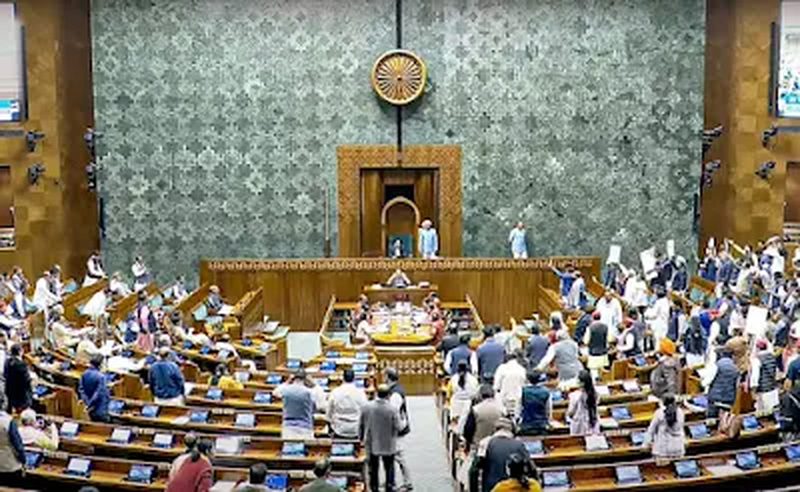
Governments in India fall not in elections alone but in the dramatic theatre of floor tests, defections and midnight parleys — the numbers game that has toppled chief ministers from Karnataka to Maharashtra to Madhya Pradesh. The anti-defection law was meant to end the infamous aya-ram-gaya-ram politics of the 1960s; instead, parties learned to game it through resignations, mergers and engineered splits. This is how governments are made and unmade between elections.
How does a government fall?
A government falls when it loses the confidence of the House. The mechanisms: a no-confidence motion by the opposition, defeat on a money bill or key legislation, or the governor/chief minister’s assessment that the majority is lost — triggering a floor test, a vote on the assembly floor. The Supreme Court, in the Bommai (1994) and Nabam Rebia judgments, insisted majority be tested on the floor, not in the Raj Bhavan: governors cannot dismiss governments on subjective satisfaction. Floor tests are high drama — MLAs paraded before cameras, resorts booked to prevent poaching, whips issued, speakers’ rulings contested.
How does the anti-defection law work — and fail?
The Tenth Schedule (1985) disqualifies legislators who voluntarily give up party membership or defy the whip. It ended retail defection but created wholesale workarounds: the law permits mergers if two-thirds of a party’s legislators agree, so poachers engineer mass defections crossing the threshold — the Karnataka (2019) and Madhya Pradesh (2020) templates. The resignation route is cruder: MLAs resign, reducing the House’s strength and thus the majority mark, then contest by-elections on the poacher’s ticket. Speakers, invariably partisan, delay disqualification petitions for months, letting defectors vote in the interim — the Maharashtra (2022) saga’s central scandal.
What role do Governors play?
Governors are the Constitution’s most abused office in government-formation crises. Meant as neutral arbiters inviting the largest pre-poll alliance or single party, Governors have repeatedly invited minority claimants, imposed President’s Rule to help poaching (Arunachal 2016, Uttarakhand 2016 — both reversed by courts), and delayed floor tests to let defections mature. The Supreme Court’s Bommai judgment curbed the worst abuses, and Nabam Rebia (2016) limited speakers’ powers — but Governors remain the favoured instrument for engineering majorities, most recently in Maharashtra’s 2022 midnight drama.
Can the numbers game be fixed?
Reformers propose several fixes.
- Speaker neutrality: transferring disqualification decisions to the President/Election Commission or a tribunal, removing partisan speakers.
- Time limits: the Court has urged deciding defection petitions within three months — widely ignored.
- Resignation bar: disqualifying resigning MLAs from ministerial office or by-elections for a cooling period.
- Two-thirds reform: treating engineered splits as defections regardless of numbers.
- Governor guidelines: codifying the Bommai principles so Raj Bhavans cannot improvise.
Until then, the numbers game continues: democracy’s spreadsheet, where majorities are assembled not just at ballot boxes but in resorts, Raj Bhavans and courtrooms. The anti-defection law stopped individual turncoats; it could not stop the wholesale market in mandates.
The resort playbook: anatomy of a toppling
Modern government-toppling follows a script refined over decades. First, identify disgruntled MLAs — denied ministries, local rivalries, ideological drift. Second, fly them to resorts in friendly-ruled states, beyond the reach of the incumbent’s police. Third, orchestrate resignations or engineer the two-thirds merger, timing them to dodge disqualification. Fourth, have the Governor invite the challenger and order a swift floor test. Fifth, win the by-elections with the defectors as candidates. Karnataka 2019, Madhya Pradesh 2020 and Maharashtra 2022 each followed this choreography with local variations — democracy’s most rehearsed drama.
What voters think of defections
Public opinion on the numbers game is scornful but resigned. Voters punish individual defectors inconsistently — some lose by-elections, others return triumphant — suggesting transactional acceptance: if the defector delivers local goods, the mandate-theft is forgiven. But the cumulative effect corrodes trust: each engineered majority teaches citizens that votes are raw material for elite bargaining. Reform energy exists, but the beneficiaries of the current rules — every major party has poached — have little incentive to change them.
FAQs
What is a floor test?
A vote on the assembly or Lok Sabha floor to prove a government’s majority, ordered when its support is in doubt — the constitutionally mandated way to test majority.
Does the anti-defection law stop party-hopping?
It stops individual defections but not mass-engineered ones: two-thirds mergers and strategic resignations remain the standard toppling templates.
Can a Governor dismiss a government?
Not on subjective satisfaction — the Supreme Court’s Bommai judgment requires majority to be tested on the House floor, though Governors still wield wide discretion.
Compiled by the Khabar 24h Editorial Desk from publicly available sources.

Khabar 24h Editorial Desk — our explainers are prepared by the Khabar 24h editorial team using AI-assisted research tools, and every piece is reviewed by a human editor before publishing. We do not claim original reporting: our work is turning complex topics into simple, accurate summaries. Spotted an error? Write to contact@khabar24h.com — our corrections policy aims for same-day review.
More from this author →