Separation of Powers Explained: Legislature, Executive and Judiciary
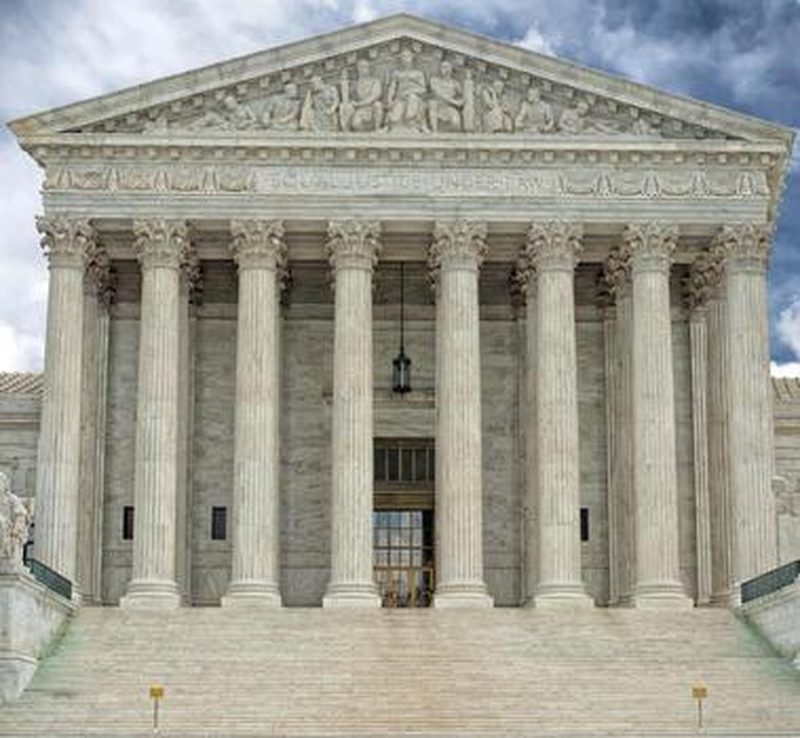
The separation of powers — dividing government into legislature, executive and judiciary, each checking the others — is the operating system of modern constitutional democracy. Conceived by Montesquieu and institutionalised by America’s founders, it rests on a pessimistic insight: power corrupts, so ambition must counteract ambition. India’s constitution adopts the doctrine in its own way, blending parliamentary fusion with judicial independence. This is how the three branches check each other.
What does each branch do?
The legislature makes laws: parliaments and congresses debate, amend and pass legislation, control the purse and oversee the executive. The executive implements: presidents, prime ministers and their administrations enforce laws, conduct foreign policy and run the bureaucracy. The judiciary interprets: courts resolve disputes and — crucially — review whether the other branches act within the law. No branch is supreme in all things; each needs the others. The legislature needs the executive to enforce its laws; the executive needs legislative funding; both need courts to validate their actions.
How do the checks work in practice?
The machinery varies by system. In America’s presidential model, separation is sharp: Congress legislates, the president can veto, Congress can override, the Senate confirms appointments, and courts strike down unconstitutional acts — Marbury v. Madison (1803) established judicial review. In parliamentary systems like India’s and Britain’s, legislature and executive fuse: the prime minister sits in parliament and depends on its confidence. The check comes instead from opposition scrutiny, judicial review and — in India’s case — a constitutionally entrenched independent judiciary with the power to void even constitutional amendments that violate the basic structure.
What threatens the separation?
The doctrine is under stress worldwide. Executive aggrandisement is the classic danger: presidents and prime ministers ruling by ordinance and decree, packing courts, capturing regulators. Legislative abdication sees parliaments rubber-stamping executive wishes as party discipline overrides institutional pride. Judicial overreach provokes the opposite complaint — unelected judges making policy, the charge behind debates over India’s collegium and America’s Supreme Court. Emergencies, from pandemics to wars, concentrate power in executives everywhere; the test is whether it disperses afterward.
India’s distinctive balance
India’s founders debated the doctrine explicitly. The constitution does not mention separation of powers by name, but the Supreme Court has held it part of the basic structure — Parliament cannot legislate it away. In practice, India blends Westminster fusion (the executive sits in the legislature) with American-style judicial review (courts void unconstitutional laws and amendments). Tensions are perennial: governments chafe at judicial activism and the collegium; oppositions decry ordinances bypassing Parliament; courts warn against executive overreach.
- Ordinances: the president’s power to legislate when Parliament is not in session — necessary, but prone to abuse.
- Judicial review: courts can strike down laws and even constitutional amendments violating the basic structure.
- Parliamentary oversight: question hour, committees and no-confidence motions check the executive daily.
- Federal division: in India, the vertical separation between Union and states adds another check.
Separation of powers is not tidiness — it is friction by design. The delays, the turf wars, the struck-down laws are the system working: liberty preserved not by trusting rulers but by pitting their ambitions against each other.
Separation of powers in the digital age
New technologies strain old separations. Mass surveillance programmes pit executive security claims against judicial privacy protections — India’s Puttaswamy judgment (2017) made privacy a fundamental right, constraining state data collection. Social-media regulation raises questions legislatures struggle to answer and courts decide case by case. Algorithmic governance — welfare delivered by opaque software — challenges all three branches: who is accountable when code denies rations? The 18th-century doctrine endures, but each branch must now check powers the founders never imagined.
Why does it matter?
Because concentrated power corrupts regardless of who holds it. Separation of powers does not assume bad rulers — it assumes human rulers, and designs accordingly.
FAQs
Who invented separation of powers?
Montesquieu articulated it in 1748’s The Spirit of the Laws; America’s founders institutionalised it, and India’s constitution adapted it to parliamentary government.
Does India have strict separation of powers?
No — it blends parliamentary fusion of executive and legislature with strong judicial review; the Supreme Court holds separation part of the constitution’s basic structure.
What is judicial review?
Courts’ power to invalidate executive actions and legislation that violate the constitution — established in the US by Marbury v. Madison (1803).
Source: Britannica

Khabar 24h Editorial Desk — our explainers are prepared by the Khabar 24h editorial team using AI-assisted research tools, and every piece is reviewed by a human editor before publishing. We do not claim original reporting: our work is turning complex topics into simple, accurate summaries. Spotted an error? Write to contact@khabar24h.com — our corrections policy aims for same-day review.
More from this author →