Left vs Right: What the Political Spectrum Actually Means
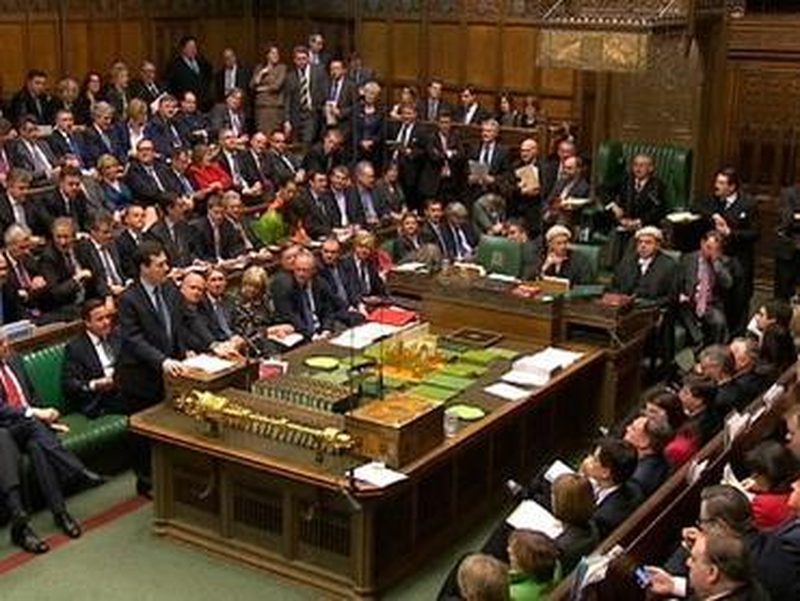
Left versus right is politics’ most durable shorthand — used on every continent to sort parties, voters and ideas. But what do the terms actually mean? Born in the seating plan of France’s revolutionary assembly in 1789, the spectrum has survived industrialisation, the Cold War and globalisation, constantly redefined yet constantly useful. This guide explains what the divide captures, where it misleads, and how it maps onto India.
Where did left and right come from?
The terms are literal: in France’s National Assembly of 1789, supporters of the king sat on the president’s right, revolutionaries on his left. The seating stuck as metaphor. The left came to mean egalitarianism, change and scepticism of hierarchy — favouring state action to reduce inequality. The right came to mean order, tradition and acceptance of hierarchy — favouring markets, authority and national continuity. Industrialisation gave the spectrum economic content: left meant labour and redistribution, right meant capital and markets. The Cold War froze it into communism versus capitalism.
What does the spectrum measure today?
Modern political science sees at least two dimensions. The economic axis runs from state intervention (left) to free markets (right): tax, welfare, regulation. The cultural axis runs from progressive/cosmopolitan (left) to traditional/nationalist (right): immigration, gender, religion, national identity. Voters and parties occupy positions on both — a voter can be economically left (pro-welfare) and culturally right (anti-immigration), the combination powering much of today’s nationalist populism. Single-axis left-right talk flattens this reality, which is why the shorthand increasingly confuses.
How does left-right map onto India?
Awkwardly — which is instructive. The Congress’s historical left-of-centre meant secularism plus a mixed economy; the BJP’s right means cultural nationalism plus (recently) market economics and massive welfare delivery. The Indian left proper — the Communists — governed West Bengal and Kerala but never went national. Caste and regional identity cut across the spectrum: parties like the SP or DMK blend social justice (left-coded) with identity politics that defies the axis. Indian politics runs more on patronage, identity and leadership than on left-right ideology — the spectrum describes elite debate better than voter behaviour.
Is the spectrum obsolete?
Reports of its death are exaggerated, but the strains are real.
- Populist scrambling: nationalist movements mix left economics with right culture, breaking the axis.
- New divides: education, urban-rural and open-closed now predict votes better than class in many countries.
- Enduring utility: for all its flaws, left-right remains the best single predictor of party positions and coalition patterns.
- Multidimensional reality: serious analysis uses two or more axes; the single line is a useful fiction.
Left and right endure because humans think in binaries and politics needs shorthand. The wise approach is to use the spectrum as a starting map while remembering the territory — of culture, identity, economics and history — is far richer than any single line can capture.
The compass and the Nolan Chart
Dissatisfaction with one dimension spawned alternatives: the political compass adds a libertarian-authoritarian axis to the economic left-right, while the Nolan Chart maps personal versus economic freedom. These two-dimensional maps capture combinations — libertarian socialists, authoritarian capitalists — that the single line mangles. Online quizzes have made the compass a meme, but political scientists genuinely use multidimensional models: they predict coalition behaviour and voter movement better than left-right alone.
Left-right in the age of identity
The newest challenge to the spectrum is identity’s rise as the master variable. Education, ethnicity, religion and urban-rural residence increasingly sort voters into camps that cut across economics: university-educated professionals vote left culturally whatever their tax preferences; non-graduate workers vote right culturally whatever their views on welfare. Some scholars argue a new cosmopolitan-nationalist axis has displaced left-right as politics’ main line. The old spectrum survives — but as one map among several, not the territory itself.
FAQs
Why are they called left and right?
From the French National Assembly of 1789, where revolutionaries sat on the president’s left and royalists on his right — the seating became political metaphor.
What is the difference between economic and cultural left-right?
The economic axis concerns markets versus state intervention; the cultural axis concerns progressive versus traditional values. Positions on one do not dictate the other.
Does left-right fit Indian politics?
Only roughly — caste, region and leadership matter more to voters, and parties like the BJP blend market economics with cultural nationalism, scrambling the axis.
Compiled by the Khabar 24h Editorial Desk from publicly available sources.

Khabar 24h Editorial Desk — our explainers are prepared by the Khabar 24h editorial team using AI-assisted research tools, and every piece is reviewed by a human editor before publishing. We do not claim original reporting: our work is turning complex topics into simple, accurate summaries. Spotted an error? Write to contact@khabar24h.com — our corrections policy aims for same-day review.
More from this author →