Nuclear Deterrence Explained: How Nuclear Powers Keep the Peace
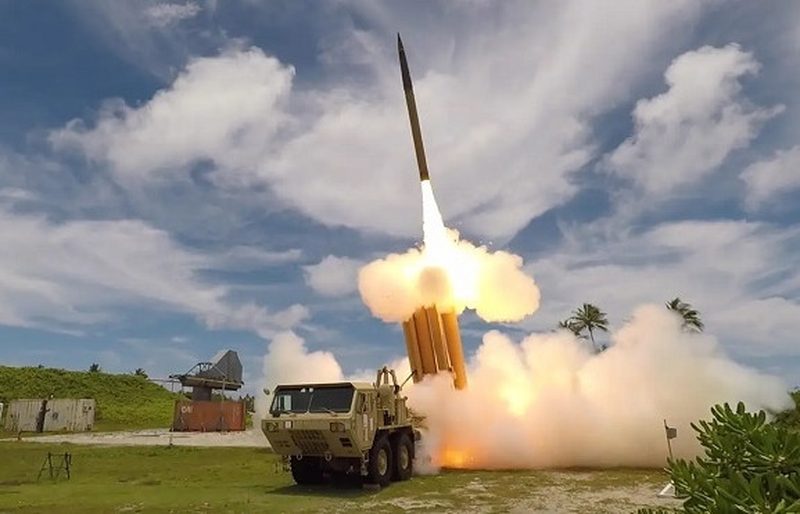
Nuclear deterrence — the idea that the fear of devastating retaliation prevents nuclear war — has held since 1945. Nine states possess some 12,000 warheads, and none has used one in conflict for 80 years. Yet deterrence is not a law of physics; it is a psychological wager that leaders will always act rationally, that accidents will never happen, and that crises will never spiral. This explainer examines how the world’s most consequential doctrine works — and where it frays.
What is deterrence theory?
At its core, deterrence is simple: a state refrains from attacking because it believes retaliation would inflict unacceptable damage. During the Cold War, strategists formalised this into doctrines. Mutually Assured Destruction held that both superpowers could annihilate each other even after absorbing a first strike — guaranteed by submarine-launched missiles and the nuclear triad of bombers, land missiles and submarines. Extended deterrence stretched the American umbrella over allies in Europe and Asia, who forswore their own bombs in exchange for protection. The doctrine’s success is measured in wars that never happened.
How do the nuclear powers differ?
Deterrence is not one doctrine but several. The United States and Russia maintain massive arsenals with launch-on-warning postures and hundreds of weapons on hair-trigger alert. China long kept a small arsenal with a no-first-use pledge, but is now rapidly expanding toward 1,000 warheads. France and Britain maintain minimum deterrents centred on submarines. India declares no-first-use and a credible minimum deterrent aimed at China and Pakistan; Pakistan, facing conventional inferiority, threatens first use to deter Indian attack — the most escalatory posture of all. Israel maintains deliberate opacity. North Korea uses its small arsenal for regime survival and blackmail.
When has deterrence been tested?
The doctrine’s near-misses are chilling. The 1962 Cuban Missile Crisis brought the superpowers to the brink over Soviet missiles in Cuba, resolved by a secret deal. In 1983, Soviet officer Stanislav Petrov correctly judged a false missile warning as malfunction, likely preventing retaliatory launch. The 1999 Kargil War and subsequent India-Pakistan crises tested whether deterrence holds between unequal nuclear neighbours — it did, barely, with American crisis diplomacy. Each case shows deterrence working through luck and leadership as much as logic.
What is eroding deterrence today?
Several trends strain the old certainties.
- Multipolarity: Cold War deterrence was bilateral; today the US must deter Russia, China and North Korea simultaneously, while they need not coordinate.
- New domains: cyberattacks on command-and-control and hypersonic weapons compress decision times from minutes to seconds.
- Nuclear coercion: Putin’s threats during the Ukraine war normalised nuclear blackmail, eroding the taboo the doctrine depends on.
- Arms control collapse: with treaties lapsing, transparency is fading and arms racing is returning.
- Tactical weapons: smaller, battlefield-usable warheads lower the threshold, making use thinkable.
Deterrence has prevented nuclear war for eight decades — history’s most successful high-stakes gamble. But a doctrine that requires perfection forever, in a world of fallible leaders, false alarms and new technologies, is a wager humanity keeps winning only until it loses. Strengthening guardrails — hotlines, arms control, no-first-use norms — is the unglamorous work that keeps the gamble alive.
The stability-instability paradox
Deterrence theory contains a disturbing corollary: by making total war unthinkable, nuclear weapons can make limited war more likely. India-Pakistan crises illustrate it — Kargil 1999, the 2001-02 standoff, Mumbai 2008’s aftermath, Balakot 2019 — each featured Pakistani confidence that its nuclear arsenal shielded it from full Indian retaliation, and Indian confidence that calibrated strikes would stay below Pakistan’s red lines. Both bets held, but each crisis was a game of chicken with catastrophic downside. The paradox means nuclear neighbours may be simultaneously safer from invasion and more prone to recurring crises — a pattern South Asia keeps demonstrating.
FAQs
What is Mutually Assured Destruction?
The Cold War doctrine that both superpowers could destroy each other even after a surprise attack, making any nuclear first strike suicidal and therefore irrational.
Which countries have nuclear weapons?
Nine: the US, Russia, UK, France, China, India, Pakistan, Israel and North Korea, holding roughly 12,000 warheads between them.
Has deterrence ever nearly failed?
Yes — the Cuban Missile Crisis (1962) and the 1983 Soviet false alarm, when officer Stanislav Petrov defied protocol and likely prevented accidental nuclear war.
Source: Bulletin of the Atomic Scientists
Related stories
View all →
EC Orders Voter-Roll Software Review; Opposition Demands CEC’s Exit
The Election Commission of India on Saturday ordered a review of its voter-roll software after a newspaper report said two election commissioners…

ED Raids AAP Minister Hardeep Mundian’s Nephew in Ludhiana
ED raided premises linked to AAP minister Hardeep Mundian's nephew in Ludhiana, escalating scrutiny of the Punjab leader's circle.

EC Appointment Law: Why SC Sent the 2023 Law to CJI
The Supreme Court has referred the challenge to the 2023 Election Commissioner appointment law to a Constitution Bench headed by the CJI.

Khabar 24h Editorial Desk — our explainers are prepared by the Khabar 24h editorial team using AI-assisted research tools, and every piece is reviewed by a human editor before publishing. We do not claim original reporting: our work is turning complex topics into simple, accurate summaries. Spotted an error? Write to contact@khabar24h.com — our corrections policy aims for same-day review.
More from this author →