The Russia-Ukraine War Explained: Origins, Stakes and Global Fallout
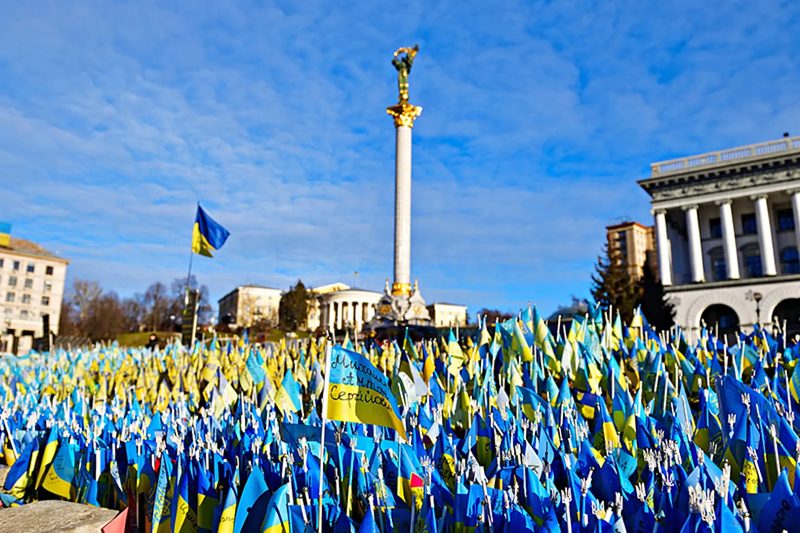
Russia’s full-scale invasion of Ukraine in February 2022 became Europe’s largest war since 1945 — and a global crisis reshaping energy markets, food security, alliances and the nuclear order. The war’s roots stretch back through the Soviet collapse, NATO enlargement and the 2014 seizure of Crimea. Three years on, with front lines grinding through eastern Ukraine, the conflict’s outcome will define European security and the credibility of the rules-based order for a generation.
What are the war’s origins?
Vladimir Putin frames Ukraine as an artificial state and Russians and Ukrainians as one people, denying Ukrainian nationhood in essays and speeches. The proximate triggers were Ukraine’s 2014 Maidan revolution, which ousted a pro-Russian president; Russia’s subsequent annexation of Crimea and sponsorship of separatists in the Donbas; and Kyiv’s deepening Western integration, including NATO aspirations. Moscow demanded guarantees Ukraine would never join NATO; Washington refused to concede the principle that states choose their alliances. On February 24, 2022, Russia invaded on multiple axes expecting a swift decapitation — and met ferocious Ukrainian resistance.
How has the war evolved?
The war has moved through phases: Russia’s failed blitz on Kyiv and retreat in spring 2022; Ukraine’s stunning Kharkiv and Kherson counteroffensives that autumn; the grinding 2023 battle of Bakhmut and Ukraine’s underwhelming counteroffensive; and since then, a war of attrition favouring Russia’s greater resources, with Moscow making slow gains in the Donbas. Ukrainian strikes deep into Russia — including dramatic drone operations — and Russia’s bombardment of Ukrainian cities and energy infrastructure define the current exchange. Western aid, American-led, has been the decisive variable: when it flowed, Ukraine held; when it stalled in US politics, Russia advanced.
What are the global stakes?
The war’s fallout extends far beyond the battlefield. Energy: Europe’s rupture with Russian gas redrew global energy flows and enriched alternative suppliers. Food: blockaded Ukrainian grain spiked prices, hitting the Middle East and Africa hardest. Alliances: NATO gained Finland and Sweden and a renewed purpose; the West’s unity surprised Moscow. The Global South: much of Africa, Asia and Latin America refused to sanction Russia, buying its oil and resenting Western demands — India most prominently, massively increasing Russian crude imports. Nuclear order: Putin’s threats eroded the taboo against nuclear coercion, while the Zaporizhzhia plant’s peril recalled Chernobyl.
How might it end?
Scenarios range across a bleak spectrum.
- Negotiated settlement: a Korea-style armistice freezing lines, requiring painful Ukrainian territorial concessions and credible security guarantees.
- Ukrainian success: sustained Western support enabling Kyiv to reclaim territory — increasingly distant as aid politics shift.
- Russian victory: Western fatigue leading to Ukrainian collapse or coerced capitulation, emboldening aggressors worldwide.
- Frozen conflict: fighting ebbs without resolution, leaving a militarised, unstable frontier for years.
Diplomatic efforts — from Turkish mediation to Chinese and Brazilian proposals to direct US engagement — have so far produced ceasefire talks rather than peace. The war’s deepest lesson may be about deterrence: the West’s failure to prevent invasion, and Ukraine’s success in resisting it, will shape how every potential aggressor calculates for decades.
The sanctions experiment and its limits
The West’s sanctions on Russia were the most ambitious in history: central-bank reserves frozen, banks cut from SWIFT, oil price caps, technology export controls. They inflicted real pain — yet Russia adapted. A shadow tanker fleet moved oil to India and China at discounts, parallel imports supplied sanctioned goods through Central Asia and Turkey, and wartime military spending fuelled GDP growth. The lesson is double-edged: sanctions degraded Russia’s long-term potential, especially in technology, but failed as a war-stopping instrument. Future sanctions designers will study both halves of that verdict.
What the war means for Taiwan
Every capital watches Ukraine for lessons about Taiwan. Beijing studies Western unity, sanctions’ bite and the costs of miscalculation; Taipei studies the value of societal resilience and advance weapons stockpiles; Washington studies deterrence’s failure and democracy’s defence. The wars are different — an amphibious invasion of Taiwan would dwarf Russia’s land offensive in difficulty — but the strategic linkage is real. Ukraine’s fate will shape Chinese calculations about risk for a generation, which is why the war’s outcome matters far beyond Europe.
FAQs
Why did Russia invade Ukraine?
Putin denies Ukrainian statehood, sought to block its Western integration and expected a quick victory; the 2014 Maidan revolution and NATO aspirations were proximate triggers.
How has the war affected the world economy?
It redrew energy flows, spiked food prices through blocked Ukrainian grain, accelerated defence spending and deepened the West-Global South divide.
What is India’s position?
New Delhi has stayed neutral, massively increasing Russian oil imports while calling for dialogue — prioritising energy security and strategic autonomy over Western pressure.
Compiled by the Khabar 24h Editorial Desk from publicly available sources.

Khabar 24h Editorial Desk — our explainers are prepared by the Khabar 24h editorial team using AI-assisted research tools, and every piece is reviewed by a human editor before publishing. We do not claim original reporting: our work is turning complex topics into simple, accurate summaries. Spotted an error? Write to contact@khabar24h.com — our corrections policy aims for same-day review.
More from this author →