What Is Soft Power? How Countries Win Influence Without Armies
When South Korean dramas captivate global audiences, when students queue for American universities, or when the world tunes in to the BBC, countries are exercising soft power — the ability to shape preferences through attraction rather than coercion. Coined by Harvard scholar Joseph Nye in 1990, the concept explains how culture, values and foreign policy win influence without firing a shot. In an age where military might often backfires, soft power has become a central currency of geopolitics.
What is soft power, exactly?
Nye distinguished three ways to get what you want: coercion (sticks), payment (carrots) and attraction (soft power). A country’s soft power rests on three resources: its culture (where it is attractive to others), its political values (when it lives up to them at home and abroad) and its foreign policies (when they are seen as legitimate). Crucially, soft power is not propaganda or public relations — it cannot be manufactured by government campaigns alone. It emerges from civil society: films, universities, tech companies, cuisine and the everyday appeal of a way of life.
Who wields it best?
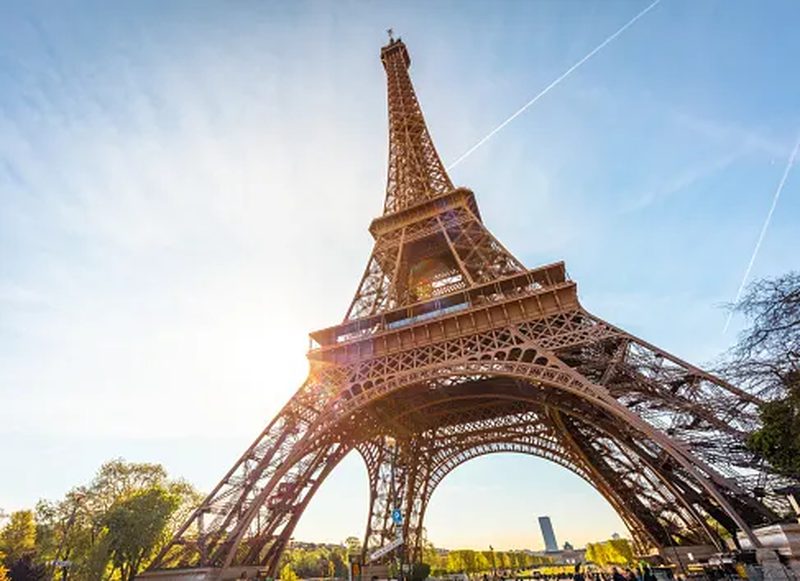
Rankings of soft power consistently place the United States near the top — Hollywood, Silicon Valley, Ivy League universities and the English language form an attraction machine without parallel — though forever wars and political polarisation have dented the brand. Britain punches above its weight through the BBC, the Premier League and world-class universities. South Korea engineered the most deliberate soft-power surge: the Korean Wave of K-pop, K-dramas and cuisine, backed by state cultural investment, made a mid-sized country a global cultural force. Japan’s anime and cuisine, France’s art de vivre and India’s yoga, Bollywood and diaspora all convert culture into influence.
How does soft power translate into influence?
Attraction matters because it lowers the cost of leadership. Countries admired for their culture and values find it easier to build coalitions, set agendas and have their policies accepted as legitimate. Foreign students who study in America often become lifelong advocates of its system; global audiences for Korean dramas develop goodwill that smooths trade and diplomacy. During crises, soft power provides resilience: countries with deep reservoirs of goodwill get the benefit of the doubt. But conversion is indirect and slow — soft power shapes the environment in which hard bargaining happens rather than winning the bargain itself.
What are its limits?
Soft power has sharp critics and clear boundaries.
- It cannot stop tanks: cultural admiration did not deter Russia’s invasion of Ukraine; hard power still decides wars.
- Hypocrisy corrodes it: preaching democracy while backing dictators, or celebrating openness while closing borders, destroys credibility fast.
- It can provoke backlash: cultural dominance breeds resentment — anti-Americanism and debates over cultural imperialism are soft power’s shadow.
- Sharp power: authoritarian states wield a corrupted version — censorship, covert influence and disinformation — which Nye distinguished as sharp, not soft, power.
The smartest powers blend attraction with muscle — what Nye called smart power. In a fragmented world where legitimacy is contested, the ability to be admired may matter as much as the ability to be feared. Soft power does not replace armies and economies, but it decides whose leadership the world is willing to follow.
India’s soft-power portfolio
India is a soft-power heavyweight by endowment, if not always by strategy. Yoga’s UN-recognised International Day, Bollywood’s global audiences, a cuisine loved worldwide and the world’s largest diaspora — a community that shapes politics from Washington to London — give New Delhi enormous cultural capital. The government’s soft-power push has added the International Solar Alliance, vaccine diplomacy during Covid-19 and the promotion of Ayurveda and millets. The constraint, as Nye would note, is domestic: communal tensions and democratic-backsliding critiques undercut the values pillar, showing that soft power begins at home.
FAQs
Who coined the term soft power?
Harvard political scientist Joseph Nye, in a 1990 book, defining it as the ability to shape others’ preferences through attraction rather than coercion or payment.
Which country has the most soft power?
The United States typically tops rankings through Hollywood, universities and tech, though the UK, France, Germany, Japan and South Korea all rank highly.
What is sharp power?
Nye’s term for authoritarian influence tactics — censorship, covert manipulation and disinformation — which pierce and manipulate rather than attract.
Source: Foreign Affairs

Khabar 24h Editorial Desk — our explainers are prepared by the Khabar 24h editorial team using AI-assisted research tools, and every piece is reviewed by a human editor before publishing. We do not claim original reporting: our work is turning complex topics into simple, accurate summaries. Spotted an error? Write to contact@khabar24h.com — our corrections policy aims for same-day review.
More from this author →