How the IMF and World Bank Work: Voting Power, Loans and Conditionality
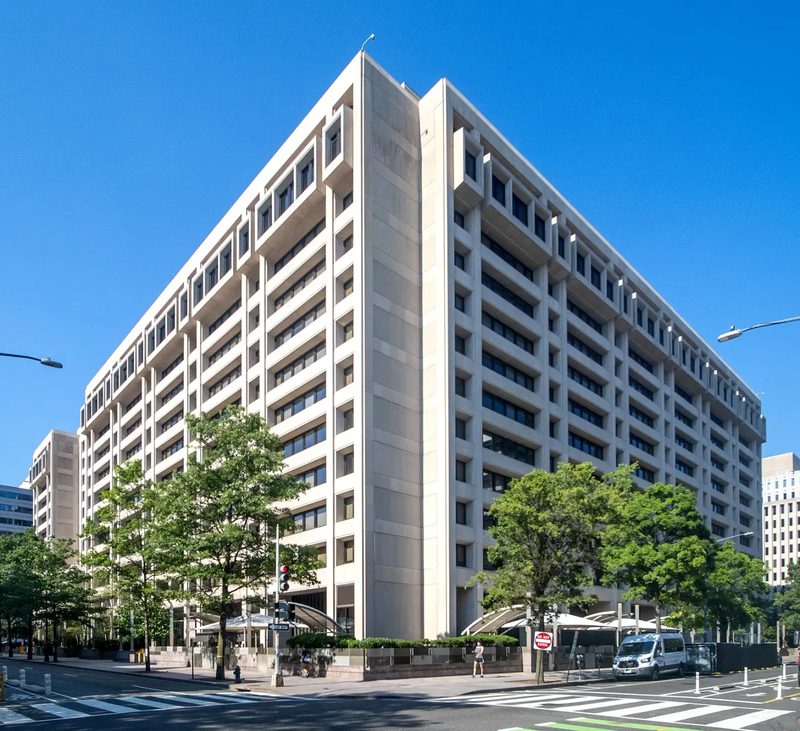
The International Monetary Fund and the World Bank, both born at the 1944 Bretton Woods conference, are the twin pillars of the global financial system — and among its most controversial institutions. The IMF lends to countries in balance-of-payments crises; the World Bank finances development projects in poorer nations. Both are controlled by weighted voting that gives rich countries outsized power, and both attach policy conditions to their loans that have sparked decades of debate. This is how they work.
Why were they created?
As the Second World War ended, Allied planners sought to avoid the economic chaos of the 1930s — competitive devaluations, trade wars and the Great Depression. The IMF was designed as a global financial firefighter, lending to countries facing currency crises so they would not resort to beggar-thy-neighbour policies. The World Bank (formally the International Bank for Reconstruction and Development) was created to rebuild war-shattered Europe and later pivoted to financing development in poor countries: dams, roads, schools and health systems. Together they became the financial arm of the liberal international order.
How does voting power work?
Unlike the UN General Assembly’s one-country-one-vote, the IMF and World Bank allocate votes by financial contribution, or quota. The United States holds about 16.5 per cent of IMF votes — enough for a veto over major decisions requiring an 85 per cent supermajority — followed by Japan, China, Germany, France and the UK. Emerging economies have long argued the quotas underweight them: China’s share lags its economic size, and Africa’s 54 nations collectively hold barely 4.5 per cent. Quota reforms in 2010 shifted some weight toward emerging markets, but the US veto and European over-representation remain sore points, fuelling the creation of alternatives like the BRICS bank.
What is conditionality?
IMF loans come with strings attached: borrowing governments must typically cut deficits, raise interest rates, privatise state firms and liberalise trade — the package once known as the Washington Consensus. Defenders argue conditions ensure loans are repaid and economies fixed; critics call them intrusions on sovereignty that deepen recessions. The record is contested: IMF programmes stabilised countries from South Korea in 1997 to Argentina repeatedly, but the Fund’s own research later admitted it underestimated the damage of austerity in Greece after 2010. Modern programmes claim to be more flexible, protecting social spending — though sceptics note the old medicine often comes in new bottles.
What does the World Bank actually fund?
The World Bank Group lends around $70-100 billion a year for development: transport corridors, power grids, water systems, education and health. Its soft-loan arm, the International Development Association, offers near-zero-interest credit to the poorest countries. The Bank has shaped development thinking for decades — championing poverty reduction, then governance reform, now climate finance. But its projects have also drawn fire: large dams displacing communities, structural-adjustment loans in the 1980s-90s tied to market reforms, and a persistent critique that Washington-based experts prescribe one-size-fits-all solutions.
Why do they still matter?
Despite the rise of Chinese lending and regional funds, the two institutions remain indispensable.
- Crisis lending: when Sri Lanka, Pakistan or Argentina face default, the IMF programme is still the seal of approval private creditors demand.
- Knowledge power: their research and data set the terms of global economic debate.
- Climate pivot: both now channel major climate finance, though far below developing countries’ demands.
- Legitimacy crisis: quota reform stasis pushes emerging powers toward parallel institutions, slowly eroding the Bretton Woods monopoly.
The IMF and World Bank are simultaneously firefighters, bankers and ideologues — and the argument over which role dominates has run for 80 years. As debt crises and climate costs mount, the question is whether these 1944 institutions can be reformed fast enough to serve a very different century.
FAQs
What is the difference between the IMF and the World Bank?
The IMF lends short-term to countries facing currency and balance-of-payments crises; the World Bank lends long-term for development projects like infrastructure, health and education.
Why does the US have a veto at the IMF?
Major IMF decisions need 85 per cent of votes, and the US holds about 16.5 per cent — enough to block anything alone, a legacy of its founding financial weight.
What is IMF conditionality?
Policy reforms borrowing governments must implement — typically deficit cuts, privatisation and market liberalisation — criticised as austerity imposed from Washington.
Compiled by the Khabar 24h Editorial Desk from publicly available sources.

Khabar 24h Editorial Desk — our explainers are prepared by the Khabar 24h editorial team using AI-assisted research tools, and every piece is reviewed by a human editor before publishing. We do not claim original reporting: our work is turning complex topics into simple, accurate summaries. Spotted an error? Write to contact@khabar24h.com — our corrections policy aims for same-day review.
More from this author →