BRICS Explained: The Bloc, Its Expansion and Its Reform Ambitions
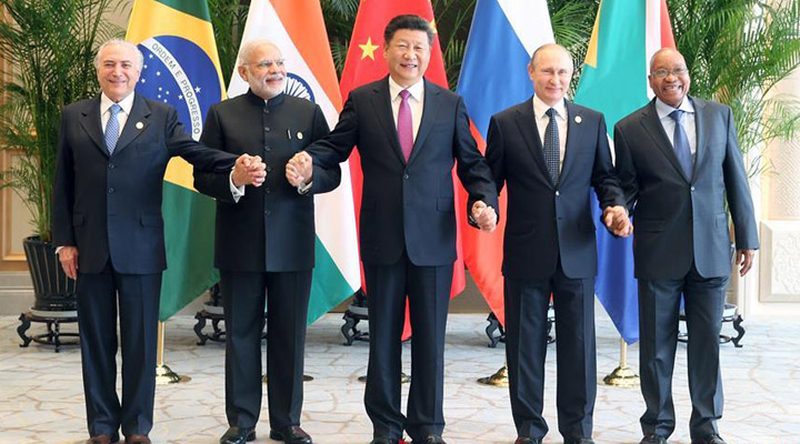
BRICS began in 2009 as a club of four large emerging economies — Brazil, Russia, India and China, joined by South Africa in 2010 — and has grown into the most prominent challenger to Western-dominated global governance. After a landmark expansion in 2024 that brought in Egypt, Ethiopia, Indonesia, Iran and the UAE, the bloc now represents nearly half the world’s population and a growing share of global GDP. This explainer covers what BRICS is, what it wants, and whether it can deliver.
What is BRICS and how did it start?
The BRIC acronym was coined by a Goldman Sachs economist in 2001 to describe the large emerging markets expected to reshape the world economy. The governments adopted the label, holding their first summit in 2009 amid the global financial crisis, with a shared grievance: institutions like the IMF and World Bank, where Western countries hold disproportionate voting power, did not reflect the new economic reality. South Africa’s admission in 2010 added an African voice. From the start, BRICS was less an alliance than a platform — a way for rising powers to coordinate demands for a multipolar order.
Why did BRICS expand?
At the 2023 Johannesburg summit, BRICS invited six countries to join; by 2024, Egypt, Ethiopia, Indonesia, Iran and the UAE had become full members, while Saudi Arabia has kept its status ambiguous and Argentina’s new government declined. Expansion served different members differently: China and Russia wanted a larger anti-Western coalition, India preferred a careful, consensus-based enlargement, and the new members sought leverage, investment and a hedge against Western pressure. The result is a far more diverse — and far harder to manage — grouping spanning democracies, monarchies and authoritarian states.
What does BRICS actually do?
The bloc’s most concrete achievement is the New Development Bank, headquartered in Shanghai, which finances infrastructure in emerging economies as an alternative to the World Bank. Members have also built the Contingent Reserve Arrangement, a currency-swap safety net. Annual summits produce declarations on trade, development and reform of global governance. More ambitiously, members discuss settling trade in local currencies to reduce dependence on the US dollar — de-dollarisation — though progress is slow: the dollar’s dominance rests on deep financial markets that no BRICS currency currently offers.
What are its reform ambitions?
BRICS’ core demand is a fairer say in global institutions: bigger voting shares at the IMF, a reformed UN Security Council, and development finance without Western-style conditions. The 2024 Kazan summit, hosted by Russia, showcased the bloc’s appeal to the Global South — dozens of leaders attended as guests. But ambitions collide with internal contradictions.
- India-China rivalry: border clashes and strategic competition limit how far the bloc’s two giants will integrate.
- Russia’s war: Western sanctions have made BRICS a useful sanctions-evasion forum for Moscow, alarming members like India that want balance, not confrontation.
- Divergent economies: members compete as much as they cooperate, from oil markets to manufactured exports.
- No secretariat: BRICS runs on summits and consensus, with no permanent machinery to implement decisions.
BRICS matters less as a coherent bloc than as a signal: a large part of the world wants alternatives to Western-led institutions and will build them, however imperfectly. Whether expansion strengthens that project or dilutes it into irrelevance is the open question of the next decade.
The de-dollarisation debate
Among BRICS’ most talked-about ambitions is reducing reliance on the US dollar in trade and finance. Russia, cut off from dollar systems by sanctions, settles growing trade in yuan and rupees; members discuss a common BRICS currency or payment system. But de-dollarisation faces hard limits: the dollar dominates because of deep, liquid American financial markets, the rule of law and network effects that no BRICS alternative currently matches. Even enthusiastic members settle only a fraction of trade in local currencies. The dollar’s challengers have ambition; they do not yet have an alternative.
FAQs
Which countries are in BRICS?
The original five — Brazil, Russia, India, China, South Africa — plus Egypt, Ethiopia, Indonesia, Iran and the UAE, which joined in the 2024 expansion.
Is BRICS an anti-Western alliance?
Not formally. It demands reform of Western-dominated institutions rather than their overthrow, though Russia and China use it to build an anti-Western coalition.
What is the New Development Bank?
A Shanghai-based multilateral lender founded by BRICS in 2014 to finance infrastructure and sustainable development in emerging economies.
Compiled by the Khabar 24h Editorial Desk from publicly available sources.
Related stories
View all →
EC Orders Voter-Roll Software Review; Opposition Demands CEC’s Exit
The Election Commission of India on Saturday ordered a review of its voter-roll software after a newspaper report said two election commissioners…

ED Raids AAP Minister Hardeep Mundian’s Nephew in Ludhiana
ED raided premises linked to AAP minister Hardeep Mundian's nephew in Ludhiana, escalating scrutiny of the Punjab leader's circle.
EC Appointment Law: Why SC Sent the 2023 Law to CJI
The Supreme Court has referred the challenge to the 2023 Election Commissioner appointment law to a Constitution Bench headed by the CJI.

Khabar 24h Editorial Desk — our explainers are prepared by the Khabar 24h editorial team using AI-assisted research tools, and every piece is reviewed by a human editor before publishing. We do not claim original reporting: our work is turning complex topics into simple, accurate summaries. Spotted an error? Write to contact@khabar24h.com — our corrections policy aims for same-day review.
More from this author →