How Bangladesh’s Parliamentary System Works
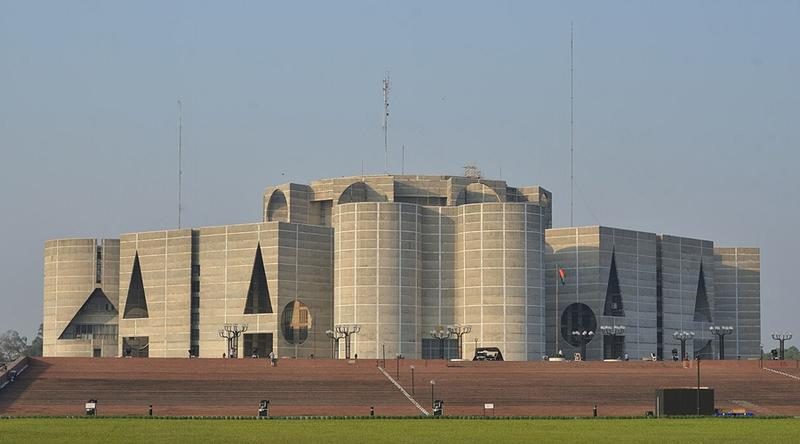
Bangladesh is a parliamentary democracy whose politics have been defined by an intense rivalry between two parties and two political dynasties — until a student-led uprising in 2024 rewrote the script. The country elects a 350-seat parliament, the Jatiya Sangsad, and the leader of the majority becomes prime minister. Understanding how this system works, and how it broke down, is essential to following South Asia’s most dramatic recent political transformation.
How the parliamentary system is structured
Bangladesh’s constitution establishes a Westminster-style system: a unicameral Jatiya Sangsad of 300 directly elected members plus 50 seats reserved for women, allocated to parties in proportion to their elected strength. The prime minister, commanding a parliamentary majority, holds executive power, while the president is a largely ceremonial figure elected by parliament. General elections are held every five years, and the Election Commission administers the vote. On paper, it is a conventional parliamentary democracy.
The two-dynasty era
For three decades, politics meant the Awami League of Sheikh Hasina against the Bangladesh Nationalist Party (BNP) of Khaleda Zia — the battle of the two begums. Sheikh Hasina governed from 2009 to 2024, winning elections that the BNP boycotted or dismissed as rigged, while critics accused her government of authoritarian drift: jailing opponents, muzzling the press and using courts against rivals. The rivalry personalised politics to an extraordinary degree, with state institutions treated as instruments of the ruling party.
What happened in 2024?
In mid-2024, student protests against a government job quota system exploded into a nationwide uprising against Sheikh Hasina’s rule. After a brutal crackdown that killed hundreds, the army declined to continue suppressing the protests, and Hasina fled the country in August 2024. An interim government led by Nobel laureate Muhammad Yunus took charge with a mandate to reform state institutions and organise fresh elections. The uprising — remembered as the July Revolution — ended 15 years of one-party dominance and opened an uncertain transition.
What are the challenges of the transition?
Rebuilding a democracy hollowed out by years of one-party rule is a formidable task.
- Electoral reform: restoring the credibility of the Election Commission and the voting process after disputed polls.
- Constitutional questions: reformists demand changes to curb the prime minister’s sweeping powers, a legacy of the old order.
- Justice vs revenge: prosecuting abuses of the Hasina era without turning trials into political vengeance.
- Economic pressure: stabilising an economy strained by the upheaval while meeting young protesters’ expectations of jobs and fairness.
Bangladesh’s parliamentary framework survived the upheaval intact; the question is whether its political culture can change with it. The interim government’s success or failure will determine whether 2024 becomes the founding moment of a healthier democracy or merely an interlude between eras of dominant-party rule.
The caretaker experiment and its abolition
Bangladesh once had a unique safeguard: a constitutional provision requiring elections to be held under a neutral caretaker government, introduced after disputed polls in the 1990s. The system produced the country’s freest elections in 1991, 1996, 2001 and 2008, and was widely admired as a South Asian innovation. Sheikh Hasina’s government abolished it in 2011, arguing that elected governments could run fair polls; the opposition called the move the original sin that enabled a decade of one-sided elections. Restoring some version of neutral election-time administration is now a central demand of the reform agenda, and its design will shape whether future polls are trusted.
The economy beneath the politics
Political turmoil has unfolded against a remarkable economic story. Bangladesh rose from one of the world’s poorest countries to a lower-middle-income economy on the back of garment exports, remittances and microfinance, dramatically cutting poverty. But the model faces strain: the garment sector needs diversification, youth unemployment is high, and the interim government inherited depleted reserves and an energy crunch. The protesters of 2024 demanded jobs and fairness as much as democracy, and any elected successor will be judged on whether the economy delivers for the young, urban generation that brought the old order down.
FAQs
How is Bangladesh’s prime minister chosen?
The leader of the party or coalition winning a majority in the 350-seat Jatiya Sangsad becomes prime minister, in the Westminster tradition.
What caused Sheikh Hasina’s fall in 2024?
Student protests over job quotas escalated into a mass uprising against 15 years of increasingly authoritarian rule; after a deadly crackdown, she fled the country in August 2024.
Who leads Bangladesh now?
An interim government headed by Nobel laureate Muhammad Yunus, tasked with institutional reforms and preparing fresh elections.
Source: The Diplomat

Khabar 24h Editorial Desk — our explainers are prepared by the Khabar 24h editorial team using AI-assisted research tools, and every piece is reviewed by a human editor before publishing. We do not claim original reporting: our work is turning complex topics into simple, accurate summaries. Spotted an error? Write to contact@khabar24h.com — our corrections policy aims for same-day review.
More from this author →