Judicial Review Explained: How Courts Check Parliament and the Executive in India
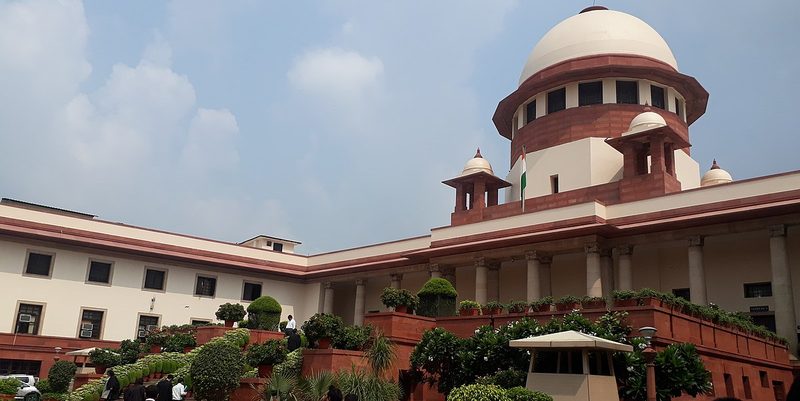
When Parliament passes a law or the executive takes an action that violates the Constitution, who can stop it? In India, the answer is the judiciary. Judicial review, the power of courts to examine the constitutionality of laws and executive actions and strike down those that fail the test, is one of the defining features of Indian democracy. It makes the Supreme Court and the High Courts the Constitution’s ultimate guardians.
The constitutional basis
Unlike the United States, where judicial review was established by judicial interpretation, India’s Constitution provides for it explicitly. Articles 13, 32, 141, 142, 144 and 226 together empower the courts: Article 13 voids laws inconsistent with fundamental rights, Article 32 guarantees the right to move the Supreme Court for their enforcement, and Article 226 gives High Courts broad writ jurisdiction. The Supreme Court has held judicial review to be part of the Constitution’s basic structure, meaning even a constitutional amendment cannot take it away.
How judicial review works in practice
Review operates at three levels. Courts test legislation against fundamental rights and the Constitution’s federal distribution of powers, striking down laws that exceed legislative competence or violate rights. They review executive action for legality, rationality and procedural fairness, quashing arbitrary decisions. And they review constitutional amendments themselves against the basic structure doctrine, a power asserted in the Kesavananda Bharati case of 1973. Any citizen can invoke this machinery, most directly through writ petitions, making the courthouse door open to all.
Landmark cases that built the doctrine
- Golaknath (1967): held that Parliament could not amend fundamental rights, a position later refined.
- Kesavananda Bharati (1973): established the basic structure doctrine, limiting Parliament’s amending power.
- Maneka Gandhi (1978): expanded Article 21 into a guarantee of substantive due process.
- Minerva Mills (1980): struck down clauses that would have made Parliament’s amending power unlimited.
- S. R. Bommai (1994): subjected the President’s satisfaction under Article 356 to judicial review.
The basic structure doctrine
The basic structure doctrine is Indian judicial review’s most famous export. It holds that while Parliament can amend the Constitution, it cannot destroy its essential features: supremacy of the Constitution, republican and democratic government, secularism, separation of powers, federalism, and judicial review itself. The doctrine has no exhaustive definition, which critics call vague, but it has repeatedly saved Indian democracy from majoritarian overreach, blocking attempts to insulate laws from scrutiny or to concentrate unchecked power.
The debate: activism versus restraint
Judicial review’s sweep invites the perennial charge of judicial overreach: unelected judges overturning the will of elected majorities. Defenders respond that constitutional democracy is precisely the restraint of majorities by rights, and that Indian courts have mostly intervened where legislatures and executives failed, from environmental protection to electoral reform. The tension is structural and permanent. Public interest litigation has widened access further, letting any citizen approach the courts on behalf of those who cannot do so themselves. What matters is that the power exists, is reasoned in public, and is itself exercised within a constitutional framework that Parliament can engage with through fresh legislation.
Writs: the tools of review
Judicial review is exercised largely through writs: habeas corpus against unlawful detention, mandamus commanding public authorities to perform their duties, prohibition and certiorari restraining or quashing actions of lower tribunals, and quo warranto challenging unlawful occupation of public office. Any person can seek these writs from a High Court, and any citizen can move the Supreme Court directly when fundamental rights are at stake. The writ jurisdiction is what makes judicial review a lived reality rather than an abstract doctrine: it converts constitutional promises into binding orders that governments must obey, often within weeks of filing.
FAQs
Can courts strike down constitutional amendments? Yes, if an amendment violates the Constitution’s basic structure, as established in Kesavananda Bharati.
What is the difference between appeal and judicial review? An appeal re-examines a case’s merits; judicial review examines whether a law or action is consistent with the Constitution.
Do High Courts also have review powers? Yes. High Courts can strike down state laws and review executive action under Article 226, often more accessibly than the Supreme Court.
Judicial review is the mechanism by which India’s Constitution governs its governors: no matter how large the majority behind a law, it must still pass the Constitution’s test.
Source: Supreme Court Observer

Khabar 24h Editorial Desk — our explainers are prepared by the Khabar 24h editorial team using AI-assisted research tools, and every piece is reviewed by a human editor before publishing. We do not claim original reporting: our work is turning complex topics into simple, accurate summaries. Spotted an error? Write to contact@khabar24h.com — our corrections policy aims for same-day review.
More from this author →