NOTA in India: What Happens When Voters Choose None of the Above
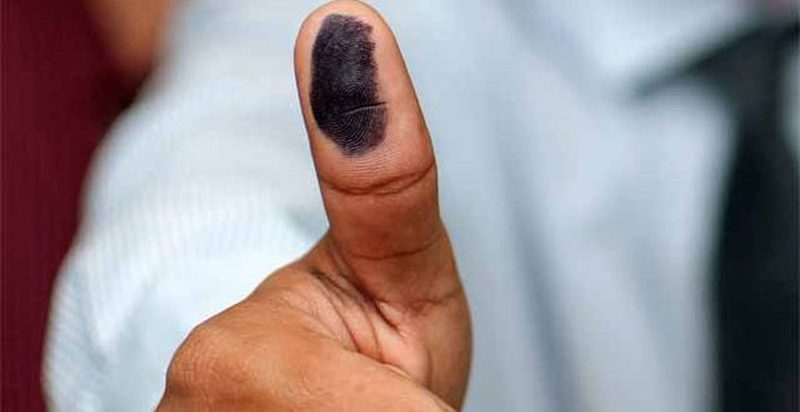
On every Indian ballot, below the last candidate’s name, sits an option that exists in few other democracies: NOTA, or None of the Above. Introduced in 2013, it lets voters formally register their rejection of all contesting candidates while still participating in the election. But what does a NOTA vote actually do, and can it ever change who wins? The answers are more subtle than most voters realise.
How NOTA came to India
NOTA owes its existence to a 2013 Supreme Court judgment in the People’s Union for Civil Liberties case. The Court ruled that voters have a right to a negative vote, a way of expressing disapproval of all candidates, as part of their freedom of expression. The Election Commission implemented the order the same year, adding a NOTA button to Electronic Voting Machines and a NOTA option to ballot papers. India thus joined a small group of countries, including Bangladesh, Colombia and parts of the United States, that formally recognise the right to reject.
How NOTA votes are cast and counted
Casting a NOTA vote is identical to voting for a candidate: the voter presses the NOTA button on the EVM, the VVPAT prints a slip, and the vote is recorded. On counting day, NOTA votes are tallied like any other and reported in the results. The crucial point is what happens next: nothing, electorally speaking. NOTA votes do not affect the outcome. The candidate with the most valid votes among the actual candidates still wins, even if NOTA polled more votes than the winner. NOTA is a protest recorded, not a veto exercised.
Why NOTA cannot change the result
India uses the first-past-the-post system, in which the winner needs only a plurality, not a majority. The law treats NOTA votes as valid votes cast but not for any candidate, so they cannot disqualify the field or force a fresh election. This has produced striking outcomes: in several constituencies, NOTA has polled more votes than the victory margin, and occasionally more than some candidates, yet the result stood. Reformers have proposed that if NOTA tops the poll, the election should be re-held with new candidates, but no such rule exists in Indian law.
What NOTA does achieve
Even without electoral consequences, NOTA serves real purposes. It gives dissatisfied voters a reason to turn up rather than stay home, which matters in a democracy that prizes high turnout. Political scientists also mine NOTA data to map voter alienation, treating high NOTA shares as a warning that mainstream parties are failing to offer credible choices. It sends parties a measurable signal of discontent in a constituency, data that strategists study closely. And it protects the secrecy of the dissenting voter: before NOTA, a voter who wanted to reject everyone had to inform the presiding officer and sign a register, a procedure few used because it sacrificed secrecy. NOTA made protest anonymous and effortless.
The debate over strengthening NOTA
Critics argue that a toothless NOTA breeds cynicism, inviting voters to register anger that changes nothing. Proposals to give it teeth include treating NOTA as a fictional candidate so that a NOTA plurality voids the election, or disqualifying candidates in seats where NOTA crosses a threshold. The Election Commission and courts have so far resisted these ideas, holding that the right to reject is satisfied by recording the protest. The debate reflects a deeper question: should democracy offer voters not just a choice among candidates, but a meaningful power to reject them all?
FAQs
Is NOTA available in every election? Yes. It appears on EVMs and ballot papers in Lok Sabha, assembly and most local body elections across India.
Do NOTA votes affect the deposit of candidates? No. A candidate’s security deposit is forfeited only if they fail to secure one-sixth of the valid votes, and NOTA votes do not change that calculation against candidates.
Can NOTA ever lead to re-election? Under current law, no. Even if NOTA receives the most votes, the leading candidate is still declared elected.
NOTA is best understood as democracy’s pressure valve: it does not overturn verdicts, but it ensures that dissatisfaction is counted, visible and impossible for parties to ignore entirely, election after election.
Until the law gives NOTA sharper teeth, it will remain democracy’s most visible, and most limited, form of protest.
Compiled by the Khabar 24h Editorial Desk from publicly available sources.

Khabar 24h Editorial Desk — our explainers are prepared by the Khabar 24h editorial team using AI-assisted research tools, and every piece is reviewed by a human editor before publishing. We do not claim original reporting: our work is turning complex topics into simple, accurate summaries. Spotted an error? Write to contact@khabar24h.com — our corrections policy aims for same-day review.
More from this author →